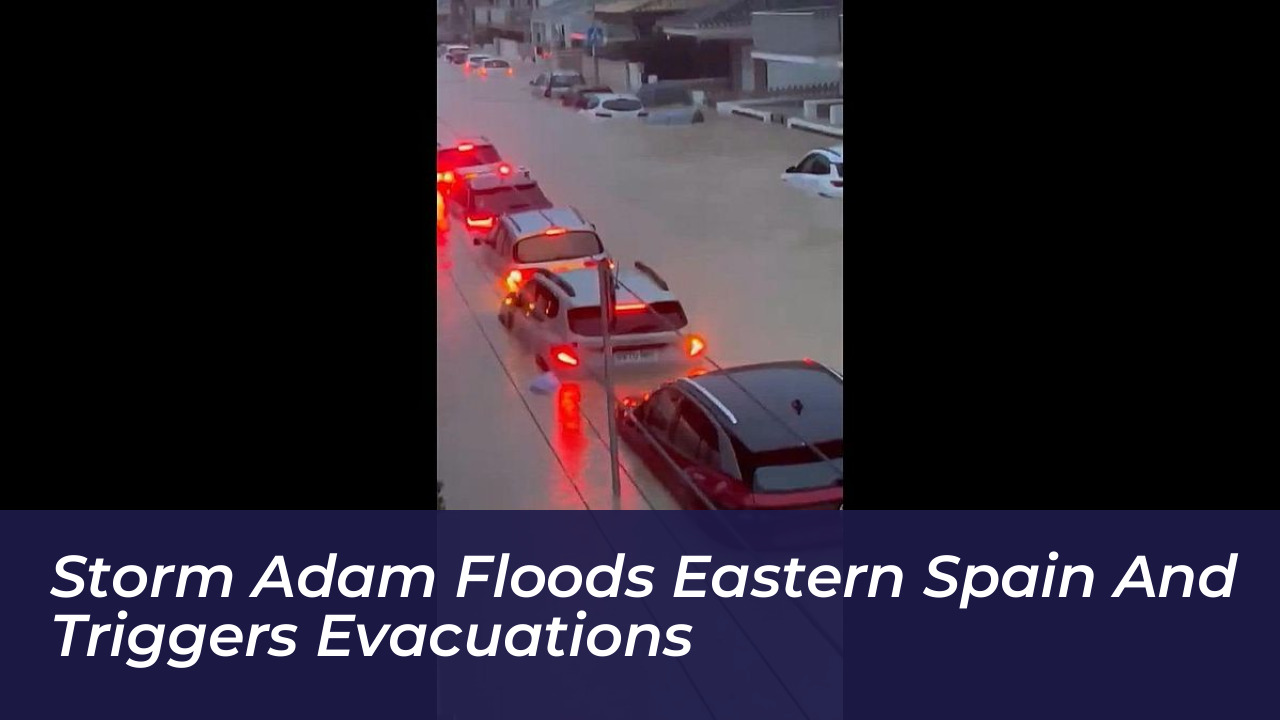

Record-breaking rainfall from Storm Adam has caused severe, deadly flooding across eastern Spain. The disaster has forced mass evacuations, closed major roads, and severely disrupted public services in Valencia, Alicante, and surrounding regions. Spanish authorities imposed strict movement restrictions affecting approximately 850,000 residents across 145 municipalities. Emergency crews deployed helicopters and military personnel to rescue residents trapped by rapidly rising floodwaters.
The destructive storm system has claimed at least four lives in storm-related incidents across the country. According to reports from Spanish authorities, victims include a woman swept away by a swollen stream near Cabrera de Mar north of Barcelona, another woman whose body was recovered near Sagunto in Valencia, two individuals found dead inside a flooded property in Oliva, and a 64-year-old man who suffered a heart attack at an inundated campsite.
Exceptional Rainfall Totals Overwhelm Local Infrastructure
The meteorological agency AEMET issued its highest red level weather alerts for extraordinary danger across eastern Spain as precipitation levels broke historical records. The Valencian Meteorological Association (Avamet) recorded up to 720 millimeters of rain over a 48-hour period in Forna, within L’Atzúbia in Alicante province. Nearby Pego received 638.5 millimeters in just 24 hours.
Swollen rivers, including the Girona river at Els Poblets, burst their banks, turning streets into rushing torrents. Vehicles were swept away, ground-floor homes and commercial properties were submerged, and several coastal communities were temporarily cut off. In the Balearic Islands, which were also lashed by the severe weather, flight operations at Palma de Mallorca and Ibiza airports suffered massive disruptions, with dozens of cancellations and delays.
Emergency Response and the Shadow of the 2024 Floods
Spain’s Military Emergencies Unit (UME) was rapidly deployed from its base at Bétera to assist local firefighters and regional emergency services in Valencia, Ibiza, and Mallorca. Emergency coordination centers dispatched multiple ES-Alert mobile phone warnings, strongly urging residents to avoid all travel, remain confined to their homes, and move away from basements and ground floors to upper levels or rooftops.
The intensity of Storm Adam immediately drew painful comparisons to the catastrophic October 2024 floods that killed more than 230 people in the Valencia region. That earlier disaster prompted widespread public anger and intense political scrutiny regarding delayed emergency notifications and inadequate regional coordination. The new wave of flooding has instantly thrust questions of climate resilience, infrastructure investment, and early-warning preparedness back to the forefront of Spanish politics.
Wider Regional Impacts Across Catalonia, Murcia, and Andalusia
While Valencia and Alicante bore the brunt of the disaster, the severe weather system also triggered hundreds of emergency incidents across Catalonia, Andalusia, and the Murcia Region. Along the Murcia coast, towns such as San Pedro del Pinatar, San Javier, and La Manga del Mar Menor experienced intense downpours that left roads impassable and water surging into residential properties. Emergency coordination centers across the affected provinces handled thousands of urgent calls relating to road obstacles, freshwater rescues, and localized power outages.
As cleanup operations begin and authorities evaluate the structural and economic damage, scientists emphasize that human-driven climate change continues to intensify Mediterranean storm systems. Warm summer temperatures cause the sea to absorb excess heat, fueling increased evaporation and generating unprecedented volumes of autumn rainfall across Spain’s eastern coastline.