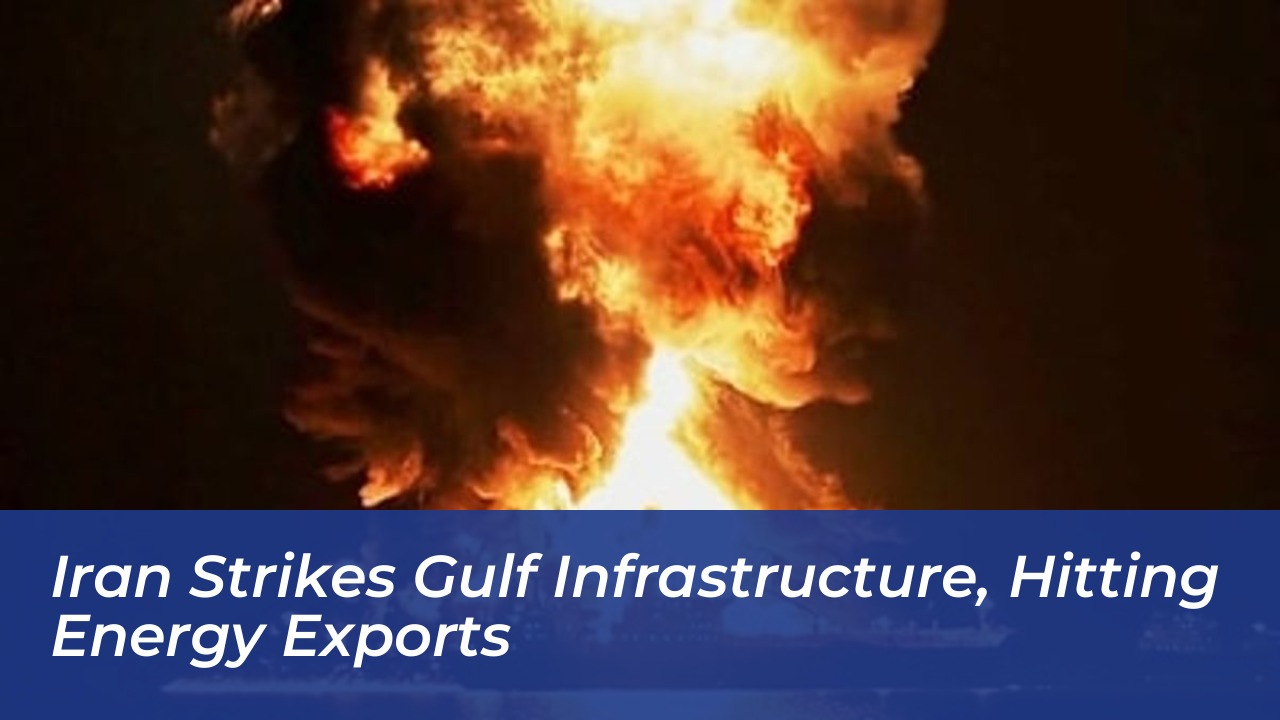

Iranian missile and drone attacks have hit at least 135 critical infrastructure targets across the Persian Gulf during seven months of regional conflict, damaging vital oil networks, power plants, and industrial complexes. An extensive investigation published by Reuters revealed that 84 separate sites have been struck since hostilities erupted on February 28 between Iran, the United States, and Israel. The strikes have systematically targeted facilities essential to global energy supply chains and regional commerce across Saudi Arabia, the United Arab Emirates, Qatar, Kuwait, Bahrain, Oman, and Iraq.
Severe Damage to Strategic Energy Chokepoints
The strikes have focused heavily on logistical routes designed to bypass the volatile Strait of Hormuz. In early 2025, roughly 20.9 million barrels of oil and petroleum products passed daily through this strait, accounting for approximately 20% of global petroleum liquids consumption.
One of the primary focal points of the campaign has been the Port of Fujairah in the United Arab Emirates. This region’s main bunkering and crude export hub is situated outside the strait. Iranian drones and missiles targeted the port at least 19 times between February and May, inflicting heavy damage on oil-routing machinery, storage tanks, and transfer terminals:
- March 9: Direct strikes damaged the port’s matrix manifold, an essential pipeline junction responsible for directing crude oil and refined petroleum to waiting vessels.
- May 4: Subsequent strikes severely crippled product-loading equipment. Shipping data from Kpler indicates that only a single refined-fuel vessel departed Fujairah between May 4 and June 1.
- September 10: An aerial assault targeted Saudi Arabia’s East-West Pipeline, which transports crude oil directly across the Arabian Peninsula to the Red Sea port of Yanbu. The attack damaged three pumping stations, completely destroying one and halting crude flows for 11 days.
Long-Term Setbacks for Liquefied Natural Gas and Industry
The damage extends far beyond crude terminals. In Qatar, strikes on the Ras Laffan industrial complex destroyed two primary liquefaction units containing specialized cooling machinery. Saad al-Kaabi, chief executive of state producer QatarEnergy, stated that restoring the damaged equipment will take an estimated three to five years, clouding future liquefied natural gas (LNG) output.
Heavy industry and civil infrastructure have suffered parallel disruption across multiple Gulf states:
- Emirates Global Aluminium (EGA): Operations at the Al Taweelah industrial complex were halted following an attack on March 28. Restoring production requires an estimated $400 million through 2027. By late August, only 315 of the smelter’s 1,262 reduction cells had resumed work.
- Kuwait’s Civil Utilities: Iranian-linked strikes hit Kuwait International Airport eight times and damaged at least four of the nation’s eight combined power and water desalination plants between March and July.
- Commercial Tech Facilities: Sites housing international commercial enterprises, including Amazon data centers in Bahrain and facilities used by Western energy contractors, sustained direct drone hits.
Underreported Destruction and Government Discrepancies
The Reuters investigation highlighted notable discrepancies between public statements released by Gulf governments and the reality on the ground. In at least 34 formal statements, authorities in Gulf nations claimed that damage to energy and utility sites was caused solely by falling debris following missile and drone interceptions.
However, analysis of commercial satellite imagery, photographic records, and interviews with 36 industry insiders revealed precise hits on isolated pieces of mission-critical machinery. Experts questioned whether random intercept debris could consistently destroy specialized equipment like pumping stations, cooling manifolds, and oil-routing manifolds.
Diplomatic Fallout and Tehran’s Position
Tehran has mounted a conflicted public defense of the campaign. Foreign Ministry spokesperson Esmail Baghaei asserted that Iran holds “no hostility” toward neighboring Gulf states. He claimed strikes were directed exclusively at U.S. military bases and equipment under the right to self-defense outlined in Article 51 of the UN Charter.
“All military bases, installations and assets that in any form or manner are being used to help the aggressors are regarded as legitimate targets,” Baghaei said.
Iranian President Masoud Pezeshkian publicly apologized for striking neighbor territories, urging regional states to set aside animosities. However, the apology triggered immediate backlash from hardline clerics and Revolutionary Guard figures inside Iran, and strikes against Gulf targets resumed shortly after.
The Gulf Cooperation Council (GCC) has formally condemned the strikes as treacherous. Gulf officials have warned that the deliberate targeting of non-military energy infrastructure has shattered regional trust. A senior UAE official indicated that while regional geography forces neighbors to coexist, the campaign has created a trust gap that will persist for decades.