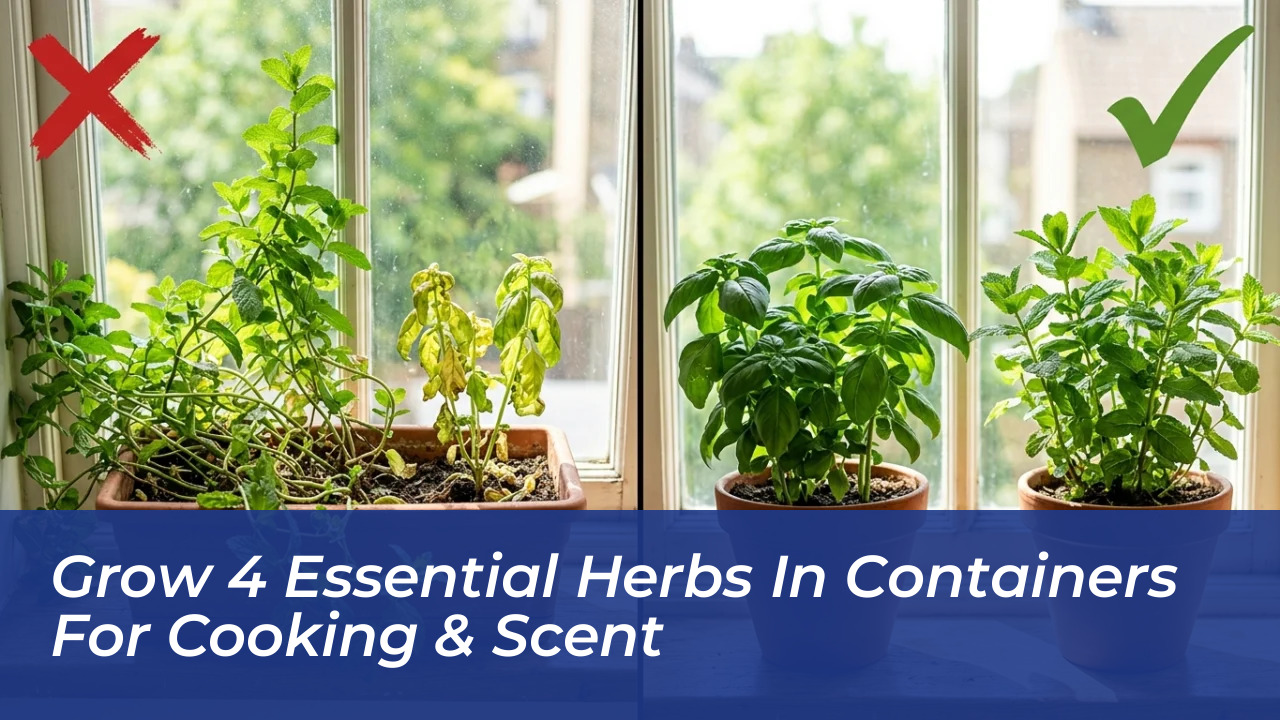

Four resilient aromatic herbs-basil, mint, rosemary, and thyme-offer the ideal balance of culinary utility and natural fragrance for container gardening. They thrive on balconies, patios, and bright windowsills. Each variety brings distinct flavor profiles to the kitchen while naturally scenting living areas with zero chemical additives. Thriving even in restricted square footage, these four staples adapt readily to pots as long as specific moisture and sunlight thresholds are maintained.
Urban and suburban households frequently struggle to keep culinary greenery alive indoors due to improper container dynamics. Balancing warm-weather species with drought-tolerant perennials transforms a modest windowsill into an active culinary pantry. Proper container cultivation relies on matching the specific drainage and moisture tolerance of each herb rather than applying a universal watering routine.
Culinary Basil: Warmth and Continuous Harvesting
Cultivating basil demands warm temperatures to develop vigorous foliage and robust essential oils. The freshly harvested leaves provide essential flavor notes for sliced tomatoes, pastas, salads, and homemade sauces. To perform well, basil requires a medium container paired with fertile potting mix and unobstructed drainage outlets.
Position the container in an area receiving several hours of direct natural light. Provide light shade during extreme afternoon heat spikes to prevent leaf scorch. Regular watering keeps the root zone consistently moist without causing waterlogged conditions. Gardeners should pinch off the growing tips frequently to prevent early flowering and encourage bushier, tender growth.
Vigorous Mint: Managing Growth and Moisture
Known for its piercing fragrance, mint serves as an indispensable ingredient for cold teas, lemonades, and c**ktails. Unlike heat-loving annuals, mint flourishes in cooler spots with indirect sunlight or soft morning rays. The plant rapidly establishes strong root networks during active growing periods.
A widespread misconception is that mint can share container space alongside other species. Because of its invasive underground root network, mint must be planted in an isolated pot to prevent it from choking out surrounding herbs. Occasional pruning keeps stems compact and prompts a steady supply of fresh aromatic leaves.
Woody Perennials: Rosemary and Thyme for Sunny Spaces
Balconies and terraces with abundant direct sun offer prime environments for woodier, drought-resistant varieties. Rosemary features sharp, needle-like foliage loaded with piney aromas that enhance roasted potatoes, vegetables, and meats. It requires sharply draining soil and spaced-out waterings, suffering far more from standing water than brief dry spells.
Complementing rosemary, thyme suits ultra-compact arrangements without compromising aromatic intensity. Its minute leaves concentrate powerful savory notes for soups and braises while requiring only minimal container volume. During active growth phases, thyme often produces tiny blossoms that attract pollinating insects. Trimming the top growth after bursts of vigorous expansion preserves its dense silhouette.
Care Specifications for Container Cultivation
- Basil: Warm temperatures, rich moist soil, moderate to full sun
- Mint: Dedicated isolated container, damp substrate, indirect light
- Rosemary: High direct sunlight, dry intervals, sharp container drainage
- Thyme: Full sun, compact pots, well-draining soil, regular trimming
Essential Maintenance Steps for Healthy Container Herbs
Maintaining strong vigor across all four varieties requires implementing five foundational container management practices:
- Select pots with drainage holes: Unobstructed outlets prevent standing water, reducing root rot hazards.
- Allocate direct and indirect light correctly: Position rosemary, thyme, and basil under bright exposures while shielding mint from harsh rays.
- Check soil moisture before watering: Inspect the lower potting substrate to avoid overwatering drought-tolerant varieties or drying out moisture-loving basil.
- Isolate aggressive root systems: Dedicate individual containers strictly to mint to protect companion plants.
- Prune stems moderately: Remove damaged foliage and harvest terminal branch tips to stimulate continuous compact production.
Frequently Asked Questions
Can I grow basil, mint, rosemary, and thyme in the same large pot?
No. While it is tempting to combine them into a single decorative planter, their watering and soil needs conflict directly. Basil and mint require consistent moisture, whereas rosemary and thyme prefer dry intervals and sharp drainage. , mint possesses an aggressive root system that will rapidly crowd out and choke neighboring plants.
How much sunlight do container herbs need indoors?
Most aromatic herbs require a minimum of six hours of bright, direct sunlight daily. Positioning pots on a south- or southwest-facing windowsill yields the best results. If natural light is limited during winter months, supplementing with full-spectrum indoor grow lights helps prevent leggy, weak growth.
What type of soil is best for growing herbs in containers?
Always use a high-quality, fast-draining commercial potting mix designed for containers. Never use dense garden soil or topsoil, as these compact heavily inside pots, restrict air circulation around the root zone, and trap excessive moisture that leads to root rot.
How do I prevent my container herbs from drying out too fast?
Pots dry out much faster than garden beds, especially in warm weather or windy outdoor locations. To retain moisture effectively, choose larger container sizes rather than tiny pots, apply a light mulch layer to the surface, and check soil dampness daily by inserting a finger two inches into the substrate.
Should I fertilize my container-grown culinary herbs?
Fertilize sparingly. Because frequent watering flushes nutrients out of container soil, feed herbs lightly once every four to six weeks during the active growing season using a diluted, water-soluble organic fertilizer. Over-fertilizing can cause rapid, weak stem growth and dilute the essential oils responsible for flavor and fragrance.