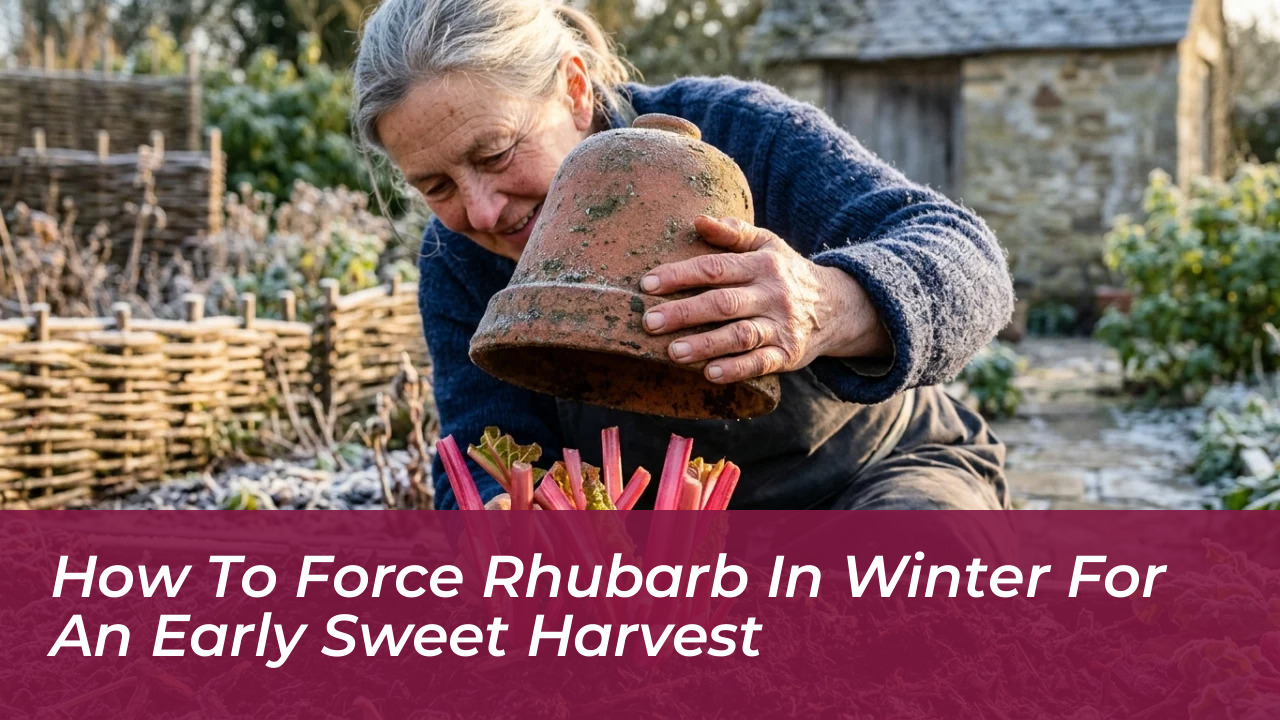

Preparing to force rhubarb crowns in the depths of winter allows British and temperate-zone gardeners to harvest tender, jewel-pink stems up to a month earlier than traditional outdoor crops. This simple practice yields a sweeter flavor with far less acidity. By excluding light and warming the dormant rootstock, the plant directs its stored energy into rapid stem elongation rather than leaf development. Initiating this process during late autumn or midwinter unlocks peak early productivity from mature rootstocks.
The practice relies entirely on the plant’s dormant starch reserves built up over the preceding summer. When cold temperatures meet complete light deprivation, the emerging stems stretch upward in search of sunlight. This results in crisp, delicate stalks that require far less sugar in the kitchen. To achieve this, the underlying crown must be structurally sound and free from exhaustion.
Assessing Crown Health Before Winter Forcing
Attempting to force an exhausted, overcrowded rootstock often results in weak, stringy growth that permanently undermines the plant. Established crowns between four and eight years of age frequently run out of steam, developing a hollow or decaying central rhizome. When a clump expands across roughly one square metre (10 square feet), the outer ring tends to suffocate the centre. This leads to thin stems and premature flowering spikes rather than the robust petioles required for early winter production.
A widespread misconception among growers is that persistent flowering and spindly growth indicate drought or a lack of chemical fertiliser. In established perennial beds, frequent bolting paired with narrow stems signals an overcrowded root mass requiring physical rejuvenation through root division. Healthy, well-spaced divisions ensure that only vigorous material with ample reserves undergoes the taxing forcing routine.
Dormant crowns can be split in late autumn when the soil remains workable and free from hard frost. Alternatively, division can be deferred to late winter between February and March in persistent, heavy clay prone to waterlogging.
Root Condition Characteristics and Management
- Overgrown Root Clump: Hollow or woody centre, thin stalks, persistent bolting, typically 4-8 years old.
- Fresh Root Divisions: Weighs roughly 500g (1 lb), features 1-3 pink buds, spaced 1 to 1.2 metres apart.
Step-by-Step Technique: Splitting and Establishing Stock
If your crowns show signs of central decay or overcrowding, dividing them before applying any winter covers guarantees an abundant return of vibrant stems. Follow these steps to rejuvenate your stock:
- Unearth the root ball: Using a spade or garden fork, cut an outer trench approximately 30 cm (12 inches) away from the crown, levering the heavy root clump upward to keep large storage roots intact.
- Clear excess soil: Shake off loose earth to expose the distinct pink growing eyes across the perimeter.
- Slice into vigorous pieces: Slice the clump with a sharp spade into healthy sections weighing approximately 500 grams (1 pound) each, ensuring every division retains one to three firm pink buds.
- Discard decaying core: Cut away and compost the brittle, woody, or softening centre of the old plant.
- Amend the soil: Prepare holes 40 cm (16 inches) deep, enriching the earth with generous amounts of mature garden compost or well-rotted manure.
- Replant with care: Position each division with its pink buds facing upward, buried beneath only 2 to 3 cm (1 inch) of topsoil, and firm gently.
- Maintain adequate spacing: Set individual crowns 1 to 1.2 metres (3 to 4 feet) apart to give future summer foliage ample room to breathe.
Applying Darkness: The Traditional Forcing Method
Once you have vigorous, mature crowns that are at least two to three years established, outdoor forcing can begin. In the depths of winter, clear away dead leaf debris around the dormant eyes to deter slugs and fungal spores.
Invert a traditional terracotta forcing jar, an upturned dustbin, or a deep bucket directly over the crown, ensuring no light penetrates around the base. To accelerate growth during chilly spells, pack a thick layer of well-rotted straw, leaves, or fresh manure around the exterior of the container. The mild heat generated by the decomposing organic matter warms the soil, coaxing the pink buds into rapid upward growth within weeks.
Aftercare and Long-Term Crown Preservation
Forcing places exceptional physiological demands on rhubarb, as the plant burns through its underground carbohydrate stores without replenishing them via photosynthesis. Moderation is vital to maintain perennial stamina over many years.
Never force the same plant in consecutive seasons. Alternate between different crowns across the garden to allow unforced specimens a full year of open sunlight and foliage restoration. Water newly replanted beds deeply to air pockets, and top-dress with compost while keeping mulch clear of the crown eyes to prevent rot. Conclude all conventional pulling by early July so the broad summer leaves can recharge the root system before the cycle begins anew.
Frequently Asked Questions About Forcing Rhubarb
Can I force rhubarb in containers indoors?
Yes. You can lift a dormant crown in late winter, pot it in a large container with compost, and place it in a dark, cool indoor space like a cellar or garage. Keep the soil consistently moist until harvest.
How long does the forcing process take?
Under optimal conditions with complete darkness and slight warmth, forced rhubarb stalks are typically ready to harvest 4 to 8 weeks after covering.
Are forced rhubarb leaves safe to eat?
No. Just like outdoor-grown rhubarb, forced leaves contain high concentrations of oxalic and are toxic. Always discard the leaves immediately and consume only the tender stalks.
What happens if light leaks into the container?
Light exposure triggers chlorophyll production, turning the stalks green and increasing their acidity. To maintain the signature sweet flavor and pale pink hue, ensure your covering is completely opaque.
Should I fertilize my rhubarb after forcing?
Yes. Once the forcing period concludes and the covers are removed, top-dress the soil with well-rotted manure or a balanced organic fertilizer to help the plant recover its energy reserves.