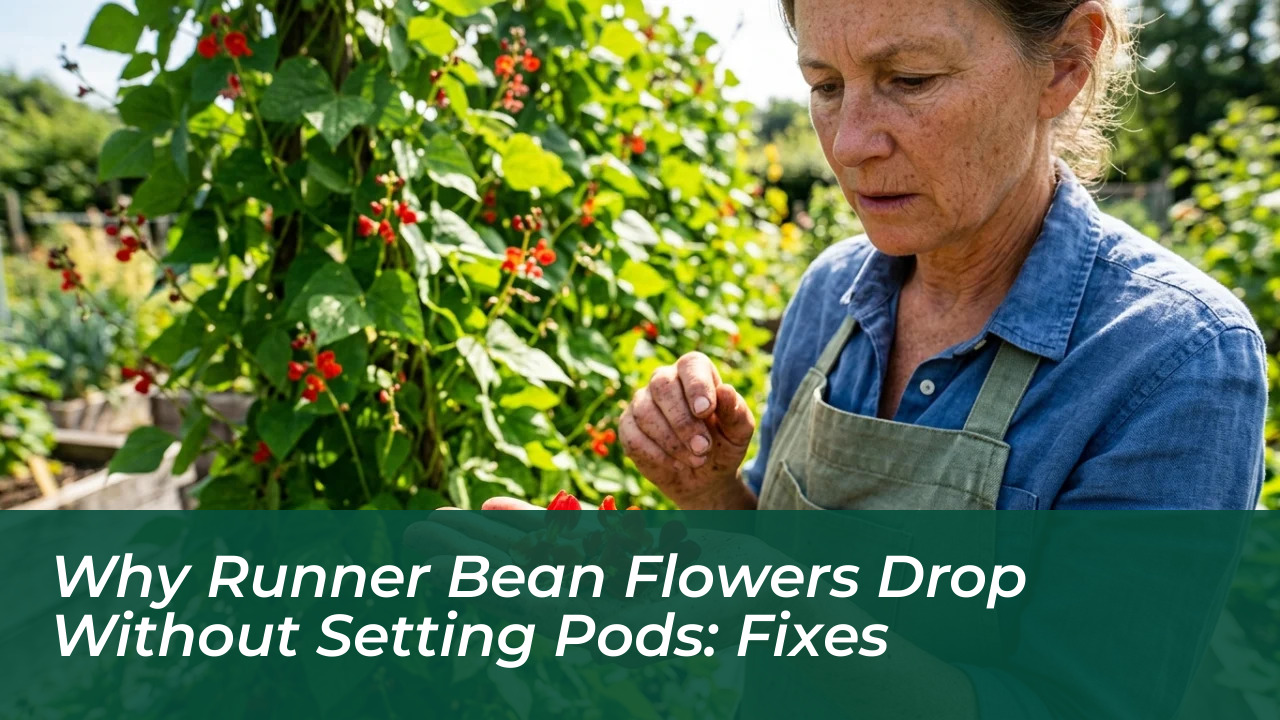

When healthy runner bean flowers suddenly wither, drop to the ground, and fail to set pods, growers face one of kitchen gardening’s most frustrating dilemmas. This failure, commonly termed “flower drop” or poor pod set, happens when environmental triggers interrupt fertilisation, leaving lush foliage without a single edible bean. While seeing clusters of scarlet or white blossoms fall from the vine looks alarming, the underlying causes usually stem from a handful of predictable physical stresses. Understanding why pollination breaks down allows growers to intervene before an entire harvest is lost. Once you recognise the exact balance between temperature, root hydration, and soil nutrients, correcting the issue becomes straightforward.
The Science of Pod Drop: Why Blooms Fail to Set
A runner bean blossom must be successfully pollinated and fertilised to trigger the growth of a bean pod. The reproductive anatomy of the flower requires visiting pollinators, predominantly bumblebees, to trip the keel petal and transfer pollen from anther to stigma. When external conditions cause the pollen to become sterile or cause the plant to conserve vital moisture, the flower aborts naturally.
Temperature plays a decisive role in this mechanism. When ambient daytime conditions climb excessively high (above 28°C to 32°C), or when nights stay stiflingly warm with minimum temperatures staying above 16°C, bean pollen grains dry out and lose viability before fertilisation occurs. Agricultural observations consistently show that unseasonal heat and adverse weather cause delicate flower clusters to dry up and shed across commercial plots and allotment beds alike.
Moisture stress accelerates this abortive reflex. Runner beans originate from upland regions of Central America, meaning they naturally prefer cool root zones and consistent ground moisture. If soil dries out during the flowering period, the plant sheds its heavy blossoms to reduce water demand and protect its central vascular structure. In fact, dry soil at the root accounts for 60 to 80 percent of flower drop cases.
Nutrient Imbalances: The Nitrogen Trap
Feeding choices can inadvertently halt bean production while creating an illusion of vigorous health. Many growers assume that lush, dark green leaves indicate a thriving plant, yet excessive leafy growth frequently signals high nitrogen levels.
Because beans are legumes capable of fixing nitrogen with root-nodule bacteria, supplemental nitrogen feeds encourage heavy foliage at the expense of blossom retention. To produce firm pods, vines need potassium and phosphorus rather than leafy stimulants. A switch to high-potash nutrition directs energy back into reproductive development.
Runner Bean Pod Failure: Key Causes and Solutions
Evaluating your growing conditions against established physiological requirements makes it easier to pinpoint why flowers drop. The reference breakdown below outlines the core environmental triggers and their corrective actions.
- Extreme daytime heat: Erect temporary shade cloth and mist foliage in the evening to lower localized stress.
- Night temperatures above 16°C: Select heat-tolerant varieties like Firestorm alongside older strains to ensure pollination windows are met.
- Dry, fluctuating soil moisture: Apply a thick organic mulch and establish deep, regular trench watering (10-15 litres per metre daily).
- Poor bumblebee activity: Plant companion flowering herbs nearby to attract wild pollinators and avoid chemical pesticides.
- Excess nitrogen feeding: Halt high-nitrogen feeds immediately and apply high-potash liquid fertilisers.
- Acidic or unconditioned soil: Work well-rotted organic matter and lime into the trench before planting if pH drops below 6.5.
Combating Flower Drop: Practical Steps for Healthy Pods
Resolving flower drop requires stabilising the microclimate around the root system and supporting pollinator access. Applying targeted cultural adjustments ensures blooming spikes transition into productive pods throughout the season.
Deep, Focused Trench Watering
Soak the soil thoroughly at the base rather than dampening the surface. Feeder roots sit 150mm to 300mm underground, meaning a light overhead sprinkle reaches nowhere near them. Deliver 10 to 15 litres of water per metre of row daily during hot spells to maintain steady subsoil hydration.
Mulching the Root Run
Spread a substantial 60mm layer of compost, straw, or well-rotted manure over the root zone. This layer retains soil coolness, suppresses surface evaporation, and keeps the lower root system within its preferred temperature range.
Attracting Native Bees
Avoid spraying any chemical pesticides near flower sprays, and introduce nectar-rich flowers nearby to draw long-tongued bumblebees capable of tripping runner bean blossoms. Honeybees often prove ineffective because their tongues cannot reach the nectar without chewing holes in the base of the flower, a process called nectar robbing.
Common Myths About Runner Bean Pollination
A widespread misconception suggests that all bean varieties self-pollinate identically to French beans. While French beans (Phaseolus vulgaris) self-fertilise readily within closed buds, runner beans (Phaseolus coccineus) depend heavily on insect intervention.
Another myth advocates misting open flowers with hand sprayers to boost pod set. While popular, controlled trials show that misting provides negligible cooling and fails to reach the primary driver of drop-dehydrated roots deep below the surface. Similarly, claims that picking off early flowers stimulates a heavier main crop are false; removing healthy blossoms only stresses the vine unnecessarily.
Frequently Asked Questions
Why are my runner beans flowering but not setting beans?
Dry soil at the root or night temperatures above 16°C are the two primary causes. Push a finger 100mm into the soil at the base of the canes; if it is dry at that depth, moisture deficit is the culprit.
How much water do runner beans need when flowering?
They require 10 to 15 litres of water per metre of row every single day once flowering starts. Deliver this moisture directly to the base of the plants in the evening.
Does spraying runner bean flowers with water help them set?
No. Hand-misting flowers evaporates in minutes and does nothing to fix the underlying moisture status at the roots or counter warm night temperatures.
Why are house sparrows attacking my runner bean flowers?
During dry spells, house sparrows frequently tear petals off runner bean flowers and drop them, leaving shredded red confetti on the ground. Protect the frame using fine mesh netting or black cotton threads.
What causes runner bean pods to turn tough and stringy?
Pods left on the vine past 20cm quickly turn stringy in summer heat, usually within 4 days. Letting pods mature signals the plant to shut down further flowering, cutting off future harvests.