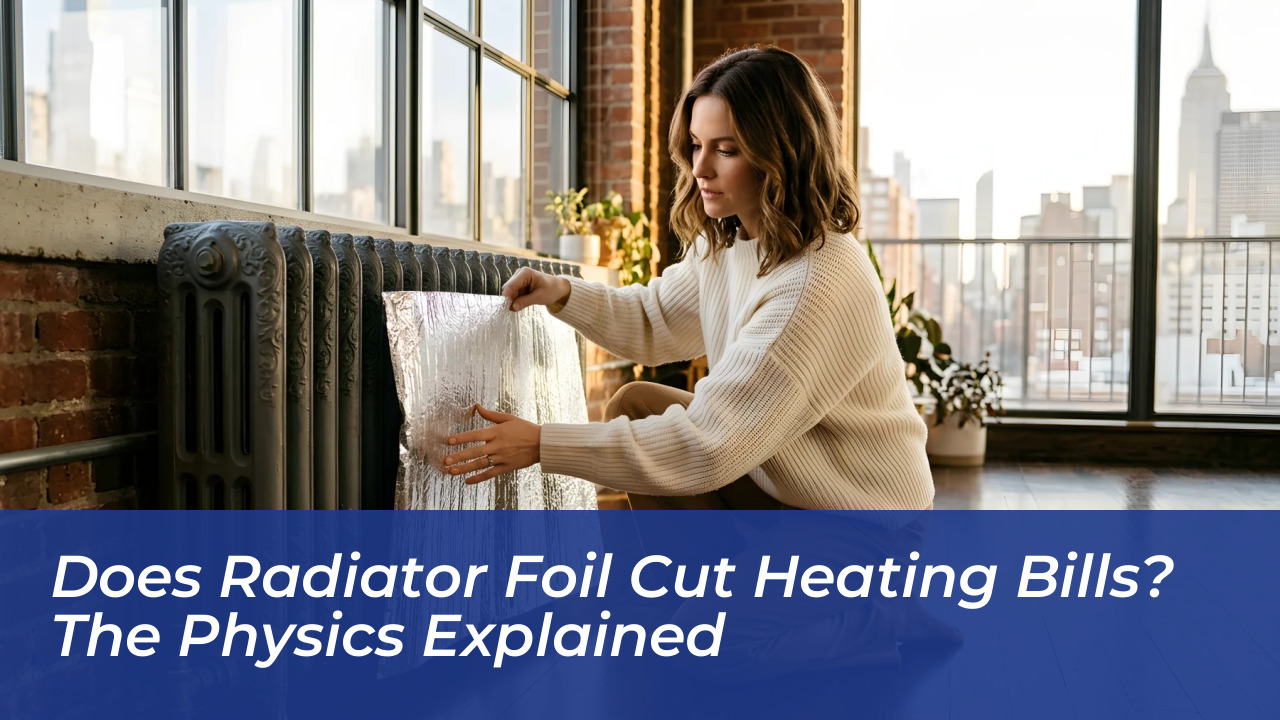
Placing aluminum foil behind radiator units can reflect radiant heat back into living spaces and lower heat loss through cold walls. However, the tactic yields significant benefits only under precise conditions. Wall-mounted hydronic and cast-iron radiators beam thermal energy in every direction. Up to half of their radiant output is directed straight into the wall behind them. If that wall faces the outdoors without modern insulation, valuable warmth bleeds straight outside instead of warming your living space.
Due to high traffic on this story, please verify you are not a bot to instantly unlock the remaining content. Takes only 5 seconds!
Verify & Continue ReadingThe core mechanism relies on infrared radiation. While radiators warm room air largely through natural convection currents, the surface facing the wall transfers pure radiant energy directly into the masonry or drywall. Installing a reflective barrier halts this conductive absorption by bouncing radiant waves back into the room envelope. Reflective barriers do not generate new heat. They simply prevent existing radiant warmth from acting as an under-wall heater for the outdoors. Home energy audits consistently show that the temperature of an uninsulated exterior wall directly behind an active radiator can rise drastically, accelerating heat conduction to the colder exterior air.
The Physics of Heat Transfer Behind Household Radiators
Standard home radiators transfer warmth through two primary mechanisms: convection and radiation. Air flows upward across the hot fins or iron sections, creating a rolling convective loop that distributes warm air across the ceiling and floor. At the same time, the unit casts off electromagnetic waves in the infrared spectrum, which warm solid surfaces upon contact.
When an exterior wall absorbs these infrared waves, thermal conduction draws the energy straight through the building materials. Solid masonry, uninsulated stone, and standard plasterboard exhibit poor thermal resistance. This means the wall rapidly dissipates that heat outdoors. Placing a reflective metal sheet interrupts this transfer by serving as a mirror for infrared wavelengths.
Why an Insulated Backing Changes Everything
Kitchen foil presents practical limitations when used alone. Thin household foil easily crinkles, tears, and oxidizes over time, which dramatically reduces its surface emissivity and reflective power. Without an insulating core, ordinary foil can also conduct heat directly if it makes contact with wall studs or radiator brackets.
Engineered radiator reflectors solve this issue by pairing polished aluminum film with a low-conductivity core, such as polyethylene foam or bubble insulation. This layered construction stops conductive contact with the wall while presenting a flat, mirror-like face toward the heat source. The trapped air layer within the foam backing provides an additional barrier against baseline conductive transfer.
Performance Comparison
- Standard Kitchen Foil: Low initial cost. It is prone to oxidation, tearing, and surface dust accumulation that rapidly diminishes radiant reflectivity over time.
- Engineered Reflector Foil: Higher durability. It incorporates a foam or bubble core that halts conductive transfer while maintaining maximum infrared reflection.
Myth-Busting Common Assumptions About Radiator Foil
A widespread misconception suggests that lining every radiator in a home with aluminum foil automatically cuts fuel consumption across the board. In reality, radiators mounted on well-insulated interior partition walls gain virtually no benefit from reflective backing. Because interior walls share thermal boundaries with adjoining heated rooms, any heat absorbed into the wall mass remains inside the thermal envelope of the building.
Another popular myth claims that reflective foil boosts the overall room air temperature faster. Foil does not increase the heat output of the boiler or accelerate convective airflow. It merely reduces the rate at which radiant heat is wasted into external masonry. If a room features double-pane windows and heavily insulated exterior cavities, the net efficiency gain from a foil barrier drops to minimal levels. A common mistake in practice is pressing reflective material flat against the hot radiator surface, which causes heat to transfer via conduction rather than reflecting via radiation.
Step-by-Step Installation for Maximum Efficiency
Achieving noticeable thermal reflection requires maintaining an uninterrupted air gap between the heating unit and the reflective sheet. If the material touches the radiator, heat moves directly across the metal through conduction, entirely defeating the purpose of a radiant shield.
- Measure the radiator footprint: Determine the height and width of the radiator, subtracting roughly two inches from every side so the foil remains invisible from standard viewing angles.
- Select your reflective medium: Use heavy-duty aluminum foil mounted to rigid cardboard or opt for purpose-built foil insulation pads with an integrated foam backing.
- Clean the wall surface: Dust and vacuum the wall area behind the radiator to ensure mounting tapes or adhesive brackets adhere firmly without dislodging.
- Position the barrier: Fix the reflective panel securely against the wall facing outward toward the radiator body, ensuring the shiny side points directly at the heat source.
- Preserve the air buffer: Verify that at least one inch of clear space separates the back of the radiator fins from the reflective surface to permit unobstructed airflow.
Inspecting the barrier annually ensures dust does not coat the reflective surface. A heavy layer of household dust acts as an absorbing skin, converting infrared waves into surface heat rather than bouncing them into the room. Evaluating whether your radiators sit on exterior masonry walls is the fastest way to decide if reflective panels make financial sense for your home.
Frequently Asked Questions
Does putting kitchen foil behind a radiator work?
Kitchen foil offers very limited benefits because it is thin, easily tears, and oxidizes quickly. Purpose-built radiator reflectors with foam insulation are far more durable and thermally efficient.
Will radiator foil save money on modern insulated homes?
No. If your home has modern cavity wall insulation or is built to current energy standards, heat is already prevented from escaping through exterior walls, rendering foil panels largely ineffective.
Do I need to leave an air gap when installing radiator reflectors?
Yes. An air gap of at least one inch is essential. If the reflective material touches the back of the radiator, heat will transfer directly through conduction rather than reflecting via radiation.
Does radiator foil help radiators on interior walls?
No. Interior walls do not lose heat to the outside environment, so installing reflective foil behind interior radiators produces zero energy savings.
How much can radiator reflectors reduce heat loss?
According to energy studies by organizations like the British Board of Agrément (BBA), engineered reflector panels can reduce heat transfer through uninsulated external walls by up to 45%.