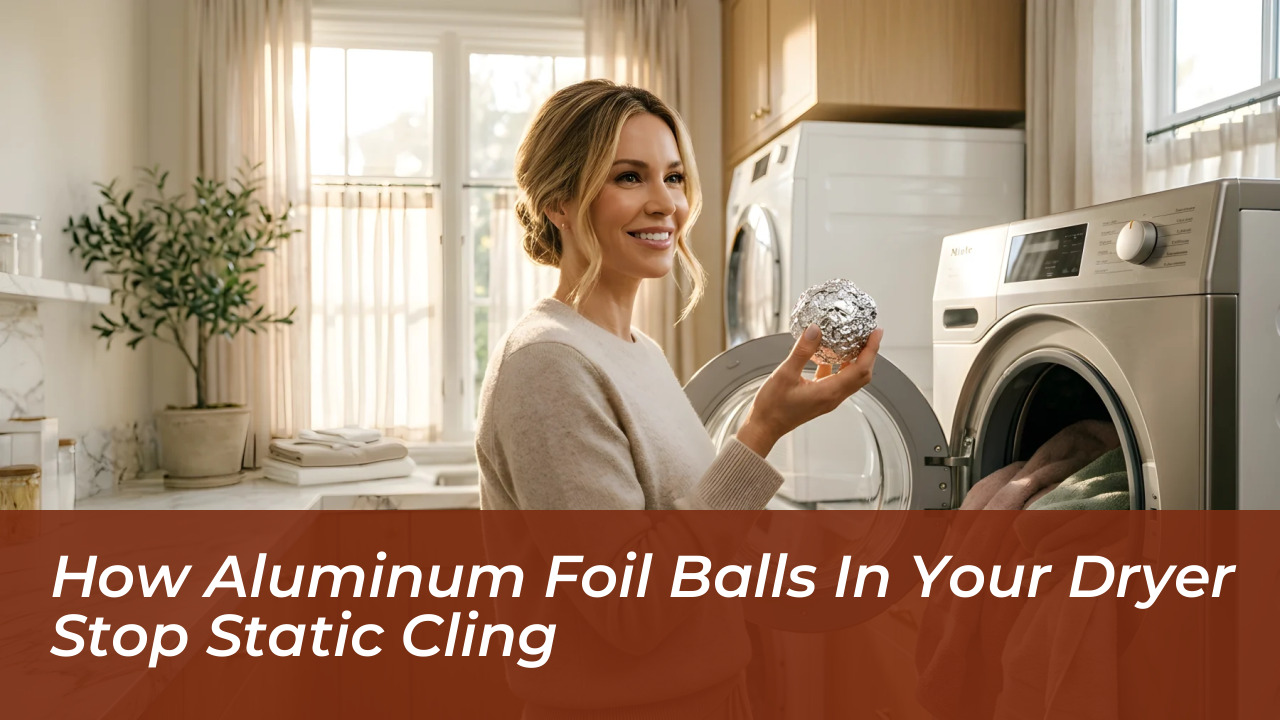
Tossing an aluminum foil ball in dryer cycles eliminates clingy static electricity without chemicals, synthetic fragrances, or disposable sheets. The technique relies on basic electrical conductivity to neutralize electrical charges as wet garments tumble and dry. By introducing a conductive metal into the tumbling cycle, loose electrons discharge continuously before fabrics can bind together.
Due to high traffic on this story, please verify you are not a bot to instantly unlock the remaining content. Takes only 5 seconds!
Verify & Continue ReadingStatic cling happens when different fabrics rub together in the dry, heated air of a clothes dryer. Synthetic fibers like polyester and nylon readily shed or attract electrons through friction, creating opposite charges between individual items. When you pull the dry load from the machine, those separated electrical charges pull garments tight against one another, creating annoying shocks and stuck fabrics. A simple ball of household foil interrupts this cycle completely, offering an inexpensive, long-lasting fix that costs pennies.
The Physics Behind Aluminum Foil and Static Neutralization
The science governing static cling is known as the triboelectric effect. As clothing items tumble together in low humidity, friction causes an imbalance of electrons between contrasting materials. Insulative fabrics cannot easily conduct electricity, meaning charges build up across their surfaces until an external contact point discharges them.
Aluminum operates as a high-efficiency electrical conductor. When a crinkled sphere of aluminum foil bounces throughout the dryer barrel, it comes into repeated physical contact with the surrounding garments. This constant contact allows the buildup of static electricity to pass safely into the metal and neutralize, keeping the clothing neutral.
Conductive metals interrupt the triboelectric sequence in tumbling laundry by absorbing surface charges before fabric fibers can establish mutual attraction. Because the foil conducts electrons rather than insulating them, static charges never accumulate to the threshold where clothes snap or stick together. This physical discharge replaces the chemical mechanism used by commercial laundry products.
Dryer Sheets vs. Aluminum Foil: What Changes for Your Laundry
Commercial dryer sheets tackle static by melting a thin layer of chemical surfactants and quaternary ammonium compounds over warm fabrics. While this fatty coating prevents charge buildup and makes towels feel smooth, it leaves a persistent residue on textiles and appliance surfaces alike. Over extended periods, commercial sheet residue can coat the moisture sensor bars inside the machine, causing the appliance to misread dryness levels and run longer than necessary. The same waxy coating also degrades the natural absorbency of cotton bath towels and workout gear.
- Static Control Mechanism: Aluminum foil uses conductive electron discharge through physical contact, whereas dryer sheets use chemical surfactants.
- Chemical Additives: Foil has zero fragrances, silicones, or chemical surfactants.
- Fabric Absorbency: Foil preserves the natural absorbency of cotton and microfiber.
- Lifespan Per Unit: Foil balls are reusable for months across dozens of cycles.
- Appliance Impact: Foil leaves no waxy film on lint screens or moisture sensors.
Switching to an aluminum foil ball in dryer loads avoids chemical buildup entirely, though it functions differently in terms of texture.
Myth vs. Reality: Does Foil Soften Fabrics?
A common misconception is that an aluminum sphere acts as a complete fabric softener. In reality, aluminum foil only addresses static cling; it does not coat fibers with softening lubricants or infuse garments with added scents. If you dry heavy cottons or stiff fabrics, foil will keep them static-free, but they will retain their natural, uncoated texture.
How to Make and Use an Aluminum Foil Dryer Ball
Creating your own static neutralizer requires basic kitchen foil and takes less than a minute. Proper preparation ensures that the foil remains intact and will not snag delicate garments during the drying cycle.
- Tear the foil: Pull off three to four square feet of standard kitchen aluminum foil.
- Compress the core: Crumple the foil tightly into a sphere, compressing it as firmly as possible with your hands until it reaches roughly the size of a golf ball or tennis ball.
- Smooth the exterior: Roll the ball firmly between your palms to press down sharp edges, ridges, or loose points. A smooth, dense surface prevents snags on delicate knits.
- Add to the drum: Place two to three prepared balls directly into the drum along with your wet laundry.
- Run the cycle: Run your regular drying program as usual. The foil balls can remain inside the dryer drum between loads, ready for the next cycle.
Over time, the tumbling action will compact the foil even further, polishing its exterior into an ultra-smooth metal pebble. The most frequent issue occurs when foil is rolled too loosely, as uncompressed edges can catch loose threads on open-weave fabrics. You can reuse the exact same foil balls continuously for six months or longer before they show wear. Once they become too lightweight or brittle, toss them into clean metal recycling bins and compress a fresh sheet to take their place.
Try this simple kitchen switch on your next load of synthetic athletic wear or fleece blankets to see how quickly static vanishes. Inspect the balls periodically to ensure the edges stay completely smooth and compact as the foil hardens over time.