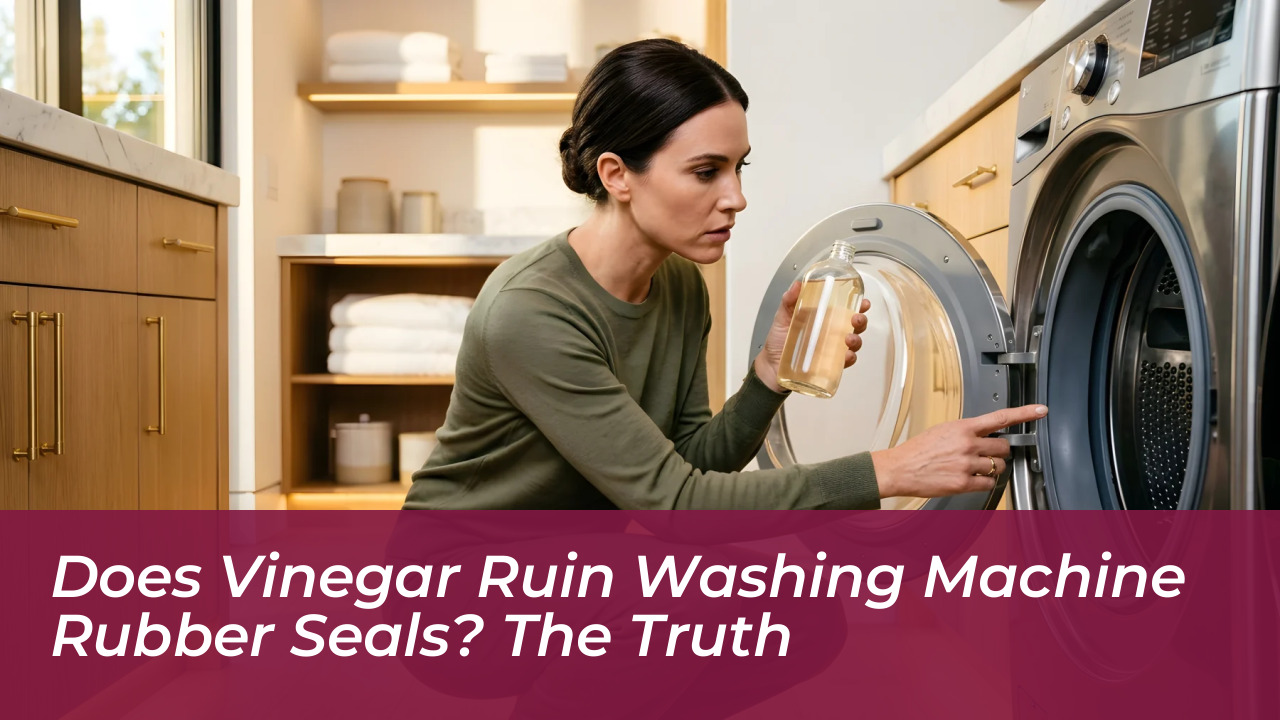
Repeated exposure to household vinegar directly degrades the synthetic rubber seals, internal hoses, and front-load door gaskets in standard washing machines. The acetic acid in distilled white vinegar slowly dissolves flexible elastomer compounds. This causes supple gaskets to turn brittle, crack, or melt into a sticky residue that prompts costly water leaks. While the popular laundry hack promises to neutralize foul odors and eliminate detergent buildup for pennies, it comes with an invisible mechanical cost. Appliance manufacturers design modern washing machines with durable polymers. However, repeated contact with acidic solutions accelerates wear on the exact barriers keeping gallons of water contained inside the drum. The chemical reaction does not ruin the machine overnight. Instead, the degradation happens silently with each laundry cycle, starting where pooling liquid meets the door boot.
Due to high traffic on this story, please verify you are not a bot to instantly unlock the remaining content. Takes only 5 seconds!
Verify & Continue ReadingThe Chemistry of Rubber Seals and Acetic Acid
Household distilled white vinegar contains roughly 5% to 8% acetic acid. While this concentration seems gentle enough for cooking and window cleaning, prolonged contact with synthetic rubber compounds like nitrile, natural rubber, and certain polyacrylate seals triggers a process known as acid esterification and polymer degradation.
The acid draws out plasticizers that give the rubber gasket its flexibility. When these chemical bonding agents leach out, the rubber loses elasticity, hardens, and develops micro-fractures under the mechanical stress of spin cycles. Continuous contact with dilute acetic acid breaks down elastomer polymers. This transforms flexible door bellows into cracked, leaking hazards. Front-load washers are particularly vulnerable because water and laundry additives frequently pool inside the deep folds of the rubber door bellow. If vinegar remains trapped in those crevices between washes, the constant acidic environment steadily erodes the seal.
Myth Versus Reality: Why the Vinegar Hack Spread
The widespread belief that vinegar serves as an all-purpose laundry miracle stems from genuine short-term benefits. Acetic acid genuinely strips away detergent scum, cuts through hard water minerals, and eliminates mildew smells caused by excessive fabric softener usage. The misconception lies in assuming that an effective home cleaner is automatically safe for appliance engineering.
Consumer testing by independent product safety researchers has consistently revealed that using vinegar as a permanent fabric softener alternative creates unneeded wear on internal plumbing. Drain pumps, internal inlet hoses, and drive-shaft seals rely on rubber gaskets to maintain water-tight barriers. Stripping mineral deposits with an unbuffered acid repeatedly exposes these internal parts to premature corrosion and seal failure.
Comparing Laundry Additives on Washer Components
Understanding which household cleaners safely maintain your machine helps avoid expensive repair calls. The breakdown below outlines how common additives interact with rubber seals and mechanical parts.
- Distilled White Vinegar: Gradually degrades natural rubber, weakens plasticizers, and causes cracking over repeated cycles.
- Citric Acid Powder: Safely descales drum surfaces and heating elements during empty wash cycles without lingering corrosive residue.
- Commercial Washer Cleaners: Formulated with buffered surfactants and enzymes designed to dissolve scum while preserving elastomer seals.
- Chlorine Bleach: Sanitizes mold effectively in diluted amounts, but repeated overdosing dries out rubber and accelerates gasket decay.
Safer Ways to Clean Your Washing Machine and Soften Fabrics
Protecting your appliance does not mean enduring foul odors or hard water buildup on your clothes. Safer, non-destructive alternatives deliver the same freshening results without threatening structural rubber components.
Step-by-Step Maintenance Protocol
- Switch to Citric Acid for Descaling: Add two tablespoons of powdered food-grade citric acid directly into an empty drum once a month. Run a dedicated tub-clean cycle on high heat to strip limescale safely.
- Wipe Down the Door Gasket: After every wash day, use a soft microfiber cloth to dry the rubber folds of the front-load seal, preventing standing water and mold development.
- Use Wool Dryer Balls: Replace liquid fabric softeners and acid rinses with reusable wool balls in the dryer to naturally soften fibers and reduce static without adding residues to your washer.
- Leave the Door Ajar: Keep the washer door cracked several inches between loads to circulate fresh air and prevent moisture-loving bacteria from colonizing the gasket.
When an existing odor problem requires immediate cleaning, run an empty cycle using an EPA-registered washing machine cleaner tablet formulated to break down residue while neutralizing appliance odors safely.
Have you noticed drying or stiffness in your washing machine gasket? Inspect the folds of your front-load door bellow today to catch early signs of cracking or wear before a leak starts. Share your favorite machine-safe laundry routines and leave your thoughts in the comments below!
Frequently Asked Questions
Does vinegar fully dissolve washing machine rubber seals?
No, vinegar does not completely dissolve rubber in normal household use. Instead, it causes minor to moderate degradation, breaking down plasticizers and causing the rubber to become brittle, stiff, and prone to cracking over prolonged, repeated exposure.
Can I use vinegar to clean my washing machine occasionally?
Occasional, highly diluted use of vinegar is generally less damaging, but frequent or full-strength exposure accelerates seal wear. If you want to descale your washer safely without risking your rubber gaskets, food-grade citric acid powder is a much safer alternative.
Which types of rubber are most vulnerable to acetic acid?
Natural rubber, nitrile (Buna-N), and polyacrylate seals are more vulnerable to acetic acid and show moderate to severe degradation over time. In contrast, materials like EPDM and silicone exhibit much higher chemical resistance.
What are the symptoms of vinegar damage on a door gasket?
Symptoms include surface discoloration, a sticky residue, stiffening or loss of elasticity, small micro-cracks in the folds of the bellow, and eventually active water leaks during high-speed spin cycles.
How can I safely remove mildew and limescale without vinegar?
To safely descale your machine, use powdered citric acid during an empty hot water cycle. To combat mildew, wipe down the rubber door boot with a mild dish soap solution and a microfiber cloth after every laundry day.