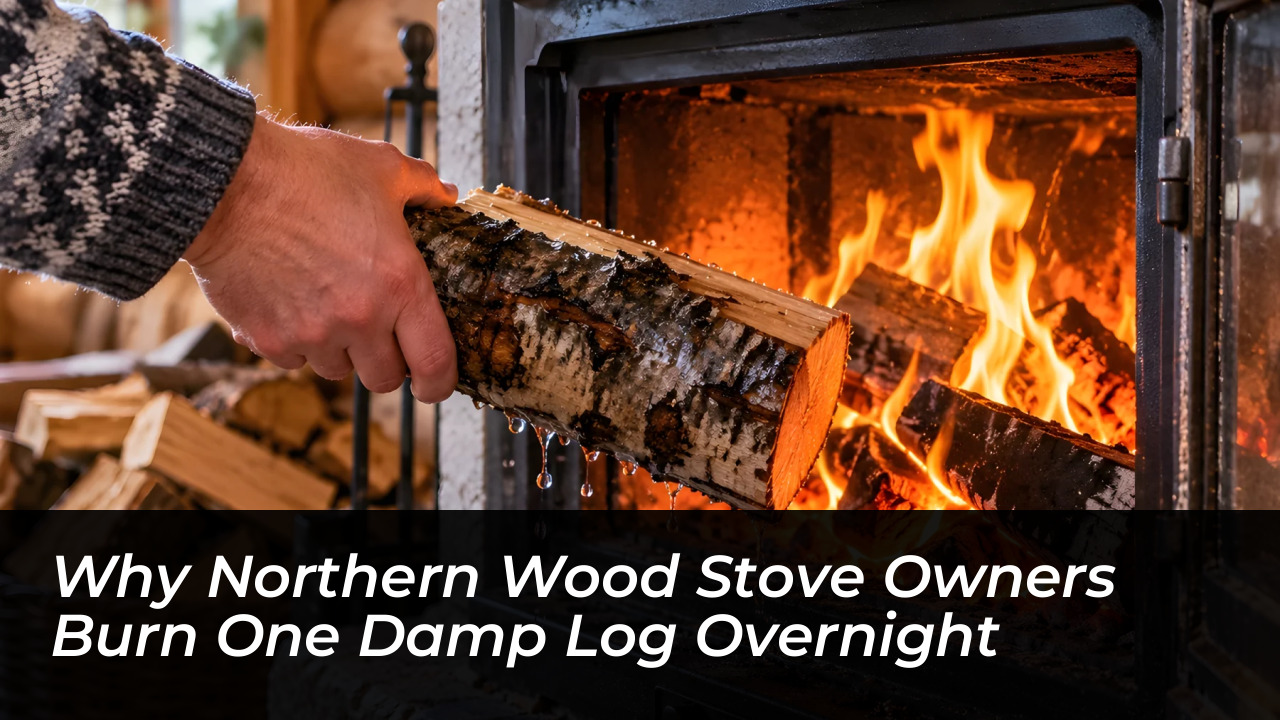
Placing a damp piece of firewood into a burning stove sounds counterintuitive. After all, standard heating wisdom strictly requires dry, split wood with a moisture content under 20% for efficient burning. Yet, seasoned stove tenders in freezing northern climates deliberately place a single unseasoned or slightly moist log onto a bed of hot coals to sustain overnight heat and protect delicate masonry from thermal shock.
Due to high traffic on this story, please verify you are not a bot to instantly unlock the remaining content. Takes only 5 seconds!
Verify & Continue ReadingWhile standard dry cordwood ignites immediately, generates peak heat output, and burns through its fuel load in just a couple of hours, that intense spike often sends valuable thermal energy straight up the flue. This leaves the firebox completely cold long before morning. By contrasting the erratic surge of fast-burning fuel with a sustained smolder, traditional northern heating practices solve the classic winter problem of waking up to freezing indoor temperatures.
How Controlled Moisture Regulates Combustion and Extends Heat
When placed over a deep bed of glowing coals, a log carrying residual moisture cannot flare up immediately. The latent water trapped within the wood fibers must slowly evaporate before full ignition can occur. This natural process slows the flame rate and allows the timber to smolder gradually through the night.
This steady release ensures that the thermal mass of a traditional brick or stone stove absorbs heat continuously rather than confronting an abrupt thermal wave. Instead of replenishing the firebox every few hours, experienced woodburners rely on this calculated delay to maintain a stable, lingering warmth across long winter nights. Placing an unseasoned log into an established coal bed serves as a natural damper, trading an aggressive, short-lived flame for sustained radiant heat.
Crucially, this method relies entirely on fuel dampness rather than waterlogged timber pulled directly from a snowdrift. A log that is merely damp will gently simmer on a vigorous bed of embers; a dripping, saturated log will instantly extinguish the coals, fill the room with acrid smoke, and stall the chimney draft.
The Aspen Secret: Thermal Impact on Flue Buildup
Traditional woodcutters frequently reserve specific timber species for this overnight technique, with aspen serving as the historical favorite. When an aspen log with modest moisture content burns slowly at elevated temperatures, the steady release of vapor interacts directly with existing residue on the chimney walls.
The moisture in the rising exhaust softens hard, glazed soot and brittle deposits inside the flue liner. As the chimney cools and heats across successive burns, these softened layers loosen and drop harmlessly down into the cleanout door.
Flue Maintenance and Creosote Reality Checks
Despite its traditional reputation, vapor-assisted soot loosening is never an absolute replacement for certified chimney sweeps and mechanical flue cleaning. Heavy creosote accumulations remain highly combustible, and relying solely on timber tricks to clear a blocked passage risks serious structural fires.
- Inspect chimney draft conditions thoroughly before attempting to slow down combustion.
- Avoid using resinous softwoods like unseasoned pine, which generate heavy tar deposits.
- Ensure active coals are red-hot throughout the bed to prevent total flame collapse.
- Clear fallen soot deposits from the cleanout box immediately after burning aspen.
Protecting Masonry Heaters Against Damaging Heat Spikes
Beyond extending heating cycles, damp wood acts as a protective buffer for the stove itself. Firing an oversized load of bone-dry hardwood produces an explosive surge of BTUs that subjects mortar joints and firebricks to immense thermal shock. Over repeated seasons, these violent swings from ice-cold room temperatures to extreme heat create hairline cracks throughout structural masonry.
A slower, tempered combustion curve allows the brickwork to expand evenly, preserving the structural integrity of the hearth. Below is a performance profile comparing fuel loading strategies.
Firing Method Performance Profile
- Exclusively Dry Cordwood: Rapid ignition, intense temperature spikes, brief burn duration, and higher flue heat loss.
- Dry Load with One Damp Log: Muffled ignition, steady overnight smolder, prolonged heat retention, and reduced thermal shock.
Safety Protocols: When to Avoid Using Damp Firewood
Precision matters when altering wood stove airflow and fuel quality. This folk method functions effectively only within large thermal-mass brick stoves or heavy radiant heaters that possess sufficient residual draft to expel moisture cleanly.
Modern high-efficiency catalytic stoves, pellet burners, and compact steel woodstoves require strict adherence to manufacturer guidelines. Introducing wet wood into modern secondary-combustion systems will clog catalytic combustors, foul glass doors, and choke precision air intakes. Managing winter heat requires balancing raw warmth against stove preservation.
Frequently Asked Questions
Can I use any type of damp wood overnight?
No. Traditional methods rely on hardwoods or specific species like aspen with modest moisture content. Never use resinous softwoods like pine, which create hazardous creosote tar buildup.
Will a wet log put out my fire?
If the log is completely waterlogged or saturated, it will smother the embers, produce heavy smoke, and kill the fire. The trick requires a merely damp log placed over a deep, established bed of red-hot coals.
Does this technique replace chimney sweeping?
Absolutely not. While water vapor from the wood can help soften minor soot layers, it does not remove heavy creosote. Regular professional chimney inspections and cleanings remain essential for safety.
Why do modern stoves react poorly to damp wood?
Modern high-efficiency and catalytic wood stoves operate at precise temperatures with restricted airflow. Damp wood introduces excess moisture that cools the firebox, fouls catalytic combustors, and darkens glass doors.
How does this protect masonry stoves?
Massive brick and stone heaters are vulnerable to thermal shock from sudden temperature spikes. A damp log slows the initial ignition, creating a gradual heat curve that prevents cracking in mortar and firebricks.