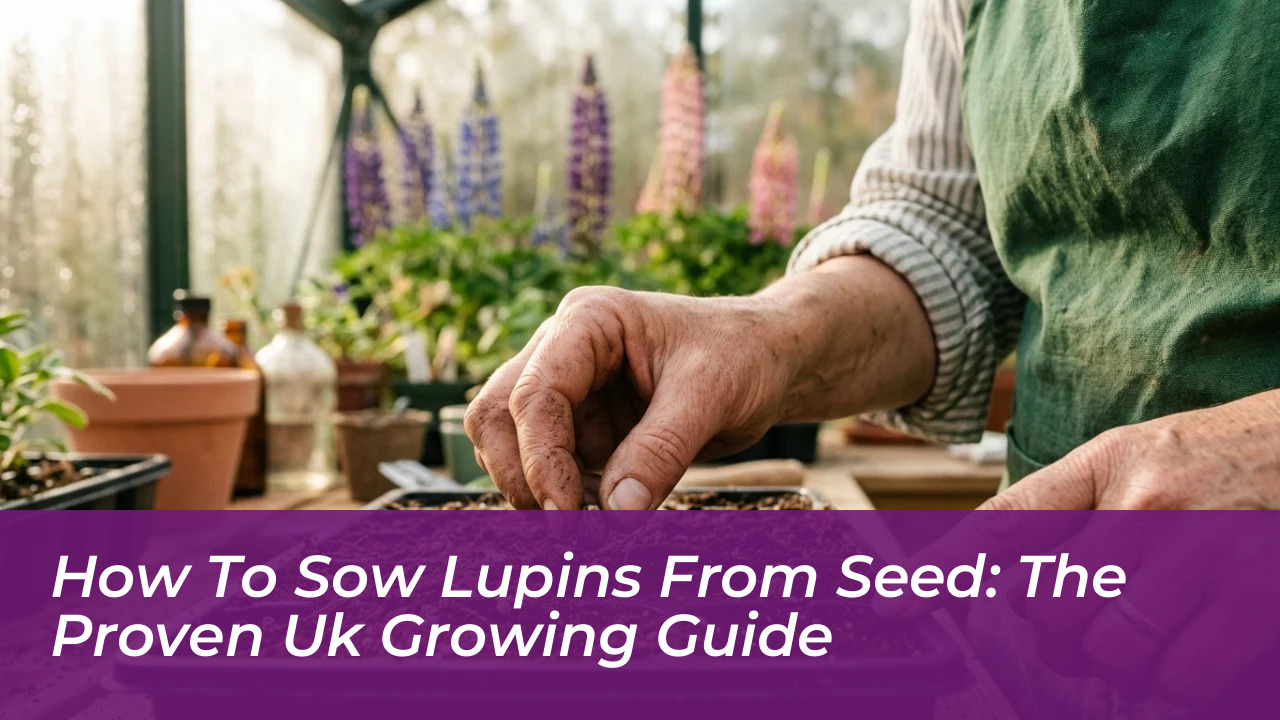

Mastering how to sow lupins from seed for UK gardens comes down to breaking through a rock-hard seed coat. You can then sow them in late winter indoors or early autumn in a cold frame. By chipping or soaking the tough outer shell and providing temperatures around 15°C to 18°C, germination occurs reliably within 10 to 21 days. Lupins (Lupinus) rank among the most striking staples of the classic British cottage garden, prized for their imposing architectural flower spires. While mature potted plants command high prices at garden centres, a single packet of seed yields dozens of vigorous plants that quickly establish deep taproots. Success hinges entirely on understanding how to bypass the seed’s natural defence mechanisms.
Overcoming Seed Dormancy: The Scarification Secret
Wild lupin species evolved tough, water-impermeable seed coats to survive severe winters. Modern garden cultivars retain this trait. Sowing them directly into damp compost without mechanical abrasion often leads to erratic emergence or seed rot. Gardeners achieve the highest germination rates through physical scarification or heat conditioning.
Lightly rubbing one edge of the seed against fine sandpaper or nicking the coat with a sharp blade allows water to penetrate the embryo. Alternatively, placing seeds in a heatproof dish and soaking them in warm water for 24 hours achieves a similar swelling effect. Any seed that fails to swell within 24 hours simply requires a gentle mechanical nick before being returned to the water.
Busting the Direct-Sowing Myth
A widespread misconception suggests that hardy perennials should always be scattered directly onto outdoor borders where they are meant to flower. In the variable UK climate, direct outdoor sowing leaves expensive seeds vulnerable to cold, waterlogged clay soil and ravenous slugs. Propagating in controlled modular trays preserves seed stocks and builds root density before plants face garden conditions. This controlled start ensures each specimen develops a strong vertical taproot undisturbed.
Step-by-Step Guide: Sowing Lupins in the UK
Because lupin seedlings resent root disturbance, container choice is critical from the outset. Deep root trainers or individual 9cm pots give taproots room to expand downwards without spiralling.
- Prepare the containers: Fill deep modules or pots with a free-draining, peat-free seed compost mixed with roughly 20 percent horticultural grit or perlite.
- Sow to depth: Place one scarified seed per module, pressing it down to a depth of approximately 5mm to 10mm. Cover lightly with sieved compost or vermiculite.
- Water carefully: Moisten the compost from below by standing trays in a water tray until damp, avoiding heavy surface water that might dislodge seeds.
- Maintain temperature: Keep trays in an unheated greenhouse, cold frame, or cool indoor windowsill out of direct midday sun at 15°C to 18°C.
- Harden off: Once true leaves emerge and the risk of harsh frost recedes, acclimatise plants outdoors gradually before planting out in free-draining soil.
Optimal Timings and Environmental Requirements
According to cultivation standards supported by bodies such as the Royal Horticultural Society (RHS), lupins tolerate cooler conditions than tender annuals. Sowing in January or February under cover often yields blooms by late summer. Autumn-sown seedlings build superior root structures to power early, taller flower heads the following year.
| Factor | Cultivation Standard |
|---|---|
| Sowing Depth | 5mm to 10mm under fine compost |
| Germination Temp | 15°C to 18°C |
| Germination Window | 10 to 21 days after scarification |
| Optimal Soil pH | Slightly acidic to neutral (pH 6.0 to 7.0) |
| Sunlight Needs | Full sun to partial shade |
| Watering Regime | Moist but strictly well-drained |
Soil chemistry plays a hidden role in long-term lupin health across Britain. Alkaline or heavy chalk soils trigger nutrient lockouts, causing foliage to yellow through iron chlorosis. Selecting a sunny, well-draining garden spot with neutral to slightly acidic soil prevents these deficiencies before planting occurs.
Shielding Young Seedlings from Garden Pests
Young lupin foliage is exceptionally soft, making emerging stems a preferred target for garden slugs and snails. Setting seedlings out only when they possess several sets of true leaves dramatically improves their survival rate. The lupin aphid represents another serious threat in the UK, capable of colonising flower spikes in dense clusters. Inspecting the undersides of leaves early in the season and washing off early infestations keeps flower development on track without relying heavily on chemical treatments.
Frequently Asked Questions About Growing Lupins
Do lupin seeds need to be soaked before planting?
Yes. Soaking lupin seeds in warm water for up to 24 hours helps soften their hard outer seed coat, allowing moisture to reach the embryo and triggering faster, more reliable germination.
When is the best time to sow lupin seeds in the UK?
You can sow them indoors in late winter (January to February) for summer blooms, or in early autumn in a cold frame to establish robust root systems for the following spring.
Can I sow lupin seeds directly into garden soil?
While direct sowing is possible, it carries higher risks in the UK due to unpredictable wet weather, cold clay soils, and slugs. Container propagation gives young taproots a protected start.
What type of soil do lupins prefer?
Lupins thrive in slightly acidic to neutral soils (pH 6.0 to 7.0) that are free-draining. Heavy, alkaline, or waterlogged clay soils can cause root rot and nutrient deficiencies.
Why are my lupin leaves turning yellow?
Yellowing leaves often indicate iron chlorosis caused by alkaline soils, or stress from overwatering. Ensure your plants sit in well-draining, slightly acidic ground.