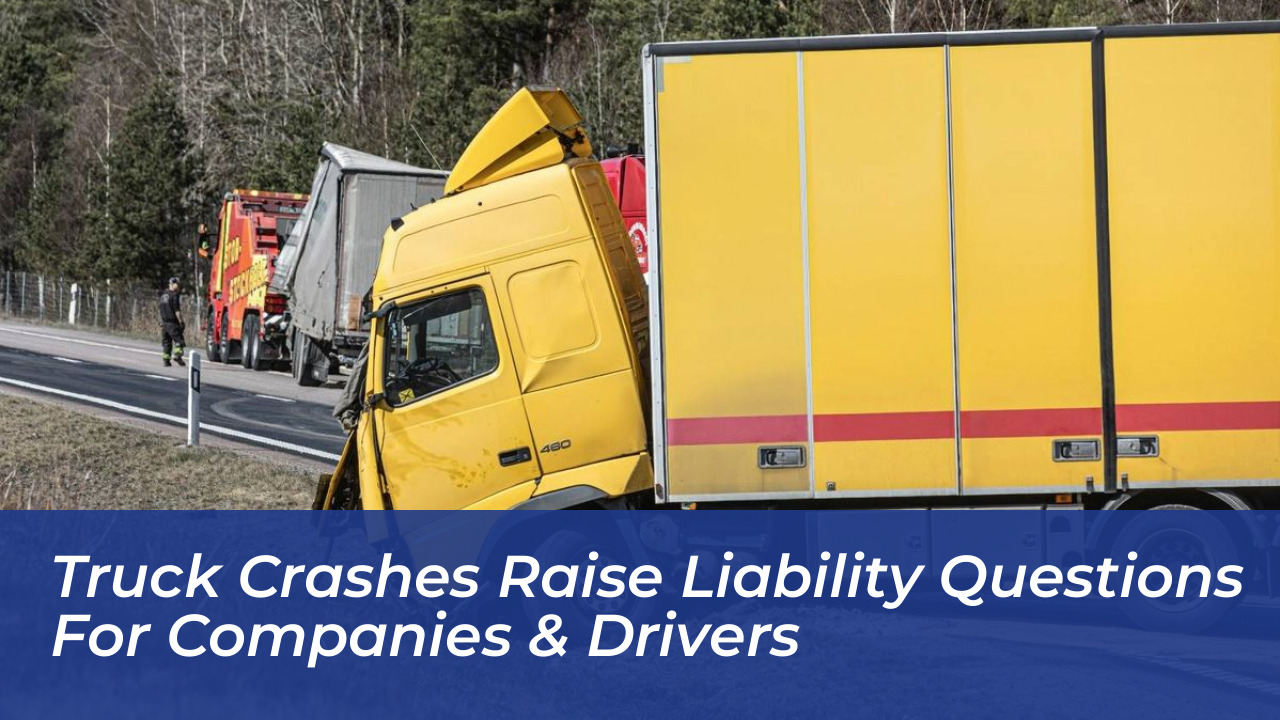

Commercial truck crashes trigger complex investigations involving drivers, trucking companies, vehicle owners, maintenance providers, and cargo handlers, particularly when mechanical failures or unsafe operating practices contribute to collisions. Reports published between October 14 and October 17, 2026, examine how investigators determine responsibility, evaluate insurance coverage, and apply state and federal safety rules in truck accident claims.
Unlike many passenger vehicle collisions, commercial truck accidents can involve several potentially responsible parties and multiple insurance policies. A report published by PR Newswire on October 15, 2026, describing a HelloNation article featuring Syracuse, New York, personal injury attorney Joe Stanley, identifies overlapping responsibilities and separate insurance coverage as factors that can prolong liability investigations and claims negotiations.
The reports also highlight the potential severity of truck collisions. Commercial vehicles can cause substantial injuries and property damage because of their size, potentially increasing the value of claims and prompting insurers to scrutinize liability and damages more closely.
Multiple Parties in Commercial Truck Accidents
Behind nearly every commercial truck on the road is an entire network of companies, contractors, logistics providers, and safety regulations. When a serious trucking accident occurs, responsibility often extends far beyond the driver sitting behind the wheel. That issue has drawn renewed attention following legal debates and recent rulings allowing certain negligence claims against freight brokers to move forward.
In many trucking accident cases, crash investigators and attorneys examine more than just the driver’s actions. A comprehensive review typically encompasses the trucking company’s hiring practices, maintenance records, cargo loading procedures, safety history, and relationships with freight brokers or outside contractors. Understanding these different players helps explain why truck accident investigations are frequently intricate and involve shared liability.
When Truck Drivers May Be Held Liable
Truck drivers may be directly responsible for negligent driving during a crash, including speeding, distracted driving, impairment, fatigue, or failing to properly inspect the truck. Driver fatigue remains one of the trucking industry’s biggest safety concerns.
Federal Hours-of-Service (HOS) rules limit how long commercial drivers can stay on the road without rest, but violations still occur. After an accident, investigators review electronic logging devices, fuel receipts, dispatch records, and cell phone data to determine whether a driver exceeded legal driving limits or faced pressure to meet unrealistic delivery schedules.
The Role of Motor Carriers and Trucking Companies
The trucking company, legally referred to as the motor carrier, is often a central entity in an accident investigation. Under federal regulations enforced by the Federal Motor Carrier Safety Administration (FMCSA), carriers are responsible for hiring qualified drivers, monitoring safety performance, maintaining trucks and trailers, and ensuring compliance with safety laws.
- Ensuring driver qualification and proper training records.
- Maintaining strict adherence to HOS and safety rules.
- Regularly inspecting and repairing fleet vehicles and trailers.
- Supervising dispatch practices to prevent dangerous scheduling.
When trucking companies fail to supervise drivers or maintain equipment properly, they may face direct liability beyond the actions of the driver. Patterns involving failed inspections or safety violations can indicate broader operational negligence.
Freight Brokers, Cargo Loaders, and Maintenance Providers
Commercial shipping relies heavily on external entities that can also share fault:
Freight Brokers
Brokers coordinate shipments by connecting companies needing freight moved with trucking companies. Legal teams examine whether a broker negligently selected a carrier with a documented pattern of safety problems or prior crashes.
Cargo Shippers and Loaders
Improperly loaded or overloaded trailers increase stopping distances and rollovers. Shippers, warehouse operators, and third-party loading contractors can share liability if shifting or poorly balanced freight causes a loss of vehicle control.
Maintenance Contractors
Commercial trucks experience massive strain on brakes, tires, and steering systems. If a third-party maintenance shop failed to identify or repair a dangerous safety issue, that business may be held liable for mechanical failures.
Comparative Negligence and Accident Investigations
In many jurisdictions, injury victims may still qualify for compensation even if they were partly responsible for the crash, subject to comparative negligence rules. Courts assign percentages of fault, which can reduce recovery proportionally. Thorough site investigations-including the retrieval of electronic data recorder (“black box”) metrics, skid mark analysis, and witness accounts-remain vital for establishing the accurate sequence of events.
Frequently Asked Questions About Truck Crash Liability
Can a trucking company be held liable if the driver caused the crash?
Yes. Under the legal doctrine of respondeat superior, employers are often responsible for the actions of employees acting within the scope of their employment. Additionally, companies can face direct liability for negligent hiring, training, or retention.
Are freight brokers responsible for truck accidents?
Potentially. While brokers do not operate the trucks, legal claims can arise if a broker negligently hired a motor carrier with a known history of severe safety violations and out-of-service orders.
What evidence is most critical in a truck accident investigation?
Critical evidence includes the truck’s electronic control module (ECM) or black box data, electronic logging device (ELD) records, maintenance logs, driver qualification files, dispatch communications, and post-crash inspection reports.
How do federal regulations impact civil truck accident lawsuits?
Federal Motor Carrier Safety Administration (FMCSA) regulations establish baseline safety standards for commercial operations. While violating these rules does not automatically establish civil liability in every state, it provides substantial evidence of negligence.
What should injured victims avoid doing after a commercial truck crash?
Victims should avoid giving recorded statements to insurance adjusters, signing broad medical or liability releases, or accepting early settlement offers before a complete investigation into all potentially responsible parties has been conducted.