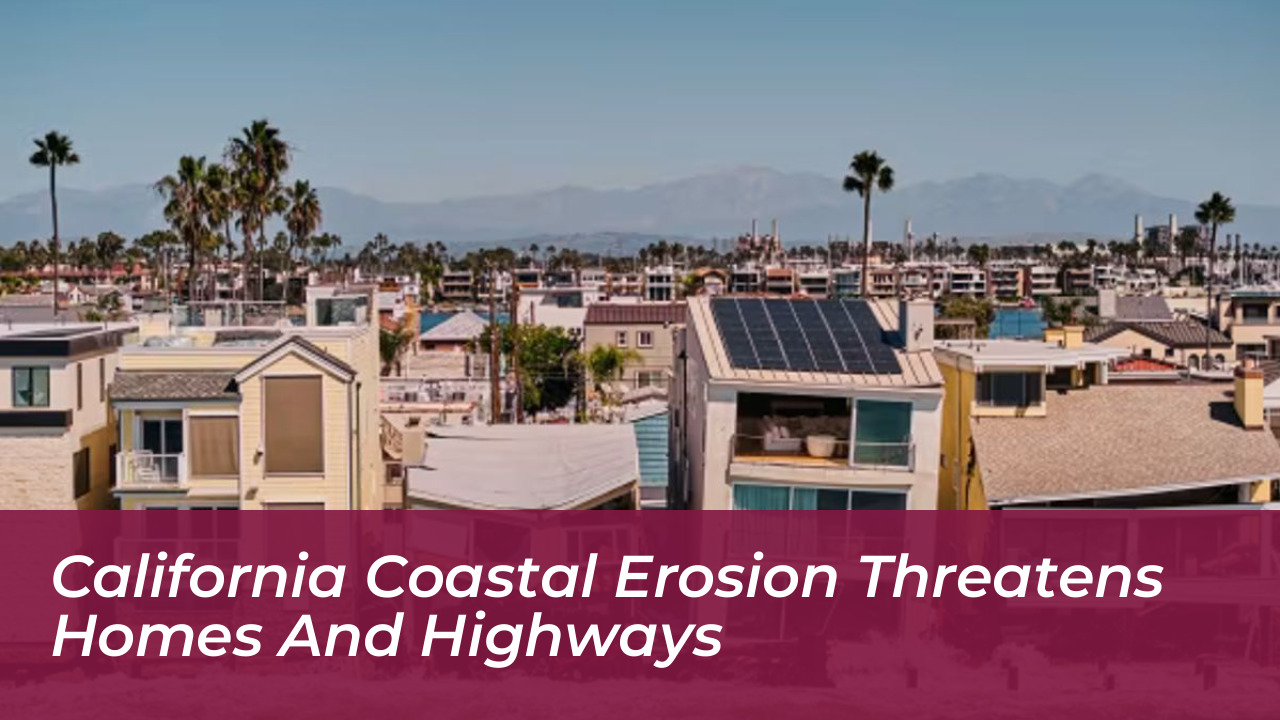

Southern California’s coastline is suffering severe erosion and flooding. Powerful surf, unusually high tides, and storm surges threaten beachfront homes, roads, and public infrastructure ahead of an expected strong El Niño. Damage across Long Beach, Orange County, Malibu, and San Diego has prompted officials to reinforce beaches, assess unstable cliffs, and consider additional flood protection as further coastal flooding remains a critical threat.
More than a dozen homes along the Long Beach shoreline have been lost. Sections of the boardwalk and the Pacific Coast Highway (PCH) have suffered substantial damage. Recent flooding also affected Newport Beach, where local authorities are actively preparing for additional high tides and worsening shoreline conditions.
On October 9, Long Beach resident Shawn Curtis awoke at approximately 3:30 a.m. to find the beach and boardwalk outside his two-story apartment building gone. Seawater surrounded the structure, and the building was tilting toward the ocean.
The Compound Threat of a Super El Niño
Dozens of iconic locations along the California coast are bracing for a severe compound threat as forecasts point toward a Super El Niño. The region faces an unprecedented convergence of rapid beach erosion, dangerous cliff collapses, and severe coastal flooding. Experts warn this could permanently alter the region’s shoreline.
“Powerful waves can accelerate erosion of beaches, sea cliffs, and bluffs, and cause coastal flooding; and strong El Niño conditions can raise sea level on the California coast by six to 13 inches,” said Adam Young, a researcher at the Scripps Institution of Oceanography at UC San Diego. “Combined, these factors increase coastal erosion and flooding during El Niño events, which can threaten public parks, beaches, critical infrastructure, highways, and homes.”
Oceanographer Michael Jacox noted that an underwater Kelvin wave associated with El Niño is expected to reach California. This wave could add another 6 to 12 inches to the temporary sea level rise caused by El Niño. Over the past century, Southern California sea levels have risen 8 to 12 inches, making the coastline increasingly vulnerable.
Infrastructure and Property Damage Statewide
The destructive force of high surf and heavy rainfall has triggered widespread structural failures from Northern County down to San Diego:
- Malibu: High surf and coastal erosion opened a massive 30-foot-by-30-foot sinkhole. This collapsed the driveway and front porch of actor Nicolas Cage’s Malibu mansion, ruptured a gas main, and forced local evacuations.
- San Clemente: The city estimates a sand deficit of about 3 million cubic yards. This requires extensive sand nourishment efforts and threatens a major railway line.
- San Diego & Interstate 5: San Onofre State Beach faces ongoing erosion that is slowly stripping away the sandstone supporting Interstate 5. Oceanside experiences up to 6.6 feet of beach retreat annually.
- Carlsbad: At Tamarack Beach, coastal erosion caused the sandy beach to disappear almost overnight. It left behind exposed cobblestones and forced ocean water into an adjacent parking lot.
Government Response and Emergency Measures
In response to the escalating crisis, California declared a preemptive state of emergency to mobilize disaster relief and first responders ahead of anticipated winter storms. The National Oceanic and Atmospheric Administration’s (NOAA) Climate Prediction Center reported a 97% chance of a strong or very strong El Niño.
Local municipalities are attempting to fortify vulnerable areas. The San Diego City Council adopted its Coastal Resilience Master Plan, identifying critical project sites like La Jolla Shores, Tourmaline Surf Park, Mission Beach, Ocean Beach, and Sunset Cliffs. Meanwhile, cleanup crews and engineering teams are installing protective sand berms along the shoreline of Mission Bay and other beaches to absorb heavy surf and reduce structural damage.
Frequently Asked Questions
What is causing the severe coastal erosion in California?
Coastal erosion is driven by long-term sea-level rise, unusually high tides (king tides), powerful storm surges, and a strong El Niño weather pattern that temporarily elevates ocean heights.
How much can El Niño raise sea levels along the California coast?
Experts from the Scripps Institution of Oceanography indicate that strong El Niño conditions, combined with underwater Kelvin waves, can temporarily raise sea levels along the California coast by 6 to 13 inches.
Which infrastructure projects and highways are most at risk?
Key infrastructure, including sections of the Pacific Coast Highway (PCH), Amtrak’s Pacific Surfliner rail line, and parts of Interstate 5 near San Onofre, faces ongoing disruptions and structural threats from sliding bluffs and encroaching waves.
How are local cities responding to the crisis?
Cities are declaring states of emergency, building sand berms, planning beach nourishment projects to move millions of cubic yards of sand, and advancing coastal resilience master plans to protect vulnerable neighborhoods.
Are beachfront homes safe from upcoming winter storms?
Many beachfront homes and cliffside properties located directly along vulnerable shorelines in Long Beach, Malibu, and San Diego face severe risks of foundation damage, cliff collapse, and structural loss.