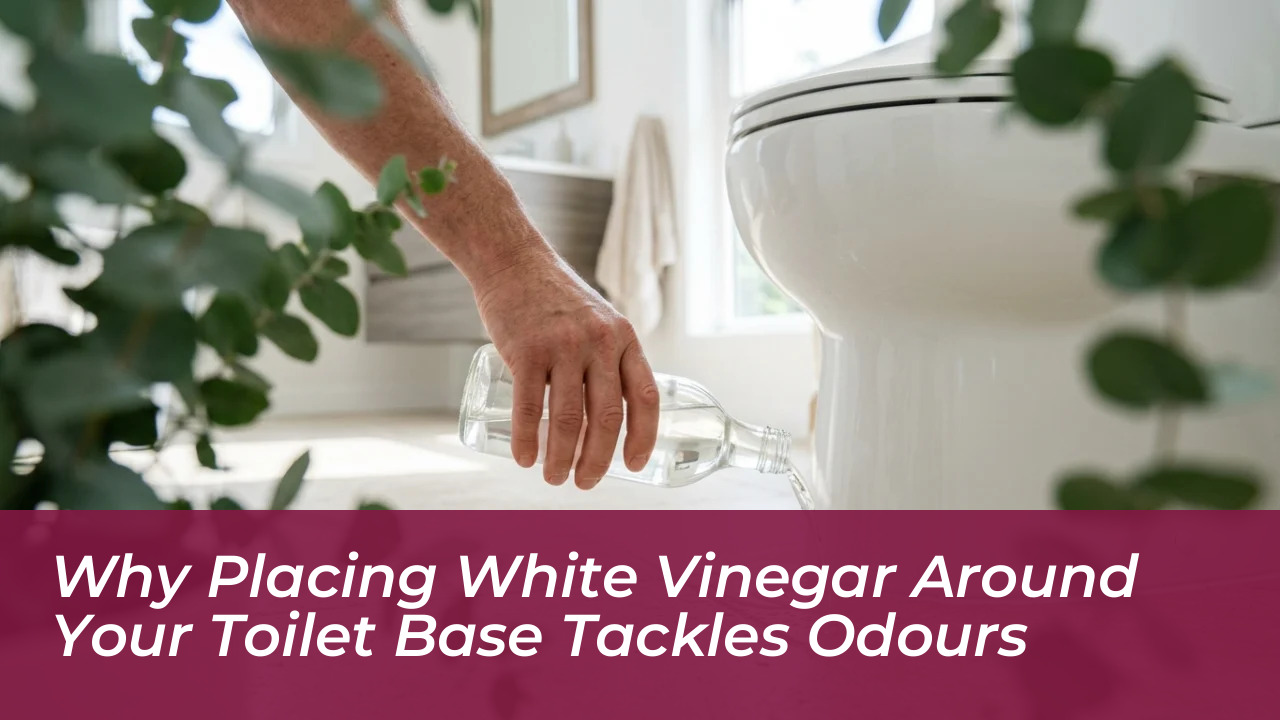

Applying white vinegar cleaning solutions around the base of a toilet neutralises persistent bathroom odours and lifts accumulated grime within 10 to 15 minutes. This affordable domestic staple uses natural acetic to break down dirt without corrosive synthetic additives. The porcelain base of a toilet often harbours invisible residue, moisture build-up, and unpleasant smells that regular floor mopping fails to resolve. By targeting this high-contact area directly with standard white vinegar, households can maintain fresh sanitary ware while avoiding expensive specialist cleaners.
The Science of Acetic in Bathroom Sanitation
White vinegar derives its cleaning efficacy from acetic , a natural compound capable of breaking down organic grime and neutralizing alkaline odours. Moisture frequently gathers at the floor seal of the pan, leading to stubborn discolouration and stale bathroom smells. While standard surface sprays often mask unpleasant scents temporarily, the natural acidity in vinegar works by dissolving mineral scale and organic deposits. This makes it an ideal supplementary maintenance step between deeper bathroom cleans.
The active component in white vinegar, acetic , helps lift stubborn dirt and counteract lingering toilet aromas without wearing down standard fixtures. Routine use prevents damp spots from settling into dark, stubborn stains around porcelain edges.
Common Myth: Is Vinegar a Complete Replacement for Disinfectant?
A widespread misconception is that household vinegar can completely replace industrial-grade disinfectants and deep sanitising agents. In reality, while vinegar excels at routine upkeep, lifting surface debris, and deodorising, it serves as a supportive maintenance tool rather than a certified clinical disinfectant. The solution provides a gentle, non-abrasive method to keep bathroom fixtures in prime condition without causing surface erosion over time.
| Feature | White Vinegar Performance |
|---|---|
| Primary Active Compound | Acetic |
| Application Dwell Time | 10 to 15 minutes |
| Core Practical Benefits | Lifts grime, reduces odours, curbs damp stains |
| Fixture Surface Safety | Non-damaging on standard bathroom materials |
| Hazardous Combinations | Never combine with bleach or chlorine |
How to Apply White Vinegar to the Toilet Base
Treating the perimeter of your toilet requires minimal equipment and takes only a few straightforward steps:
- Clear the area: Wipe away any loose dust, stray hairs, and dry surface dirt around the base of the toilet before treatment.
- Apply the vinegar: Dampen the floor perimeter and porcelain base thoroughly with pure white vinegar.
- Allow dwell time: Leave the liquid to sit undisturbed for 10 to 15 minutes so the can penetrate the grime.
- Agitate and wipe: Use a soft-bristled brush or a clean cloth to lift loosened particles, then wipe the surface completely clean.
The Vital Safety Warning: Never Mix Vinegar with Bleach
Domestic cleaning requires careful chemical awareness. Under no circumstances should vinegar ever be combined with bleach, chlorine, or other chemical cleaning agents. Combining vinegar with bleach causes a rapid chemical reaction that releases toxic chlorine gas, which poses severe respiratory risks. Always apply cleaning agents separately, rinse surfaces thoroughly between applications, and ensure windows or extractor fans remain operational to maintain proper ventilation.
Simple, budget-friendly pantry staples remain among the most effective tools for keeping domestic spaces fresh and stain-free. Always inspect your bathroom seals regularly to ensure moisture cannot seep beneath the toilet base.