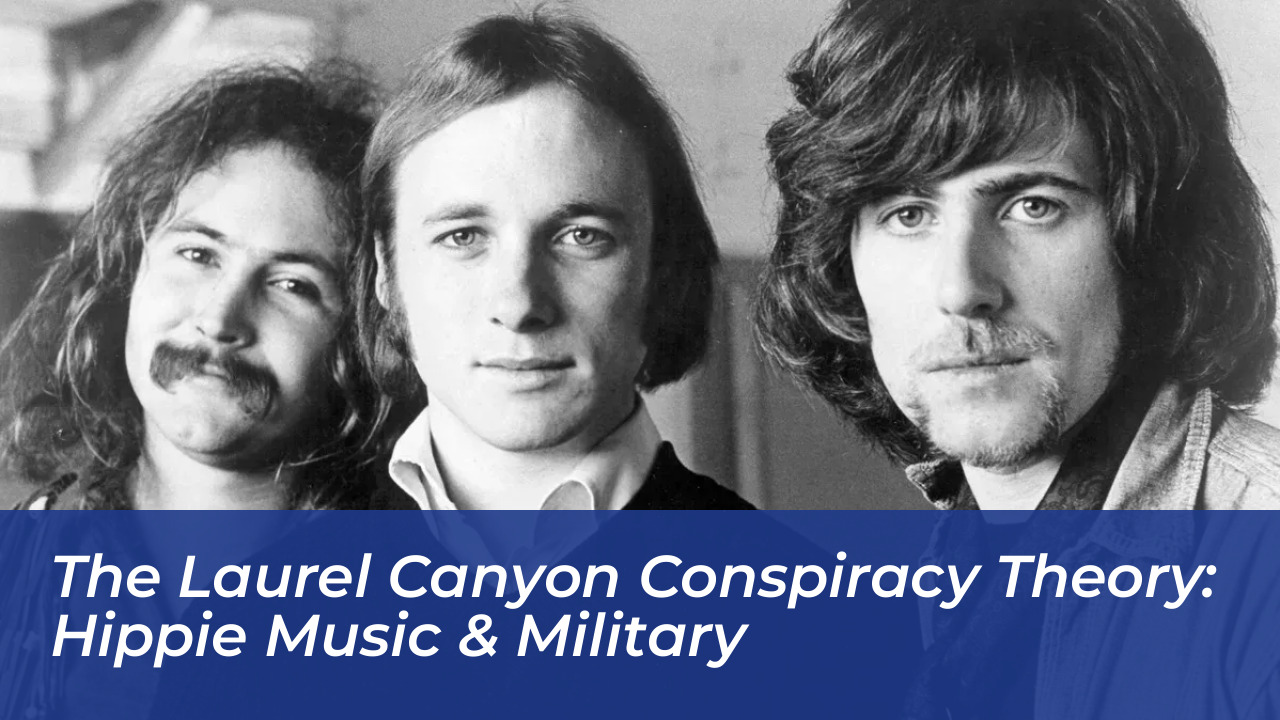

During the 1960s and early 1970s, the hillside neighborhood of Laurel Canyon in Los Angeles became a creative hub for iconic musicians. Artists such as Jim Morrison, Frank Zappa, David Crosby, Joni Mitchell, and members of the Mamas & the Papas gathered in the wooded hills. They formed a close-knit community that shaped folk, rock, and psychedelic music. However, this high concentration of talent has also inspired a controversial narrative: a conspiracy theory linking the counterculture movement directly to the American military-industrial complex.
According to this theory, popularized by researchers like the late David McGowan, the 1960s counterculture was not an organic expression of youthful rebellion. Proponents suggest it was a covert government operation designed to steer, infiltrate, and undermine the growing anti-Vietnam War movement. The theory weaves together historical facts-including military family backgrounds, a classified government film facility, and intersecting tragedies. However, these details fall short of establishing a coordinated government project.
The Core Pillars of the Laurel Canyon Theory
The endurance of the Laurel Canyon theory relies on several historical curiosities that conspiracy accounts interpret as evidence of orchestration. These elements include the familial ties of prominent musicians, the presence of a secret military installation, and associations with historic events like the Charles Manson murders.
Military Lineage and Family Backgrounds
One of the most frequently cited arguments in the conspiracy narrative is the number of prominent musicians who had close family ties to the military or defense sector:
- Jim Morrison: The frontman of The Doors was the son of Admiral George Stephen Morrison, a senior US Navy officer who commanded American naval forces during the 1964 Gulf of Tonkin incident.
- Frank Zappa: Zappa’s father was a chemist and mathematician who worked in the defense industry, including at the US Army’s Edgewood Arsenal, a facility associated with chemical warfare research.
- John Phillips: The leader of the Mamas & the Papas was the son of a retired Marine Corps officer and attended military school.
- Stephen Stills: The Crosby, Stills & Nash singer-songwriter also grew up in a military family.
To theorists, these backgrounds suggest that key figures in the anti-establishment movement had sus**cious proximity to the authorities they challenged.
Lookout Mountain Air Force Station
The most tangible geographical piece of evidence cited by theorists is the presence of Lookout Mountain Air Force Station. Operating secretly from 1947 until 1969 on Wonderland Avenue in Laurel Canyon, this classified facility produced film and photographic material for the US military and the Atomic Energy Commission. It documented nuclear weapons and atomic tests. Because the installation required skilled technicians, sound specialists, and Hollywood professionals, it brought secret government operations into the immediate vicinity of the growing music scene.
Charles Manson and the Counterculture’s Dark Turn
The narrative darkens when examining connections between the Laurel Canyon music scene and Charles Manson prior to the 1969 Tate-LaBianca murders. Manson cultivated relationships within the Los Angeles music industry, befriending Beach Boys drummer Dennis Wilson and crossing paths with producer Terry Melcher and artist Neil Young. Conspiracy accounts interpret these associations as an effort to associate the counterculture with drug abuse, violence, and scandal, thereby discrediting the anti-war movement.
Examining the Evidence: Coincidence vs. Coordination
When historians and investigators scrutinize the individual claims of the Laurel Canyon theory, the extraordinary connections largely dissolve into ordinary historical context and geographic convenience.
The Postwar Baby Boom Generation
The familial military links of Morrison, Zappa, Phillips, and Stills belong to a generation born during or immediately after World War II. In mid-20th-century America, military service and defense-related employment were widespread. Having a father in the armed forces or working in defense was common for baby boomers, and a parent’s profession does not imply a child’s recruitment into a covert intelligence program.
Geography and the Economics of Los Angeles
The concentration of musicians in Laurel Canyon can be explained by practical real estate and industry factors rather than a master plan. The canyon offered affordable housing, natural scenery, and seclusion. At the same time, it remained minutes away from the Sunset Strip, live music venues like the Troubadour and Whisky a Go Go, and major recording studios. Creative communities routinely form where artists can live affordably and network easily.
What the Artists Remember
Musicians who lived and worked in Laurel Canyon during the 1960s have consistently described an organic, highly collaborative environment. Former Byrds bassist Chris Hillman recalled moving to the canyon simply because he needed housing close to the clubs. Similarly, Joni Mitchell described the community as a productive, inspiring space for artistic creation. While the scene suffered from the era’s severe drug problems, interpersonal exploitation, and commercial pressures, its challenges do not validate claims of state engineering.
Broader Historical Context: Government Infiltration Programs
A primary reason the Laurel Canyon conspiracy theory retains traction is that it mirrors documented historical realities. During the same era, federal agencies did engage in extensive domestic surveillance and infiltration programs targeting activist movements.
- COINTELPRO: Created by the FBI in 1956 and exposed in 1971, this program systematically infiltrated communist, civil rights, and anti-war groups to disrupt them using rumors, forged documents, and psychological tactics.
- Operation Chaos: A covert CIA initiative launched under President Johnson and expanded under Nixon to gather intelligence on domestic anti-war groups, which included embedding operatives within counterculture communities.
Investigative journalists like Tom O’Neill spent decades researching these intelligence connections, discovering figures like CIA operative Reeve Whitson mingling with musicians and figures around Charles Manson. However, O’Neill and other serious researchers have concluded that while the government monitored and attempted to disrupt the counterculture, there is no credible evidence that prominent Laurel Canyon musicians were government agents or that the music scene was a manufactured psychological operation.
Conclusion
The Laurel Canyon conspiracy theory endures because it provides a cinematic answer to an improbable historical phenomenon: how a single Los Angeles neighborhood could produce so much groundbreaking music in a short span of time. By fusing secret military film stations, unexpected family backgrounds, and tragic deaths into a single narrative, the theory creates a compelling mythos. Yet, the available evidence indicates that Laurel Canyon’s legendary music scene arose from human creativity, cultural shifts, and geographic convenience-not a military experiment designed to pacify a generation.
Frequently Asked Questions About the Laurel Canyon Theory
What is the Laurel Canyon conspiracy theory?
The Laurel Canyon conspiracy theory suggests that the 1960s hippie music scene was not an organic cultural movement, but a covert government operation designed to channel youth rebellion into drug use and scandal, ultimately discrediting the anti-Vietnam War movement.
Who are the main figures associated with the theory?
Researchers like the late David McGowan popularized the theory, focusing on musicians with military family backgrounds such as Jim Morrison, Frank Zappa, John Phillips, and Stephen Stills, as well as connections to figures like Charles Manson.
Was Lookout Mountain Air Force Station connected to the music scene?
Lookout Mountain Air Force Station was a classified military film and photographic facility operating in Laurel Canyon from 1947 to 1969. While it produced classified atomic test footage and required film professionals, there is no documented evidence linking its operations to the creation or management of nearby musicians.
Did government agencies actually infiltrate 1960s counterculture?
Yes. Documented historical programs like the FBI’s COINTELPRO and the CIA’s Operation Chaos actively spied on, infiltrated, and disrupted domestic anti-war and civil rights groups. However, historical investigations have found no proof that musicians were enlisted as government operatives.
Why did so many musicians live in Laurel Canyon?
Musicians gravitated toward Laurel Canyon because it offered affordable, secluded housing in a scenic environment while remaining close to the Sunset Strip, performance venues, and the Los Angeles recording industry.