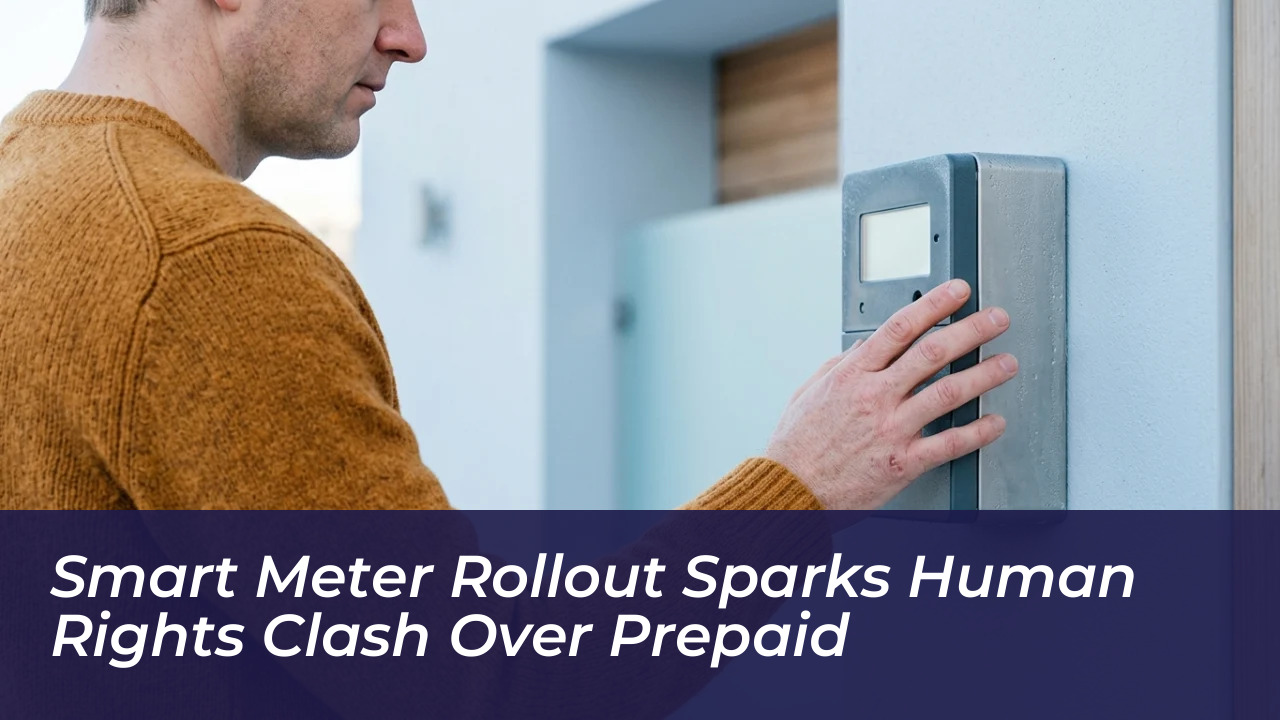

The controversial smart meter dispute in Goa has triggered a major institutional standoff. A human rights inquiry found no fundamental rights violation in the installation of digital utility meters, despite mounting public pushback over forced prepaid billing shifts and missing safety disclosures. The inquiry, initiated suo motu against the chief electrical engineer following public outcry, has exposed a profound rift between technical utility modernization and consumer rights. This leaves unresolved questions about statutory authority, personal data handling, and power grid reliability.
While the inquiry report cleared the physical replacement of traditional units from a human rights standpoint, the consumer advocacy collective Smart Meter Naka Group argues the ruling creates more problems than it resolves. Former bureaucrat Elvis Gomes and other critics argue that government authorities cannot lean on a Goa Human Rights Commission (GHRC) administrative order to justify coercive implementation measures. At the heart of the friction is the divide between completing an administrative rights assessment and conducting a comprehensive evaluation of public utility policy. This tension is especially acute when households find their commercial relationship with their electricity provider transformed overnight without explicit consent.
Consent Versus Awareness: The Unsettled Legal Battle Over Prepayment
The primary flashpoint in the rollout involves converting existing postpaid household accounts into compulsory prepaid connections. Under a standard postpaid framework, consumers settle their utility bills after consuming electricity. Under a prepaid model, households must purchase credit in advance or face an automatic disconnection of supply.
Consumer groups cite arguments presented by amicus curiae Abhijit Goswami during the proceedings. They contend that this operational shift alters the fundamental dynamic between suppliers and users without obtaining formal agreement. The utility department has cited Section 47(5) of the Electricity Act, 2003 as the statutory basis for the transition.
However, advocacy groups maintain that whether this specific statutory provision grants legal authority for mandatory prepayment remains an open question that has not been definitively resolved in court. The inquiry recommended that authorities improve consumer awareness and issue printed advance notices. Critics claim this serves as an indirect admission that prior procedural transparency and communication were inadequate. The dispute exposes a critical regulatory gap: administrative awareness campaigns cannot replace lawful consumer consent when changing basic utility payment terms.
Data Handling and Institutional Roles Under Scrutiny
Modern advanced metering infrastructure records, aggregates, and transmits granular household consumption metrics at regular intervals. This shift raises serious governance questions: what information is logged, which third-party entities have access to it, and what cybersecurity protocols protect public systems from compromise?
While consumer groups have voiced significant apprehension regarding cybersecurity vulnerabilities, official proceedings have not identified any concrete data breach, cyberattack, or compromised infrastructure to date. The tension has also exposed overlapping administrative jurisdictions between utility regulators and rights bodies.
The advocacy group challenged the human rights commission’s recommendation that the electricity department proceed with installations. They asserted that issuing policy approvals exceeded the body’s legal remit. While oversight tribunals evaluate potential abuses, core policy decisions, technical standards, and data governance frameworks remain the legal responsibility of executive departments.
Public Utility Conflict: Key Disputed Issues
To understand why a routine infrastructure upgrade has stalled in controversy, the following breakdown contrasts the verified findings of the official inquiry against the unresolved issues raised by consumer advocates:
- Human Rights Violations: The official inquiry found no violation of fundamental rights in the replacement of meters.
- Statutory Prepayment Basis: The department cited Section 47(5) of the Electricity Act, 2003, but formal legal validation remains contested.
- Health and Radiation Data: Right to Information (RTI) responses indicated an absence of departmental safety data, though no documented physical harm was proved.
- Cybersecurity Threats: Campaign groups raised public interest concerns, but no active breaches or technical exploits were confirmed.
- Procedural Safeguards: The inquiry recommended issuing printed consumer notices and strengthening public awareness efforts.
Safety Disclosures and the Core Service Paradox
Public apprehension has intensified due to a lack of transparency disclosures surrounding health and emissions. Campaigners revealed via an official RTI response that the electricity department lacked recorded safety data on radiation and potential biological impacts. This prompted calls for all technical evaluations to be published before further hardware is mounted in residential premises. A lack of accessible documentation does not establish that radio-frequency metering technology causes harm, but the omission of public data has created an acute trust deficit among local households.
Compounding the resistance is broader consumer frustration regarding basic supply performance. The Smart Meter Naka Group argues that public authorities should prioritize fixing recurring power cuts and underlying distribution defects before investing public resources into high-tech metering. While comparative outage data was not evaluated in the inquiry, the debate highlights an inescapable governance challenge: high-tech digital upgrades cannot serve as a public substitute for a stable, dependable core service.
The continuing standoff demonstrates that rolling out digital infrastructure requires absolute transparency around statutory powers, privacy safeguards, and consumer consent long before physical hardware touches household walls. Future progress hinges on whether government departments make their full data-handling agreements, technical safety dossiers, and legal interpretations accessible to public scrutiny.