
Trapping damp air beneath a tight plastic tarpaulin directly against an exterior wall will rot seasoned logs rather than preserve them. Ensuring high-efficiency heat output requires elevated, open-sided structures that exploit natural wind currents while defending against prolonged rainfall. Every seasoned wood-burner understands that soggy logs waste hard-earned cash, produce excessive smoke, and struggle to ignite in domestic stoves. Securing bone-dry fuel demands understanding airflow, clearance, and defensive positioning before persistent autumn downpours arrive.
The Physics of Drying: Why Good Ventilation Trumps Direct Coverage
Piling split logs under an airtight cover creates a microclimate of rising condensation. This reverses months of careful seasoning in a matter of weeks. The secret to effective outdoor firewood storage lies in letting moisture escape continuously rather than trapping it against the bark. Airflow remains the primary mechanism for driving moisture content below the vital 20 percent threshold recommended for clean domestic burning. A sheltered stack open to gentle prevailing breezes dries considerably faster than tightly wrapped timber tucked away in a stagnant, unventilated garden shed.
To establish the perfect drying station across the damper months, prioritise these essential structural foundations:
- Raised Timber Bearers: Never stack bare timber directly onto damp grass, earth, or unsealed patio slabs where groundwater wicks upward.
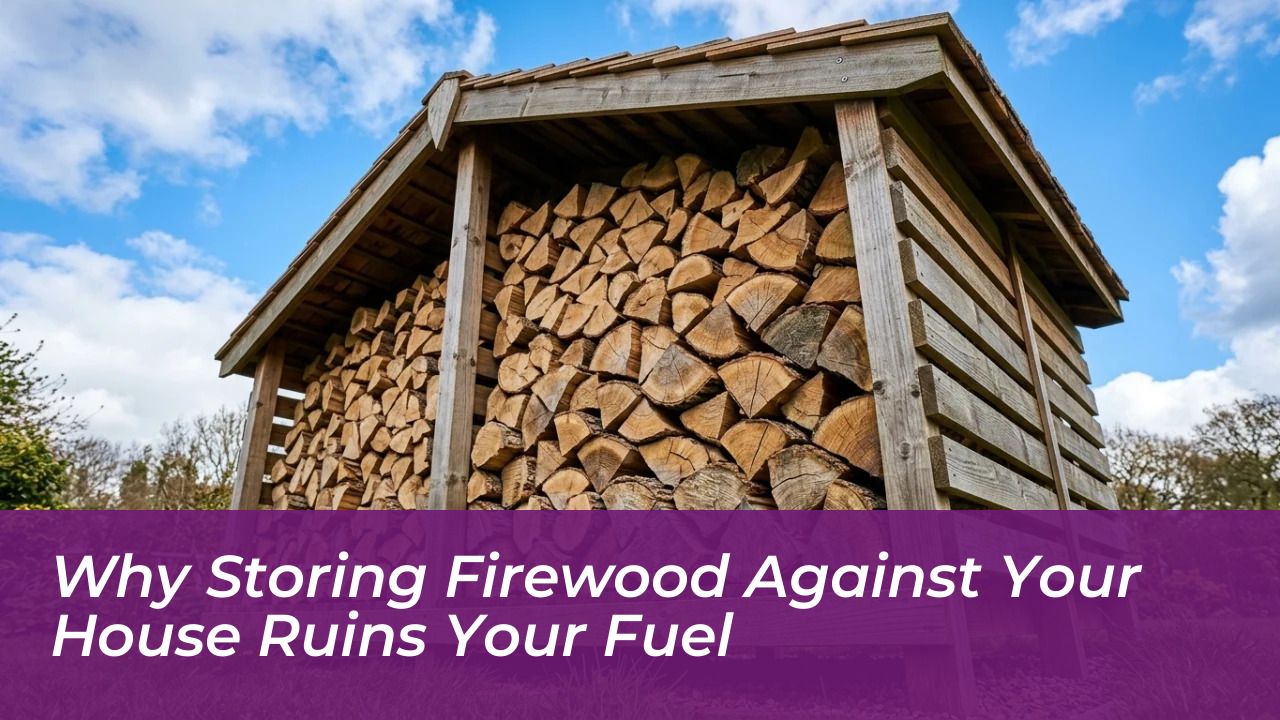
- Slatted Side Panels: Spaced battens permit continuous lateral airflow across log ends while repelling lateral drizzle.
- Angled Overhanging Roofs: Sloped felt, tin, or feather-edge boards shed rainfall forward, keeping the bulk of the stack completely shielded.
Elevating Stacks Above Saturated Soil
Ground moisture is a major threat to raw firewood, steadily degrading bottom tiers long before anyone notices the rot. Using pressure-treated wooden runners, heavy-duty pallets, or concrete gravel boards creates a vital air gap of at least ten to fifteen centimetres above ground level. This clearance allows cool air to enter underneath the woodpile, pushing upward through natural convection as daytime temperatures shift.
Keeping that base dry stops wood-boring insects, fungi, and damp earth smells from invading fuel destined for indoor living rooms. Elevating your timber prevents premature decay and ensures that every piece entering your home is structurally sound and clean.
Strategic Positioning: Protecting Exterior Brickwork and Wall Ties
Leaning tall woodpiles flush against exterior house brickwork creates a dangerous moisture bridge that can damage pointing and invite pests indoors. Termites and ants thrive in damp, decaying wood, and stacking timber directly against your home provides an easy pathway for them to infiltrate your structure. Rain soaking the timber transfers directly to external walls, preventing masonry from breathing while blocking essential air bricks around your home’s perimeter foundations.
Always maintain a minimum gap of fifty to one hundred millimetres between a log rack and any adjoining masonry or boundary fence. Fire safety guidelines also recommend keeping main stockpiles 10 to 20 feet away from living structures. This modest clearance creates a chimney effect, speeding evaporation across back-facing logs and keeping damp away from home rendering.
Positioning your primary storage station along a south- or east-facing garden boundary harnesses maximum daylight and avoids prevailing westerly driving rains. Shaded northern corners rarely dry timber effectively, leaving outer layers prone to green moss and lingering surface moisture.
Practical Shelter Concepts: From Modular Pallets to Dedicated Timber Bays
Creating functional, weather-proof log housing does not demand bespoke joinery or high costs. Reclaimed untreated shipping pallets provide ideal modular components, delivering built-in ground clearance and natural batten spacing for rapid DIY construction. For high-capacity requirements, partitioned two-bay stores allow homeowners to separate freshly split, unseasoned wood from ready-to-burn winter reserves.
Alternating use between compartments ensures a continuous supply of dry timber, preventing premature burning of fresh, sap-heavy logs. Loose tarpaulins should serve strictly as pitched roofs rather than suffocating blankets wrapped tightly down the sides. Weight down protective covers with spare split rounds or secure them to eyelets, leaving the front face and flanks clear to breathe.
Frequently Asked Questions About Firewood Storage
Should firewood be covered completely?
No, only the top should be covered. Fully wrapping a stack in plastic traps moisture inside, which slows down drying and can lead to mold and rot. The sides must remain open for proper airflow.
How far away from the house should I store firewood?
While a small day-to-day rack can sit a short distance away with a 50-to-100mm gap for ventilation, your main stockpile should be kept 10 to 20 feet away from your home to mitigate fire hazards and prevent termite or pest infestations.
How long does firewood need to dry?
Softwoods typically require 6 to 12 months to season properly, while dense hardwoods need 12 to 24 months depending on local climate conditions and storage setup.
How can I tell if my firewood is ready to burn?
Properly seasoned wood features visible cracks or checks at the ends of the logs, feels significantly lighter than fresh-cut timber, and produces a clear hollow sound when two pieces are knocked together.
Is it safe to store large amounts of firewood indoors?
No, storing large quantities of firewood inside a home or garage increases indoor humidity, invites pests like wood-boring insects, and creates a significant fire hazard. Keep only a short-term supply indoors.