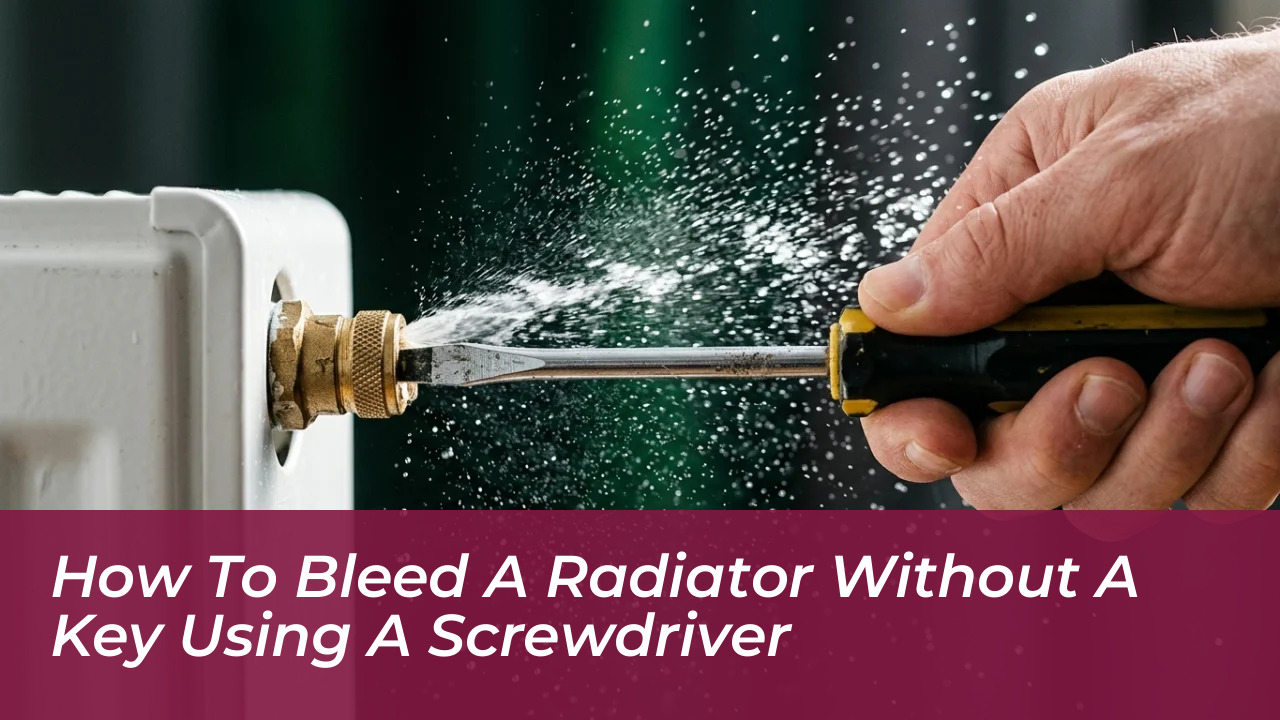

When an autumnal chill sets in and central heating systems kick back into daily service, discovering a stubbornly lukewarm radiator can be immensely frustrating. If your home panels stay blazing hot at the bottom while remaining cold across the upper sections, trapped air is invariably the culprit. This drives up energy consumption and leaves rooms uncomfortably chilly. Misplacing the small, cross-shaped brass radiator key is a universal household nuisance, but modern radiator design accounts for this exact scenario. You can easily bleed your system using everyday toolbox items without ever hunting for a specialist key or calling an expensive specialist.
The Hidden Design Inside Modern Radiator Valves
Most radiators installed across homes over the past two decades feature bleed valves engineered with dual compatibility. While the outer casing retains the classic square peg designed for a traditional brass clock key, the center of that peg usually houses a clean, machined slot. This indentation is specifically sized to accommodate an ordinary cabinet flat-head screwdriver.
If the screwdriver blade matches the width of the slot snugly, you can turn the valve with identical precision and zero risk of stripping the soft metal. Older Victorian-style cast-iron radiators or vintage compact panels installed prior to the 1990s occasionally feature solid square spindles without a slot. Even in those rare instances, emergency alternatives exist if you handle the fitting with careful control.
Tools You Already Own That Fit the Bill
Before touching any plumbing fitting, gather items capable of controlled torque rather than brute force. Stripping the bleed screw creates an expensive emergency call-out that no homeowner wants to deal with. Keep these essentials ready in your utility drawer:
- A 5mm to 6mm flat-head screwdriver: The gold standard alternative. Ensure the tip sits squarely in the channel without wobbling.
- Small adjustable spanner or locking pliers: Suitable solely for solid square pegs lacking a central groove. Fasten the jaws tightly against the flat sides before applying leverage.
- A thick microfibre cloth and a shallow container: Central heating water contains rust inhibitors and dissolved iron oxide that will permanently stain porous flooring and carpets.
Step-by-Step: Purging Trapped Air Safely
Attempting to vent a radiator while the central heating pump is actively circulating is a critical error. An active pump can draw fresh air back into the pipework or eject scalding water under heightened pressure. Follow these sequential steps to purge your system safely:
- Switch off the heating: Turn off your heating at the main thermostat or programmer and allow the panels to cool for at least twenty minutes.
- Position your protective gear: Locate the bleed valve situated at either the top left or top right corner of the panel. Drape your microfibre cloth beneath the valve and position your container directly under the nozzle.
- Open the valve gradually: Insert the flat-head screwdriver into the central slot, holding the shaft straight to maintain grip. Turn the screwdriver slowly anti-clockwise by just a quarter to half a turn. You will hear an immediate, sharp hissing sound as compressed air escapes from the chamber.
- Reseal when water appears: Never unscrew the pin completely. Turning the plug more than one full rotation risks detaching the screw from the casing, unleashing an uncontrollable torrent of system water. The instant the hissing gives way to a steady trickle of dark liquid, turn the screwdriver clockwise to reseal the valve firmly. Wipe away stray droplets immediately to prevent surface corrosion.
The Pressure Gauge Danger Most Homeowners Overlook
Venting air from several radiators reduces the total volume within a sealed hydronic system. If your home relies on a modern combi boiler or system boiler, releasing that trapped air causes system pressure to drop.
Once you finish venting the radiators, inspect the hydraulic pressure gauge on the front of your boiler casing. According to standard heating manufacturer guidance, the needle should sit comfortably between 1.0 and 1.5 bar (or 12 to 15 PSI) when the system is cold. If the gauge dips into the lower red band-typically beneath 0.8 bar-the boiler may display a fault code and refuse to ignite. You can restore optimum pressure within moments by opening the external filling loop valves beneath the boiler until the dial re-enters the green sector.
Pro Tips for Multi-Storey Heating Efficiency
Always work from the ground floor upward when bleeding multiple units across a multi-storey house, as air naturally rises to the highest points of your pipework. Checking your boiler pressure immediately after venting prevents unexpected lockouts right when you need heat the most.
Keeping an appropriate flat-head driver in your utility drawer ensures you never need to hunt for a missing radiator key during a sudden cold snap.
Frequently Asked Questions
Can I bleed my radiators while the central heating is turned on?
No, it is strongly advised to switch off your heating and let the system cool for 15 to 20 minutes before bleeding. Hot water under active pump pressure increases the risk of scalding and can spray dirty system water across your walls and flooring.
What if my radiator has a solid square peg with no screwdriver slot?
For older vintage radiators lacking a central slot, use a small adjustable spanner or locking pliers. Fasten the tool securely across the flat edges of the square spindle and turn it gently by a quarter turn.
Why is the water coming out of my radiator black or brown?
Discolored water contains magnetite, which is an accumulation of iron oxide sludge and rust that naturally forms inside central heating systems over time. A small amount is completely normal during bleeding.
How often should I bleed my home radiators?
At a minimum, you should bleed your radiators once a year as part of your autumn maintenance routine before winter sets in. If you notice cold tops or gurgling noises mid-season, bleed the affected panels immediately.
What should I do if the radiator remains cold after bleeding?
If bleeding does not restore heat, the issue may be heavy sludge buildup blocking the bottom of the unit, a stuck thermostatic radiator valve (TRV) pin, or an unbalanced system requiring professional evaluation.