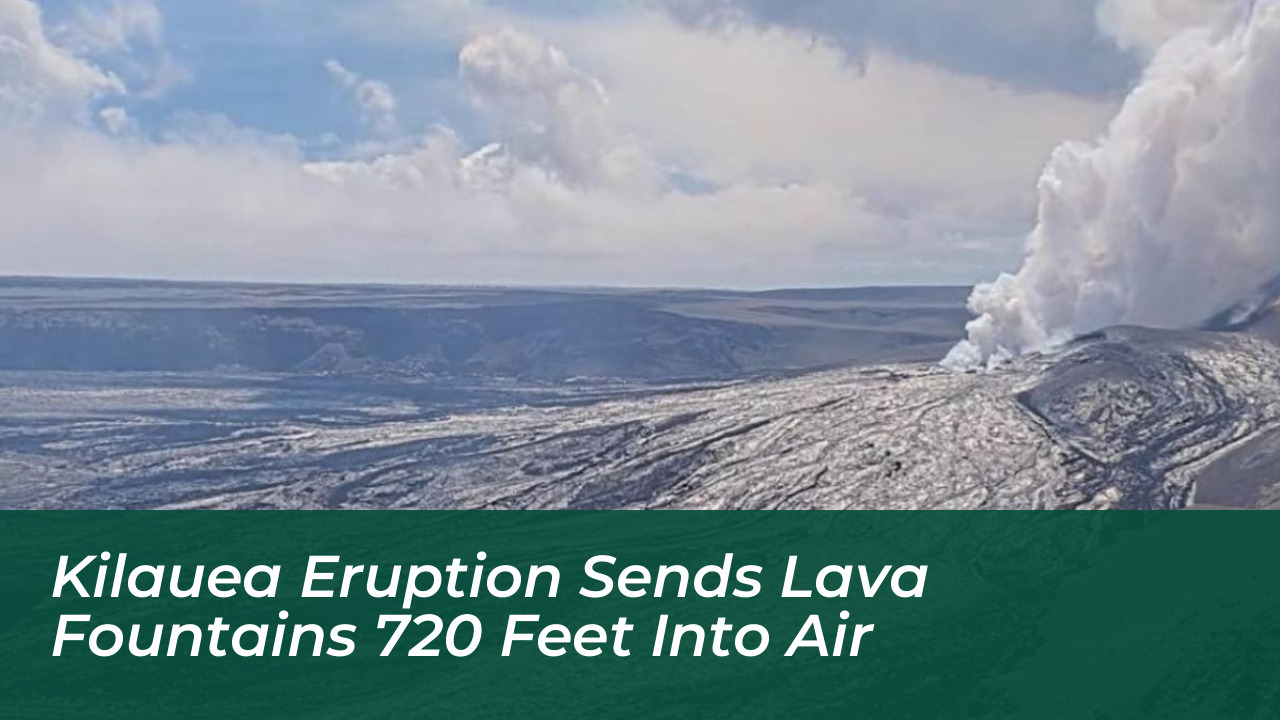

Lava fountains reaching approximately 720 feet (220 meters) marked the 55th episode of Kilauea’s ongoing summit eruption in Hawaii on October 17, 2026. The intense geological event began at 3:19 a.m. local time at the volcano’s north vent inside Halemaumau crater in Hawaii Volcanoes National Park and ended abruptly at 9:03 a.m., according to reports from the US Geological Survey’s Hawaiian Volcano Observatory (HVO).
Preliminary estimates from scientists indicated that the eruption released about seven million cubic meters of lava during its roughly six-hour duration. While the active fountaining has currently paused, researchers continue monitoring the volcano closely for ongoing shifts in seismic activity, ground deformation, and sulfur dioxide gas emissions.
Timeline and Peak Activity of Episode 55
The dramatic event began early Saturday morning, with initial fountain heights starting out relatively modest, reaching approximately 100 to 150 feet. Activity rapidly intensified as the morning progressed. The tallest fountains peaked around 5 a.m. local time, soaring roughly 720 feet above ground level from the north vent.
According to meteorological reports and observations, the powerful eruption propelled a volcanic plume roughly 25,000 feet (7,500 meters) above mean sea level. Prevailing northeast winds pushed the resulting degassing plume southwestward over the Kaʻū Desert. Tephra fall, consisting of small glassy volcanic fragments, ash, and pumice, remained largely restricted to the closed zones southwest of the Halemaumau vents inside Hawaii Volcanoes National Park.
What Led Up to the 55th Eruptive Episode?
The latest activity represents a significant evolution in Kilauea’s summit caldera eruption, which originally began on December 23, 2024. Prior to episode 55, the volcano experienced a record-breaking 39 days of intermittent overflows and precursory activity, alongside a shallow dike emplacement beneath Kaluapele.
Summit tiltmeters recorded unusual inflationary patterns ahead of the event, indicating higher levels of magma chamber pressurization than typically observed before previous fountaining episodes. Following the sudden cessation of fountains at 9:03 a.m., summit tiltmeters immediately recorded re-inflation, aligning with predictable post-fountaining behavior.
Current Status and Volcanic Hazards
The US Geological Survey maintains Kilauea’s volcano alert level and aviation color code at ADVISORY/YELLOW. Although eruptive activity remains confined safely within a closed area of the national park, several prominent hazards persist around the summit region:
- Volcanic Gas: High continuous emissions of sulfur dioxide react in the atmosphere to form vog, which can cause respiratory irritation downwind.
- Tephra and Glassy Fragments: Sharp volcanic materials such as Pele’s hair, pumice, and ash pose skin and eye irritation risks near the caldera rim.
- Unstable Terrain: Ground cracking, rockfalls, and crater wall instabilities continue to affect the closed areas surrounding Halemaumau crater.
- Lava Flows and Residual Heat: While confined to the crater so far, cooling flows present severe burn and laceration hazards due to sharp, glassy surfaces.
Frequently Asked Questions
When did Kilauea’s 55th eruption episode occur?
Episode 55 began at 3:19 a.m. HST and ended abruptly at 9:03 a.m. HST on October 17, 2026, lasting for approximately 5.7 hours.
How high were the lava fountains during the eruption?
The maximum lava fountain height reached approximately 720 feet (220 meters) above ground level from the north vent around 5:00 a.m. local time.
How much lava was released during episode 55?
Preliminary estimates from the USGS Hawaiian Volcano Observatory indicate that the event released about seven million cubic meters of lava.
What is the current alert level for Kilauea?
The US Geological Survey maintains Kilauea’s volcano alert level at ADVISORY and the aviation color code at YELLOW.
Is the eruption threatening populated areas?
No. All eruptive activity and tephra fall have been confined within the closed, restricted boundaries of Hawaii Volcanoes National Park, away from residential areas.