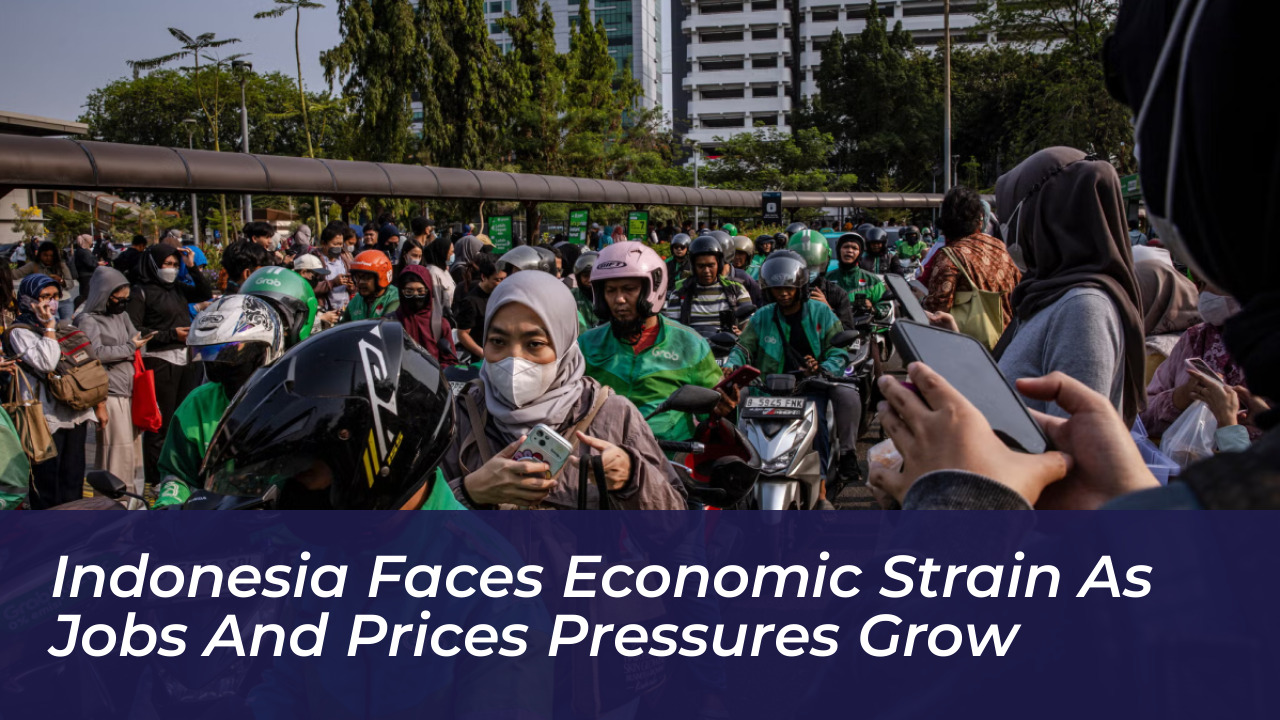

Indonesia is confronting mounting economic pressure as inflation rises, fuel shortages spread across multiple cities, and employment prospects weaken. The current climate leaves many educated workers struggling to secure jobs suited to their professional qualifications. This reflects a mix of international disruptions and domestic policy shifts under President Prabowo Subianto.
The everyday challenges facing Indonesian workers are illustrated by individuals like Novri Putra. After graduating from a Jakarta college with a degree in information technology, he hoped to build a stable career as a web developer. Instead, the 28-year-old works as a motorcycle taxi driver for a tech company, earning approximately $220 a month.
Mr. Putra’s experience contrasts sharply with the economic optimism that defined his entry into higher education. When he started college in 2018, Indonesia’s economy was expanding, its technology sector was booming, and demand for software engineers was climbing steadily. Today, those promising conditions have given way to widespread career uncertainty and financial belt-tightening.
Macroeconomic Strain and Institutional Pressures
Official reports highlight national milestones, such as Ministry of Agriculture data boasting record-breaking rice stocks of 5.3 million tons and proclaimed food self-sufficiency. However, socio-economic indicators reveal deep institutional and structural vulnerabilities. Observers note that the formal job market has failed to keep pace with the nation’s growing workforce.
Research from CORE Indonesia covering the period from 2021 to 2025 demonstrates a troubling shift in the labor market. While formal employment grew by a stagnant 0.8%, the informal sector expanded by 3.2%, growing at four times the rate of the formal sector. This trend has left a significant portion of the middle class in chronic financial vulnerability, compounded by imminent lay-off risks across manufacturing, agriculture, and service sectors.
Policy Responses and Financial Markets
The administration’s fiscal and monetary approaches have faced scrutiny from international markets and domestic economists alike. Policies such as the ambitious Free Nutritious Meals (MBG) program cost billions annually. This has strained national budgets and raised concerns over delivery bottlenecks and fund allocations.
Financial markets have reacted to these domestic policy directions alongside broader global headwinds, including high oil prices, shifting U.S. interest rates, and trade pressures. Analysts from institutions like Permata Bank and independent economic research firms emphasize that restoring investor confidence requires strict fiscal discipline. It also requires enhanced transparency and closer alignment between monetary and fiscal policies to protect everyday households from ongoing cost-of-living increases.
Frequently Asked Questions
What are the main economic challenges currently facing Indonesia?
Indonesia is dealing with rising inflation, spreading fuel shortages, a cooling formal job market, currency depreciation pressures, and a heavy reliance on the growing informal economy.
How has the job market affected recent college graduates?
Many educated young professionals, including IT graduates, face limited openings in the formal sector. This often forces them to take lower-paying informal jobs, such as ride-sharing or delivery driving, to make ends meet.
What is the ‘informalization’ of the workforce?
The informalization trend refers to data showing that informal jobs are growing significantly faster than stable, formal employment sectors, leaving more workers without job security or standard benefits.
How are government policies impacting the national budget?
Large-scale populist programs, such as subsidized meal initiatives, combined with high debt service payments and regional transfer adjustments, have strained fiscal space and drawn scrutiny from global credit ratings agencies.