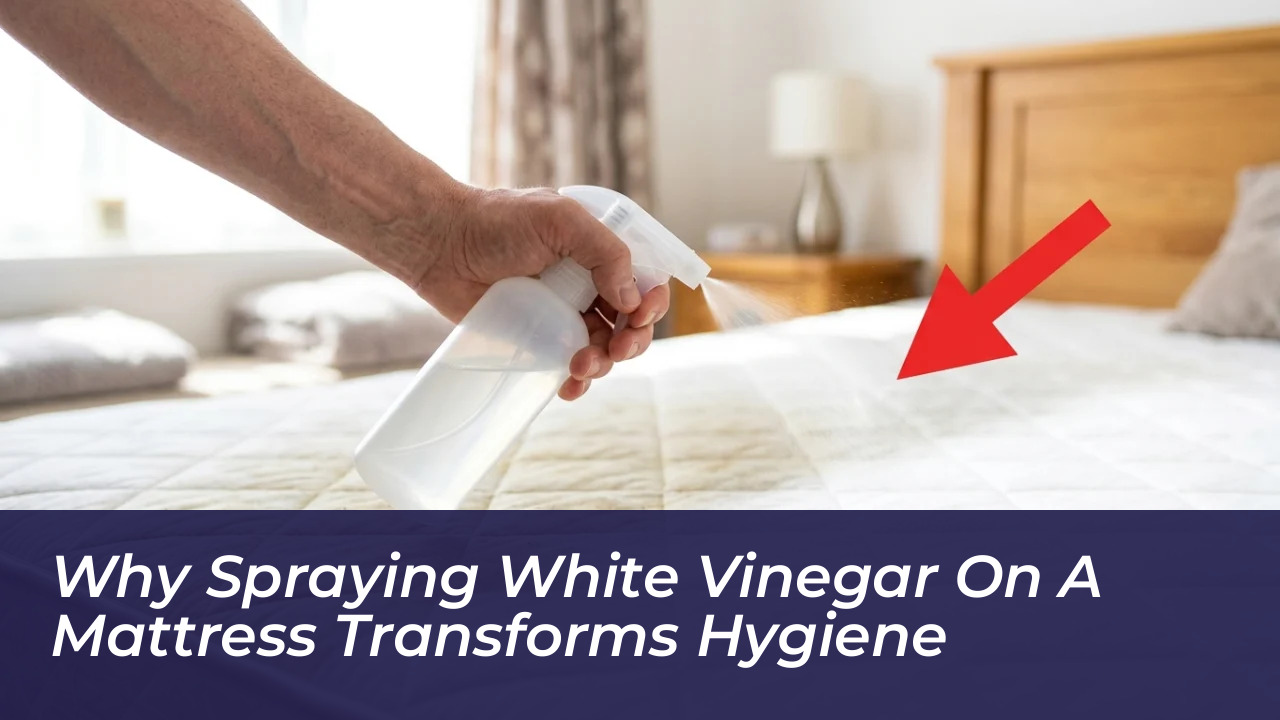

Spraying a diluted solution of white vinegar directly onto a mattress neutralises trapped perspiration odours, softens stubborn surface dirt, and helps deter pests without resorting to harsh chemical treatments. This budget-friendly household staple relies on natural acetic to break down lingering grime and restore fabric balance in bedrooms where ventilation is limited.
Mattresses naturally absorb body sweat, shed skin cells, and ambient dust over months of nightly use. While standard linen changes keep top sheets fresh, deep-seated odours and microscopic buildup often remain embedded within the upper upholstery layers, directly compromising the quality of your nightly rest. Major sleep specialists endorse this gentle intervention, with official guides highlighting the targeted use of vinegar, baking soda, and mild detergents to treat routine spills, accidental stains, and heavy odours safely.

The Science of Acetic Against Bedroom Pests and Odours
The secret behind this household remedy lies in the chemical makeup of distilled vinegar. The natural acetic content acts as a mild disinfectant and deodoriser, softening dried dirt particles so they can be lifted without abrasive scrubbing. Vinegar softens stubborn dirt and acts as an effective neutraliser, making it an ideal treatment for enclosed rooms or areas with limited airflow.
Beyond breaking down organic residues, the pungent scent during application serves an additional protective role. The sharp, acidic aroma works naturally to ward off small insects and hidden pests that seek refuge in darker, less accessible seams of the bed frame. A widespread misconception is that soaking a stain in strong cleaning chemicals produces faster, superior results. In reality, oversaturating internal padding traps excess moisture deep inside the core, creating structural damage and making complete drying nearly impossible.
Step-by-Step Guide to Applying White Vinegar Safely
To avoid waterlogging internal upholstery layers, apply this mild solution with strict attention to dampness control. Follow these steps for an effective and safe fabric refresh:
- Mix the solution: Combine equal parts white vinegar and clean water inside a fine-mist spray bottle.
- Mist the fabric: Lightly spray the surface across the stained or musty areas, taking care not to saturate the internal fillings.
- Allow resting time: Let the liquid sit undisturbed for a minimum of one hour to soften dirt and neutralise volatile scent compounds.
- Scrub and vacuum: Gently scrub targeted spot stains with a clean cloth before thoroughly vacuuming the surface.
- Complete drying: Treat both sides of the mattress where necessary, ensuring the entire unit dries out fully in a well-ventilated room before replacing bedding.
Maintenance Cadence and Health Standards
Proper sleep hygiene requires routine care alongside emergency spot treatments. Establishing consistent airflow and regular vacuuming forms the baseline for extending the lifespan of your bed. Incorporating a disciplined maintenance schedule keeps microscopic buildup under control.
| Maintenance Action | Recommended Frequency |
|---|---|
| Air out the mattress | Daily (15 to 20 minutes) |
| Vacuum fabric surface | Every 7 to 15 days |
| Wash sheets & bed linen | Weekly |
| Wash protective mattress cover | Every 15 to 30 days |
Leading medical authorities confirm that environmental controls inside the home are just as critical as fabric cleaning. The Mayo Clinic recommends washing sheets weekly in hot water, fitting allergen-proof covers on mattresses and pillows, and maintaining indoor relative humidity below 50% to actively suppress dust mite populations. Pairing weekly linen washing with a light, regular vacuuming schedule removes the microscopic food sources that encourage pests to multiply.
A light misting of your white vinegar mattress spray provides an inexpensive, dependable reset whenever deep odours emerge. Simple, non-toxic pantry solutions often outperform expensive, aggressive detergents when refreshing delicate home fabrics. Regular airing and disciplined humidity management remain your most effective long-term defence against dust mites and damp.
Frequently Asked Questions
Does spraying white vinegar on a mattress leave a lasting smell?
No. While the sharp, acidic aroma is strong during application, the vinegar scent completely dissipates as the mattress dries, usually within an hour or two, leaving the fabric neutral and fresh.
Can white vinegar damage mattress memory foam?
When applied as a very light mist using a fine-spray bottle, diluted vinegar will not damage memory foam. However, you must avoid soaking or oversaturating foam materials, as trapped moisture can degrade the core and lead to mold growth.
How often should I use a vinegar spray on my bed?
A vinegar misting is best reserved as an occasional treatment for deep odours or spot cleaning, roughly once every few months, combined with regular weekly linen washing and bi-weekly vacuuming.
Does white vinegar kill dust mites?
While vinegar helps deodorise and clean surfaces, physical removal through regular vacuuming, washing bedding in hot water, and controlling indoor humidity below 50% are far more effective for managing dust mite populations.
Can I mix essential oils into the vinegar spray?
Yes. Adding a few drops of lavender or tea tree essential oil to your equal-parts water and white vinegar mixture can impart a pleasant fragrance while adding mild antimicrobial benefits.