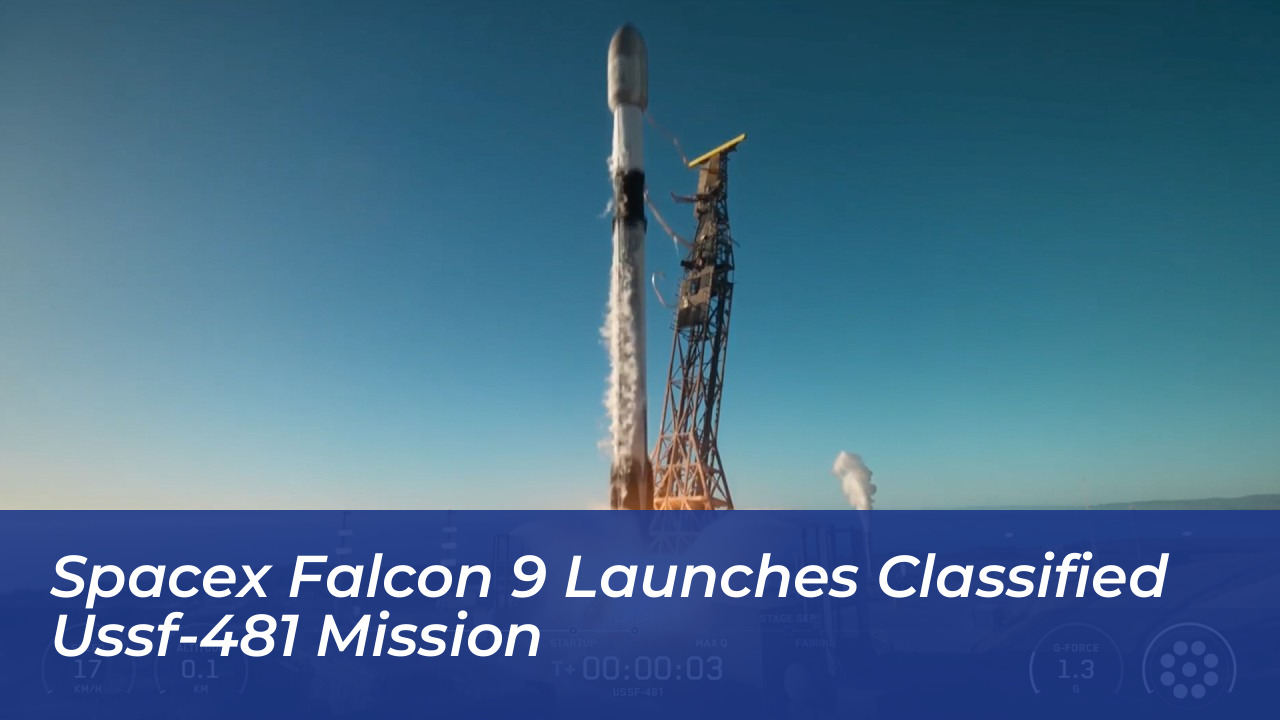

A SpaceX Falcon 9 rocket successfully placed the classified USSF-481 national defence payload into orbit before guiding its first-stage booster back to Earth for a precision touchdown. This launch marks another major milestone in commercial spaceflight’s integration into military architecture, proving that rapid orbital deployment is no longer the exclusive preserve of state-run agencies.
Lifting off from Space Launch Complex 4E (SLC-4E) at Vandenberg Space Force Base in California, the two-stage vehicle climbed into the upper atmosphere under the power of its nine Merlin 1D engines. Utilizing first-stage booster B1081 on its 28th flight, the mission took a southerly trajectory targeting a low Earth orbit with an 80-degree inclination. Moments after stage separation, the upper stage accelerated out of tracking view under a strict public broadcast blackout, and the booster completed its burn sequence to return to Earth.
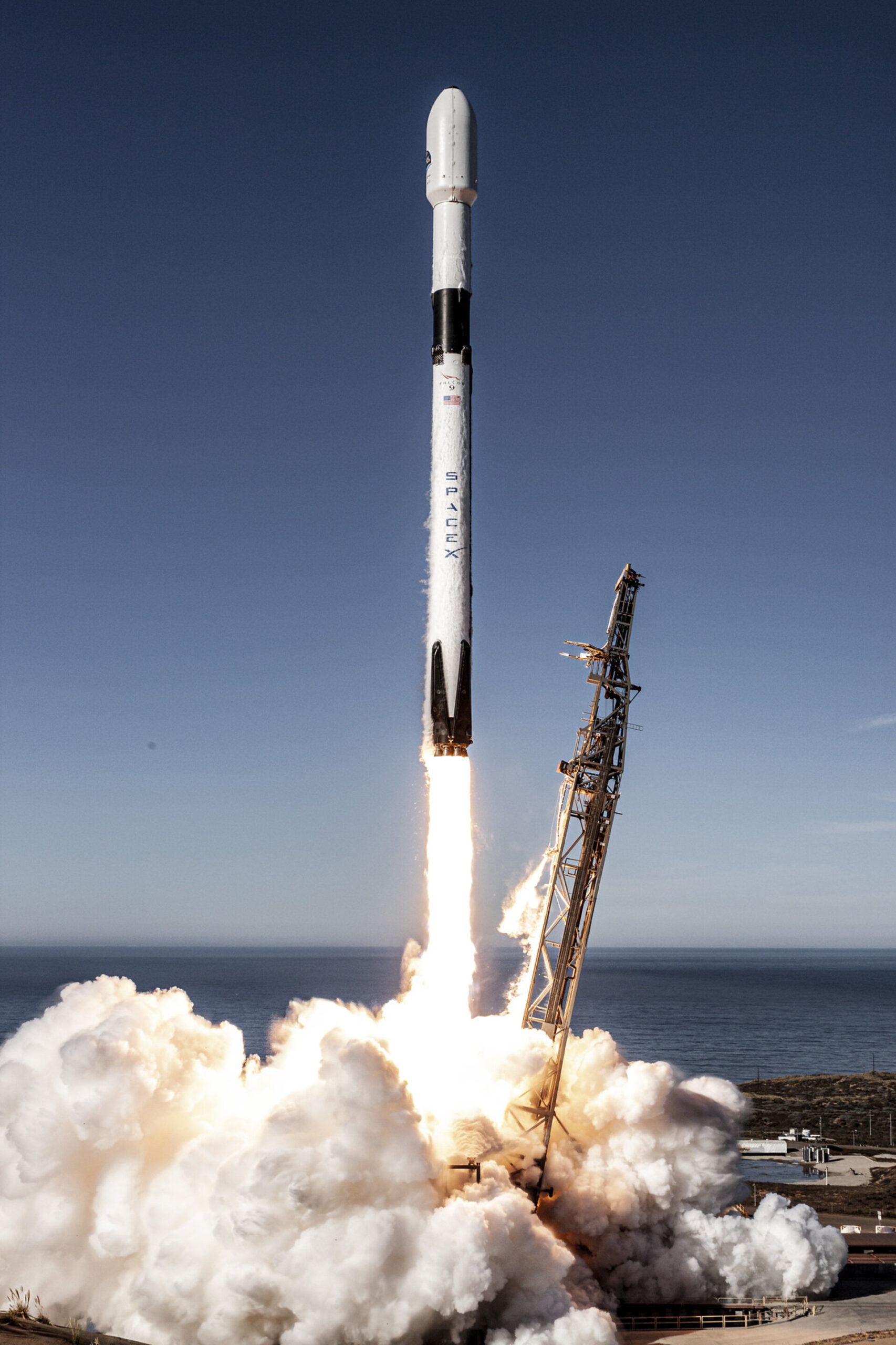
For military planners and intelligence observers monitoring the flight, the launch confirms the routine reliability of rapid-turnaround commercial rocketry for critical strategic assets. Public notices frequently referenced the flight as “TH-2,” following the USSF-259 (TH-1) mission launched weeks prior.
The Secrecy Surrounding USSF-481
Military payloads of this nature are cloaked in security protocols from conception to deployment. The US Space Force mission designated USSF-481 entered orbit without public disclosure of its exact trajectory, mass, or operational role. In line with standard Department of Defence operational security, coverage of the mission ceased just after stage separation. The booster’s descent was fully documented, but the destination and orbital mechanics of the second stage remain classified.
Military space activities generally fall into several vital operational disciplines:
- Orbital Reconnaissance: High-resolution optical, infrared, and synthetic-aperture radar arrays designed to track military movements across global hot spots.
- Secure Communication Relays: Anti-jamming, high-bandwidth data links connecting strategic commands with forward-deployed combat units.
- Space Domain Awareness: Sensor packages engineered to identify, track, and deter adversarial manoeuvres targeting Western satellites in low and geostationary orbits.
- Signals Intelligence: Passive listening arrays tuned to capture military telemetry and communications across contested regions.
The Reusable Advantage in High-Stakes Defence
The successful recovery of the Falcon 9 first stage underscores a radical doctrine shift across Western defence logistics. Reusability was once viewed by military procurement departments as an unacceptable technical risk, yet it has become the bedrock of space superiority. Recovering the booster allows launch providers to inspect hardware directly, shorten turnaround windows, and maintain uninterrupted launch cadences.
By lowering the launch cost threshold, space commands can deploy distributed satellite constellations rather than relying on a handful of vulnerable orbital targets. Following a successful eight-minute flight, booster B1081 touched down on the SpaceX autonomous droneship, Of Course I Still Love You, stationed in the Pacific Ocean.
The Transatlantic Security Picture
While the launch took place from the Pacific coastline, the operational implications matter deeply to the United Kingdom and its NATO allies. Modern allied defence relies upon an integrated network of space-based assets, coordinated through frameworks like the Five Eyes alliance and the Combined Space Operations initiative.
Through facilities such as RAF Fylingdales in North Yorkshire, UK Space Command works with the United States to track high-speed ballistic and orbital objects. When an allied defence asset like USSF-481 reaches orbit, it adds another protective node to an ecosystem relied upon by British armed forces deployed worldwide.
Disruption to civilian and military positioning, timing, and communications services remains listed as a primary national security threat in the UK Government’s National Risk Register. Routine, dependable access to orbit forms the primary deterrent against adversarial anti-satellite programmes.
Engineering an Atmospheric Bullseye
Executing an orbital insertion while bringing a twelve-storey rocket booster back from hypersonic speed remains one of modern aerospace engineering’s most formidable achievements. The Falcon 9 booster must survive extreme aerodynamic heat and mechanical stresses before restarting its engines with surgical accuracy.
Using deployable titanium grid fins at the top of the rocket, the booster actively steers itself through the thin upper atmosphere before slowing to a hover directly above the landing vessel. Landing legs deploy mere seconds before touchdown, bringing the heavy machine to a dead stop within inches of the target centre. The repetition of these landings has transformed what was once experimental into an industrialised, dependable standard of orbital logistics.
As commercial operators continue to normalise routine orbital delivery, allied armed forces will increasingly rely on rapid-launch capabilities to protect critical national infrastructure. Tracking how commercial innovation continues to outpace traditional state-led defence programmes will define the next decade of strategic deterrence.
Do you believe Britain should develop sovereign orbital launch infrastructure for national security, or continue relying on transatlantic commercial partners? Share your thoughts below.