
Maintaining a clean indoor drying setup is essential during cold UK winters when households rely heavily on heated clothes airers to combat damp weather. While the metal frames and heating bars receive frequent attention, the fabric cover often gets overlooked. These specialized covers act as miniature drying pods, trapping ambient warmth and speeding up evaporation. However, as damp air circulates inside, the fabric absorbs fabric conditioner residue, loose lint, and stagnant condensation, creating a prime breeding ground for musty odours. Knowing how to clean a heated airer cover safely without damaging its delicate fabric, zips, or heat-retaining foil linings ensures your appliance runs efficiently all season long.
The Common Mistake Ruining Heated Airer Covers
A widespread assumption among homeowners is that a laundry accessory designed to handle wet clothes can withstand a standard cycle in a washing machine. In reality, most heated airer covers are manufactured from specialized woven polyester, poly-cotton blends, or synthetic materials lined with reflective metallic or heat-trapping coatings. Subjecting these materials to vigorous drum agitation, high spin speeds, and standard tumble drying quickly degrades their protective backing.
Tossing an insulated dryer cover into a hot machine wash or a tumble dryer often results in warped seams, ruined zip tracks, and a delaminated thermal lining that permanently impairs drying efficiency. When the internal coating flakes or peels, the cover loses its ability to circulate warm air evenly around hanging laundry. Even worse, damaged seams allow heat to escape rapidly into the room, driving up the appliance’s electricity usage while leaving your clothes damp for hours longer. Standardising your routine with gentle cleaning techniques is essential to keep drying cycles fast and hygienic.
Step-by-Step: Safe Methods to Wash and Deodorise
Before applying any liquid or cleaning agent, always inspect the manufacturer care tag sewn into an internal seam. If the tag is missing or illegible, defaulting to the gentlest possible protocol ensures the structural integrity of the fabric remains intact.
1. Isolate and Shake
Detach the cover completely from the electric airer frame. Take it outdoors or over an empty bath and shake it thoroughly to release accumulated dust, pet hair, and lint trapped in the interior corners.
2. Perform a Surface Spot Clean
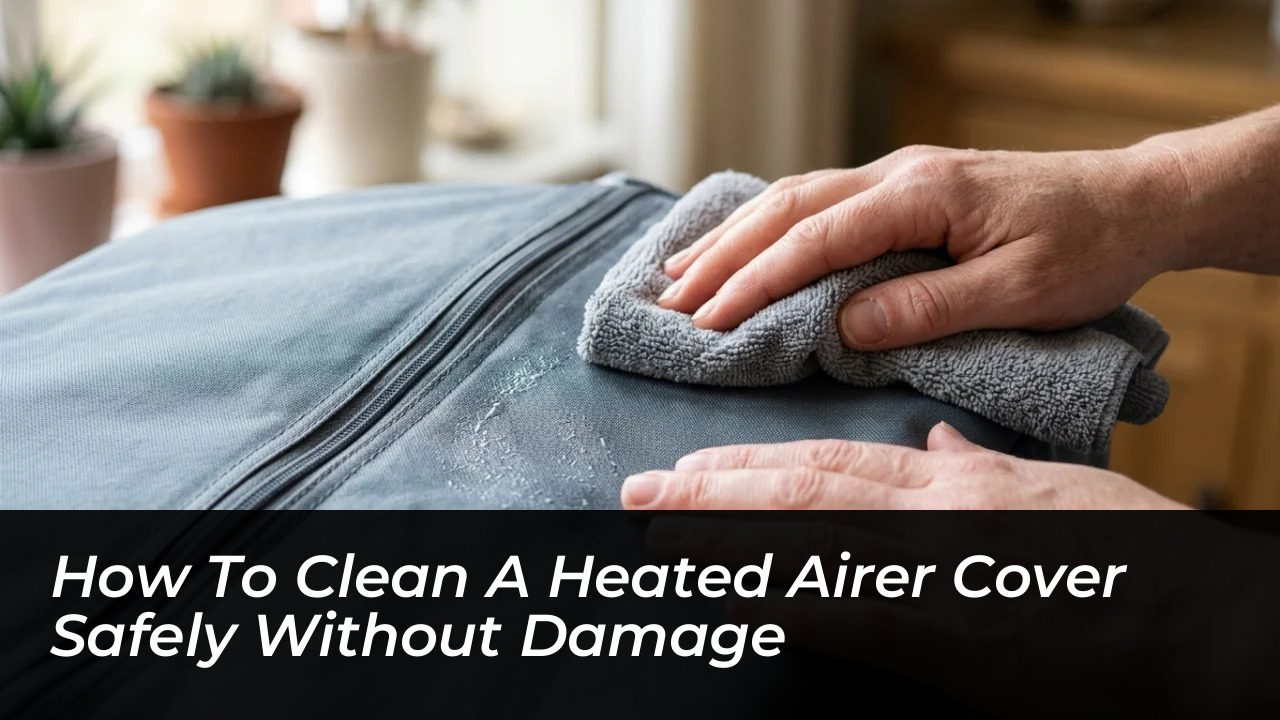
For minor dust or localized marks, lay the cover flat across a clean surface. Dip a clean microfibre cloth into a basin of warm water mixed with a few drops of mild liquid washing detergent, wring it out until damp, and gently wipe down both the interior and exterior surfaces.
3. Tackle Musty Smells and Mildew
If trapped moisture has created stubborn damp smells or early mildew speckles, prepare a solution of equal parts warm water and distilled white vinegar. Dab the solution onto the affected zones with a soft sponge, letting it sit for roughly ten minutes before wiping clean with a damp cloth.
4. Hand Wash When Necessary
If the care instructions permit full immersion, submerge the cover in a bath or deep sink filled with cool to lukewarm water, never exceeding 30°C. Use a delicate, bleach-free detergent, gently agitate the water by hand for two minutes, and rinse thoroughly with clean, cold water to remove all soap residue.
Never wring or twist the cover forcefully to extract water, as this strains the zip bindings and fractures insulated backings. Instead, press the fabric gently against the side of the tub or between two dry bath towels to soak up excess moisture before hanging it up.
Comparing Safe Cleaning Methods
Different cover constructions demand tailored care. Understanding which technique matches your specific model protects your investment over multiple winter seasons.
- Damp Microfibre Wipe: Ideal for regular fortnightly upkeep, dust removal, and foil-lined insulated panels. Low risk of structural damage.
- Diluted White Vinegar Sponge: Best for neutralising stubborn damp odours and cleaning minor surface mildew without stripping synthetic fibres.
- Lukewarm Hand Soak: Safe for non-insulated breathable polyester covers requiring a deep refresh; avoid water temperatures above 30°C.
- Machine Wash Cycle: Only suitable if explicitly stated by the manufacturer; must use a gentle wool or delicates cycle with zero spin.
Electrical Safety and Drying Precautions
Reattaching a damp cover to an electrical appliance introduces severe safety risks. Never drape a wet or partly damp cover over an active heated airer with the expectation that the bars will dry the cover itself. Doing so creates excess internal moisture that can penetrate heating elements, power switches, or nearby plug sockets.
After washing, suspend the cover over an unheated clothes horse, a shower rail, or an outdoor washing line away from direct, harsh sunlight. Ensure all zip compartments are pulled fully open to allow unimpeded airflow through the internal folds. Only once the fabric and zip bands are completely dry to the touch should the cover be reinstalled over your heated airer.
Frequently Asked Questions
Can I put my heated airer cover in the washing machine?
Most heated airer covers should not be machine-washed because vigorous drum agitation and high heat can warp zips, shrink fabric, and delaminate internal thermal foil linings. Always check the care label first, and only machine wash if explicitly permitted on a delicate, zero-spin cycle.
What water temperature is safe for hand-washing a cover?
Always use cool to lukewarm water that stays strictly under 30°C. Hot water can melt synthetic fibers, damage waterproofing agents, and permanently warp structural seams.
How do I remove musty smells from my airer cover?
Prepare a simple solution of equal parts warm water and distilled white vinegar. Dab it onto the affected areas using a soft sponge, let it sit for about ten minutes, and wipe clean with a damp microfibre cloth to neutralize odours naturally.
Can I tumble dry a heated airer cover?
No, standard tumble dryers expose the fabric to excessively high temperatures that will shrink the material, melt reflective foil coatings, and destroy zip tracks. Always air-dry the cover naturally.
Is it safe to put a slightly damp cover back onto a heated airer?
Never place a damp or wet cover over an active or plugged-in heated airer. Trapped moisture can seep into electrical components, causing short circuits or fire hazards. Ensure the cover is 100% dry before reinstallation.