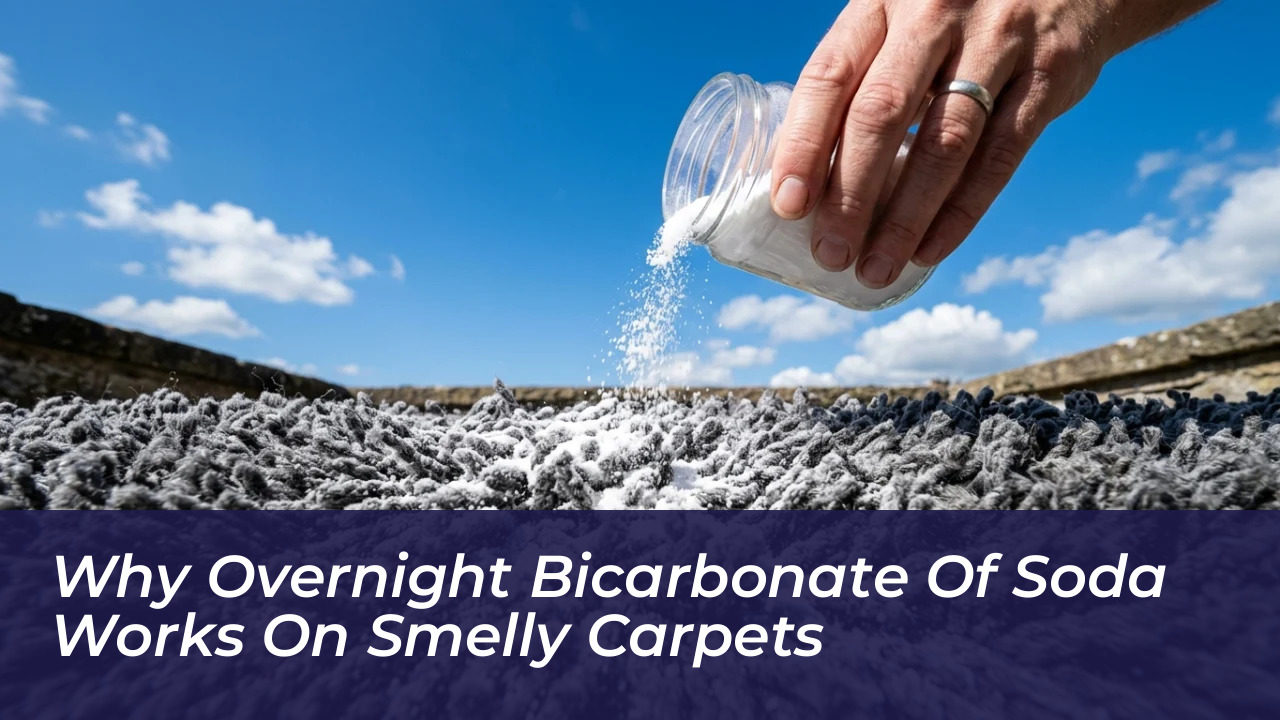

Leaving bicarbonate of soda on a smelly carpet overnight neutralises stubborn household odours by chemically bonding with acidic compounds rather than merely masking them with synthetic perfumes. Giving the alkaline powder eight to twelve hours of contact time allows it to absorb trapped moisture, break down volatile organic particles, and lift stale pet or food scents directly from the pile before morning vacuuming. Carpets act as giant filters within UK living spaces, collecting tracked-in dirt, spills, and atmospheric moisture.
While chemical aerosol fresheners temporarily cover bad smells with artificial fragrances, they often leave behind sticky residues that attract further grime. Sodium bicarbonate works through natural chemistry, providing an inexpensive, non-toxic alternative that permanently removes unpleasant scents. Understanding the underlying chemical reaction explains why this simple pantry item remains an enduring household essential for modern maintenance.
The Science of Odour Neutralisation: How Sodium Bicarbonate Works
Most offensive household smells stem from strong acids, such as butyric found in pet accidents, sour milk, and sweat. Sodium bicarbonate is an amphoteric, mildly alkaline compound with a pH balance around 8.3. When the dry crystals sit in direct contact with organic compounds, an -base neutralisation reaction takes place.
Instead of trapping the scent in the air, the powder draws moisture out of the deep textile fibres. Because the microscopic crystal structure of the mineral is porous, it adsorbs volatile molecules, trapping them securely inside its matrix until they are removed. A common mistake in practice is rushing the contact period; alkaline powders require prolonged exposure to draw moisture and neutralise trapped acidic compounds effectively. Allowing the powder to sit untouched for several hours ensures deep penetration into thick wool mixes and synthetic twists alike.
Busting the Carpet Powder Myth: Masking vs True Deodorising
A pervasive myth claims that commercial carpet powders and heavily perfumed foam sprays provide superior cleaning power compared to kitchen cupboard staples. In reality, commercial formulations rely primarily on artificial masking agents paired with carrier talc, which disguise bad smells temporarily without dismantling the odour molecules.
, perfumed sprays can bond with existing dirt, creating a grimy film that clings stubbornly to carpet fibres. Bicarbonate of soda operates without sticky surfactants, volatile organic solvents, or overwhelming synthetic perfumes. Once vacuumed up, it leaves behind a genuinely neutral, scent-free environment.
Step-by-Step: The Overnight Deodorising Method
Achieving thorough results requires proper preparation to avoid clogging household vacuum filters or grinding powder deeper into the backing:
- Clear and dry the area: Vacuum the carpet thoroughly to lift loose grit and surface dust. Ensure the carpet is completely dry, as wet patches will turn dry powder into a paste that is difficult to lift.
- Sift the powder: Distribute a generous, even layer of sodium bicarbonate across the affected carpet using a fine kitchen sieve. A light, snowy dusting works far better than dense mounds.
- Gently work into the pile: Use a dry brush or clean broom to coax the particles down into the base of the carpet fibres without agitating the backing too aggressively.
- Leave overnight: Keep pets and children away from the room, allowing the compound to rest undisturbed for at least eight to twelve hours.
- Thoroughly vacuum: Empty your vacuum container or replace the bag beforehand, then make slow, overlapping passes over the carpet to extract all remaining powder.
Essential Precautions for Vacuum Maintenance
Fine powders can clog standard micro-filters quickly. To protect your machine, inspect the vacuum filter midway through extraction and empty the dust canister frequently. High-efficiency particulate air (HEPA) filters are ideal for trapping fine mineral dust during this process.
Household Deodorising Methods Compared
Comparing various approaches highlights why natural mineral alternatives outperform chemical sprays for long-term fabric care:
- Bicarbonate of Soda Overnight: Chemically neutralises acidic odour molecules and absorbs residual damp without synthetic residue.
- Aerosol Air Freshener: Temporarily masks atmospheric smells with strong perfumes; does not resolve trapped fibre odours.
- Commercial Carpet Foam: Coats surface fibres with cleaning agents; requires careful rinsing to prevent sticky soil-attracting residue.
- Steam Extraction: Uses heat and high-pressure water for deep sanitation; requires extended drying time to prevent mould.
Treating problem spots periodically keeps living spaces fresh without damaging carpet backings or introducing harsh chemicals to domestic spaces. High-traffic entryways and living rooms accumulate moisture fastest over damper seasons, making regular dry treatments an invaluable addition to home maintenance routines.
Frequently Asked Questions
Does bicarbonate of soda need to be fresh?
Yes. Baking soda absorbs ambient odours and humidity over time, which reduces its chemical potency. Opening a brand-new, unopened box ensures maximum absorption capacity and neutralisation power.
Can I mix essential oils into the powder for fragrance?
You can add a few drops of pet-safe essential oils (such as lemon or lemongrass) to your bicarb before sifting if you prefer a scented room, though plain sodium bicarbonate is more effective for true odour removal.
Is it safe for pets to walk on the carpet during treatment?
It is best to keep pets and small children out of the room while the powder rests overnight to prevent them from inhaling fine dust or ingesting large amounts of the mineral compound.
Why must the carpet be completely dry before applying?
Applying sodium bicarbonate to a wet carpet turns the dry crystals into a pasty residue that cements itself into the textile pile, making it extremely difficult to extract fully with a vacuum cleaner.
How often should I use this overnight method?
For routine maintenance in high-traffic zones or homes with pets, repeating this treatment every few weeks prevents odours from embedding deeply into the carpet backing and padding.