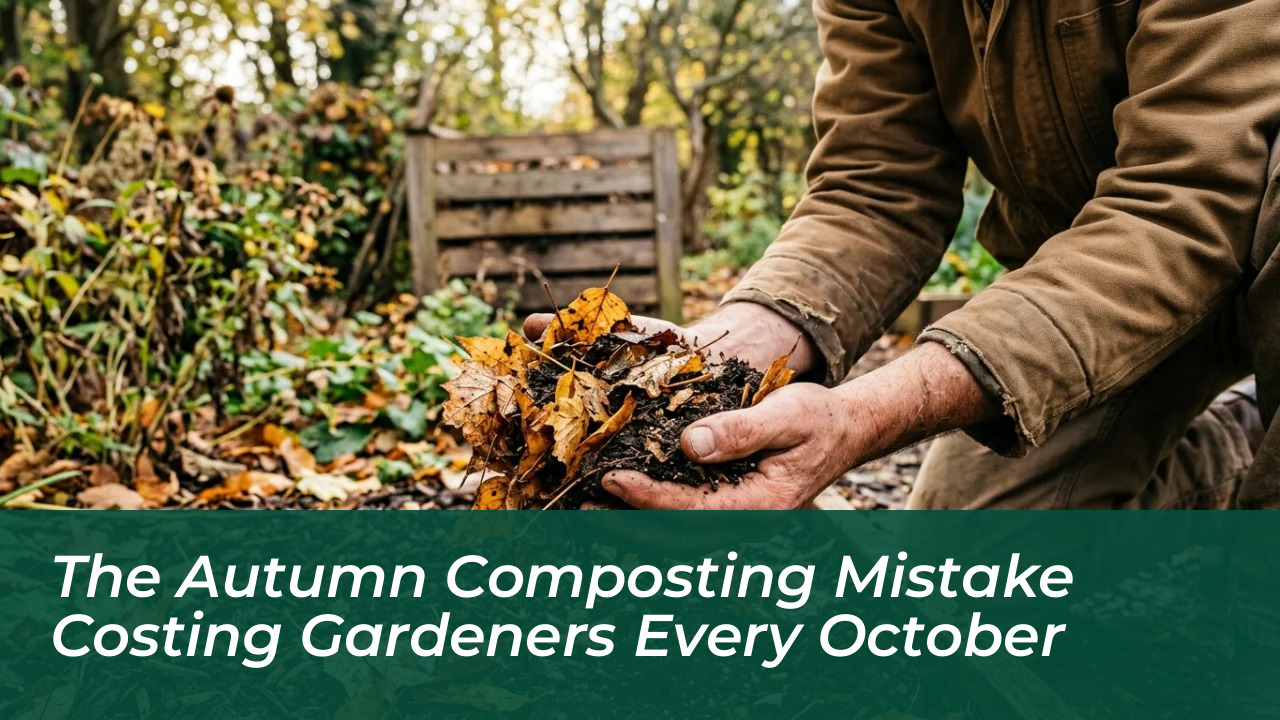

Every October, millions of homeowners pack their garden waste into council collection bins, unaware that they are throwing away the most valuable soil conditioner of the entire year. By retaining fallen foliage and balancing carbon-rich matter with nitrogen waste, you can transform your garden beds for zero cost. The secret to successful composting lies in balancing nitrogen-heavy green waste with carbon-dense brown materials. During late autumn, nature provides an abundance of carbon, offering an opportunity to stockpile free materials that protect your soil throughout winter. Yet, the urge to sweep pathways pristine often leads to depleted heaps and missed ecological benefits across Britain.
The Carbon Equation: What Your Compost Heap Actually Demands
A thriving compost system cannot survive on damp grass clippings and kitchen scraps alone. Overloading a bin with high-nitrogen greens without sufficient carbon creates a dense, foul-smelling sludge that deprives beneficial microbes of air. Autumn provides the ultimate seasonal solution: an influx of dry, carbon-rich browns that introduce structure and allow air pockets to form within the rotting mass. Homeowners often spend considerable sums in spring purchasing commercial compost and bark, oblivious to their autumn debris. When you feed your compost bin in autumn, prioritising these carbon inputs prevents compaction and locks in vital nutrients before wet winter weather sets in.
Key Carbon Materials for Your Fall Heap
- Fallen deciduous leaves: The premier autumn carbon source, ideal for balancing high-nitrogen kitchen vegetable peelings.
- Dry plant stems and prunings: Chopped woody material that maintains crucial internal airflow inside the heap.
- Cardboard and shredded paper: Excellent structural brown materials to intersperse between wet garden waste.
Why Autumn Leaves Deserve Their Own Storage
While blending leaves directly into the compost bin works well, horticultural specialist Nuala Madigan highlights that storing them separately creates an even more potent garden asset: pure leaf mould. Unlike conventional compost, which breaks down rapidly through bacterial heat, leaves decompose slowly via fungal action. By collecting damp leaves into plastic sacks or wire netting and setting them aside in an out-of-the-way corner for two years, the tough fibrous foliage breaks down into a crumbly, dark mulch.
This aged leaf mould acts as a cost-free alternative to commercial bark mulch. When layered over borders, it suppresses persistent weeds whilst locking deep moisture into the ground, ensuring drying winds cannot pull moisture away from sensitive plant roots.
A Natural Shield for Seeds and Native Wildlife
Because fully broken-down leaf mould contains low nutrient levels, it serves as an ideal seed-sowing medium. Delicate seedlings germinate quickly without their tender roots suffering scorch from artificial fertilisers. Conversely, sweeping every corner of the lawn bare strips away critical survival zones. Undisturbed leaf piles in garden corners create essential autumn and winter shelter for frogs, beneficial insects, and hibernating hedgehogs seeking refuge against sudden temperature drops.
Saving a portion of your autumn sweepings in reserve also resolves a common springtime dilemma. When lawn mowing resumes in early spring, gardeners frequently suffer from an excess of nitrogen-heavy wet grass and no brown matter to counter it. Bagging dry leaves now ensures a balanced compost bin later.
Common Autumn Composting Mistakes to Avoid
To ensure your autumn garden clean-up yields results next spring, keep these operational tips in mind:
- Avoid the “Set It and Forget It” Fallacy: Cold temperatures slow down microbes. Ensure your pile is at least 3x3x3 feet to insulate itself.
- Shred Large Materials: Whole oak leaves take years to break down. Run your lawnmower over them to accelerate decay by up to 400%.
- Monitor Moisture: Keep piles as damp as a wrung-out sponge, but protect them from becoming waterlogged by heavy October rains.
Frequently Asked Questions
Why shouldn’t I throw away my autumn leaves?
Fallen leaves are rich in carbon and represent a valuable, free soil conditioner. Tossing them out forces you to buy expensive commercial compost and bark mulch later.
What is the difference between compost and leaf mould?
Compost is created via fast bacterial decomposition requiring a mix of greens and browns, whereas leaf mould relies entirely on slow fungal breakdown of leaves kept in sacks or wire bins for one to two years.
Can I add fallen leaves directly to my garden beds?
Yes, you can use shredded leaves as a direct mulch layer. However, whole leaves left in thick mats can form a soggy barrier that suffocates the lawn or plants underneath.
How do leaf piles help local wildlife?
Undisturbed piles of autumn leaves provide critical overwintering habitat and safe refuges for hedgehogs, frogs, toads, and beneficial insects during freezing weather.
What should I do if my compost bin gets too wet in October?
Heavy autumn rains can turn a pile into an anaerobic, smelly sludge. Turn the pile with a fork and mix in dry carbon materials like shredded cardboard or dry leaves to restore airflow.