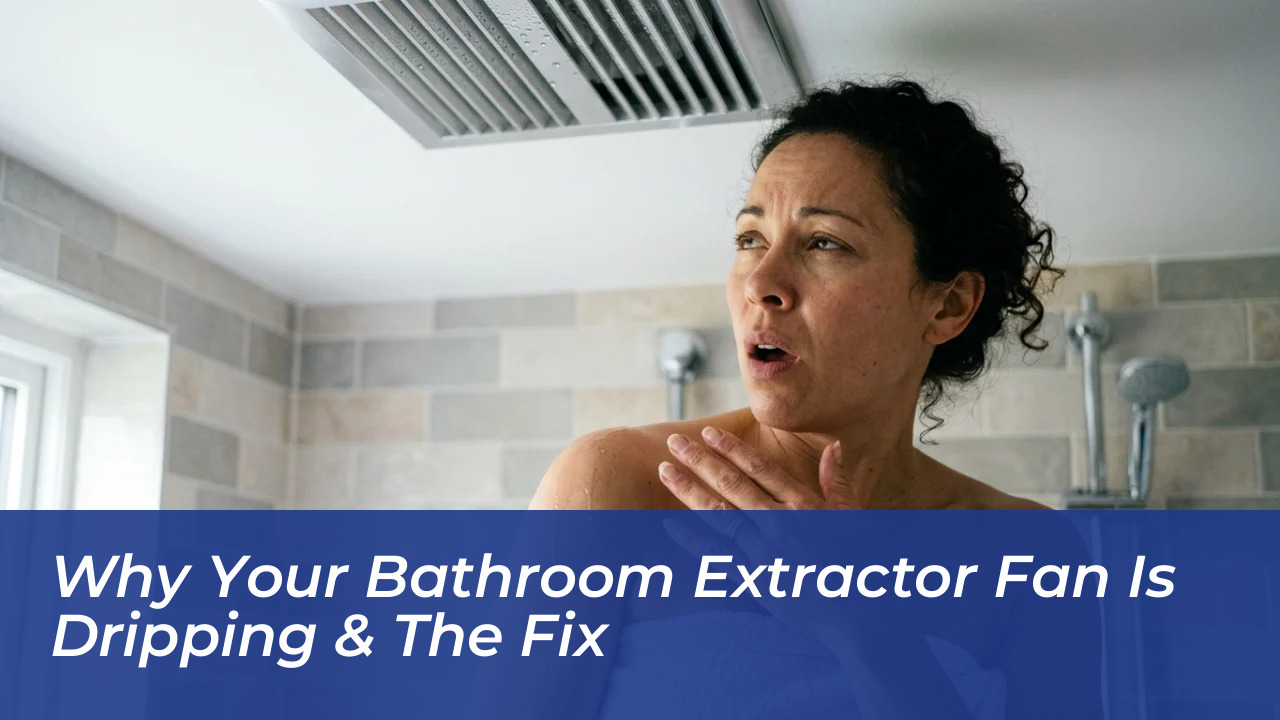

A sudden, icy drip falling from your ceiling vent while you dry yourself is rarely a sign of a roof leak. Instead, it is the result of warm, humid indoor air turning into liquid inside cold ductwork before it escapes outside. Switching off your extractor fan the moment you step out of the shower traps litres of airborne vapour inside the system, causing the water to run straight back down into the room.
As autumn and winter set in, wetter days and dropping temperatures mean windows stay firmly shut, locking damp air inside houses. Combined with central heating turning on and wet laundry moving onto indoor drying racks, household humidity spikes dramatically. Left unchecked, that trapped vapour does far more than create an annoying spray-it ruins ceiling plaster, peels wallpaper, and breeds persistent black mould.

The Physics Behind The Drip: Why Moisture Stalls Overhead
When you bathe or shower, warm vapour rises quickly towards the ceiling. The fan blades suck this humid plume into the extraction vent, pushing it through a duct towards your roof eaves or an external wall. The trouble begins the instant the power is cut.
If the airflow stops while the ductwork is still packed with high-humidity air, the vapour meets cold ambient air in an unheated loft space or outside wall. The rapid temperature drop forces the water to condense on the internal walls of the ducting, where it pools and trickles back down the grill.
According to Ruth MacEachern, a ventilation expert at Envirovent, routine household tasks generate staggering quantities of ambient water vapour. In fact, four people living in a typical three-bedroom property produce up to 112 pints of moisture every single week simply from breathing, showering, cooking, and boiling the kettle. Shutting the unit down prematurely guarantees that a sizeable fraction of that moisture never leaves the building.
The 15-Minute Overrun Rule That Solves It
The most immediate and cost-free fix for a bathroom extractor fan dripping water is changing how long you allow the motor to spin. Most homeowners assume that turning off the switch upon leaving the bathroom is an energy-efficient choice, but ventilation specialists caution that it actively causes condensation.
MacEachern stresses that you need to keep your fan running for at least 15 minutes after you have finished showering, bathing, or cooking. That quarter-hour overrun clears the entire volume of saturated air lingering inside the pipework, replacing it with drier room air and evaporating any micro-droplets before they can collect into a steady stream.
Modern extraction units often come fitted with an adjustable overrun timer or an integrated humidistat. If your wall isolator switch controls the fan directly, leaving it running while you get dressed provides the clearance window your ductwork requires.
Six Practical Adjustments To Slash Bathroom Vapour
Running the unit for longer tackles the air already in motion, but lowering the sheer volume of steam you generate protects your ceilings even further:
- Bathe in slightly cooler water: Scalding water creates dense thermal plumes; dropping the thermostat dial by even two degrees noticeably curtails airborne vapour.
- Keep the bathroom door firmly shut: Close the door during your shower and keep it closed for the entire 15 minutes of fan overrun so moisture does not migrate into adjacent bedrooms.
- Empty the tub immediately: Leaving a warm bath sitting after you climb out acts like an open radiator of steam that continuously overwhelms the room.
- Keep lids on boiling pans: Kitchen steam rapidly circulates through hallways; trapping it under saucepan lids stops it from migrating towards cooler zones.
- Leave the dishwasher shut: Opening the appliance while it is scorching hot releases a massive wave of scalding vapour; let it cool fully before unloading.
- Minimise oven door openings: Checking roast dishes repeatedly vents high-temperature humidity directly into indoor air.
Transforming Your Bathroom Into A Safe Drying Space
Outside washing lines become unreliable as weather turns damp, forcing millions of households without tumble dryers to air clothes indoors. Spreading wet laundry over bedroom radiators dumps multiple pints of water straight into living quarters, accelerating mould formation across wallpaper and window sills.
A safer alternative is converting your bathroom into a dedicated drying station. MacEachern recommends hanging laundry on an airer inside the bathroom, switching on the heated towel rail, and leaving the extractor fan running to exhaust the evaporating water outdoors. Spacing garments out evenly on the drying rack prevents stagnant air pockets, speeds up drying times, and prevents the stale odour that often plagues indoor clothes drying.
How to Inspect and Maintain Your Extractor Fan Ductwork
If changing your timing habits does not completely resolve the drip, physical maintenance of your extraction system may be required. Over time, components degrade or accumulate obstructions that prevent proper drainage.
- Check flexible vs. rigid ducting: Flexible ducting often sags, creating low points where condensation pools into heavy pockets. Replacing it with smooth, rigid ducting allows moisture to escape freely.
- Ensure a downward slope: Wall-mounted fan ducts must be installed with a slight downward angle toward the exterior vent so that any residual moisture drains outside rather than inside.
- Install a condensate trap: For ceiling-mounted fans with vertical roof runs, a professional can easily fit a condensation trap to catch water before it reaches the vent grill.
- Inspect exterior flaps: Check that your outside vent hood or backdraft damper opens freely under fan pressure and seals tightly when shut to block cold drafts.
Addressing condensation inside your fan ducting takes only minor daily timing changes, protecting both your health and your ceiling plaster. Taking a moment to verify whether your fan timer is set correctly will keep cold drips firmly in the past.
Have you noticed water dripping back through your ceiling fan this autumn? Share your experiences and questions in the comments below.
Frequently Asked Questions
Why does my bathroom extractor fan drip water only in winter?
Winter brings freezing outdoor temperatures that drastically chill uninsulated attic ductwork. When warm, moist shower air hits these freezing pipe walls, it rapidly condenses into heavy water droplets that run back down into the room.
Is a dripping bathroom fan always caused by condensation?
No. While condensation is the most frequent culprit, a dripping fan can occasionally point to a compromised roof flashing, a leaking plumbing pipe in the attic, or rainwater driving directly into an unshielded exterior roof vent.
How do I know if my extractor fan is powerful enough?
As a rule of thumb, your extractor fan should be able to exchange the total air volume of your bathroom in roughly five to ten minutes. If your mirror stays fogged for more than 20 minutes after your shower, you likely need a higher cubic feet per minute (CFM) rated fan.
Should I insulate my bathroom fan ducting?
Yes. Wrapping your exhaust ducting in thermal insulation keeps the pipe interior warm, preventing the severe temperature contrast that causes airborne moisture to turn into liquid water.
Can I fix a dripping extractor fan myself?
Yes, many fixes are straightforward DIY tasks. You can adjust your fan run-time habits, clean out dust buildup, seal duct gaps with aluminum foil tape, or insulate exposed pipes in your loft without professional help.