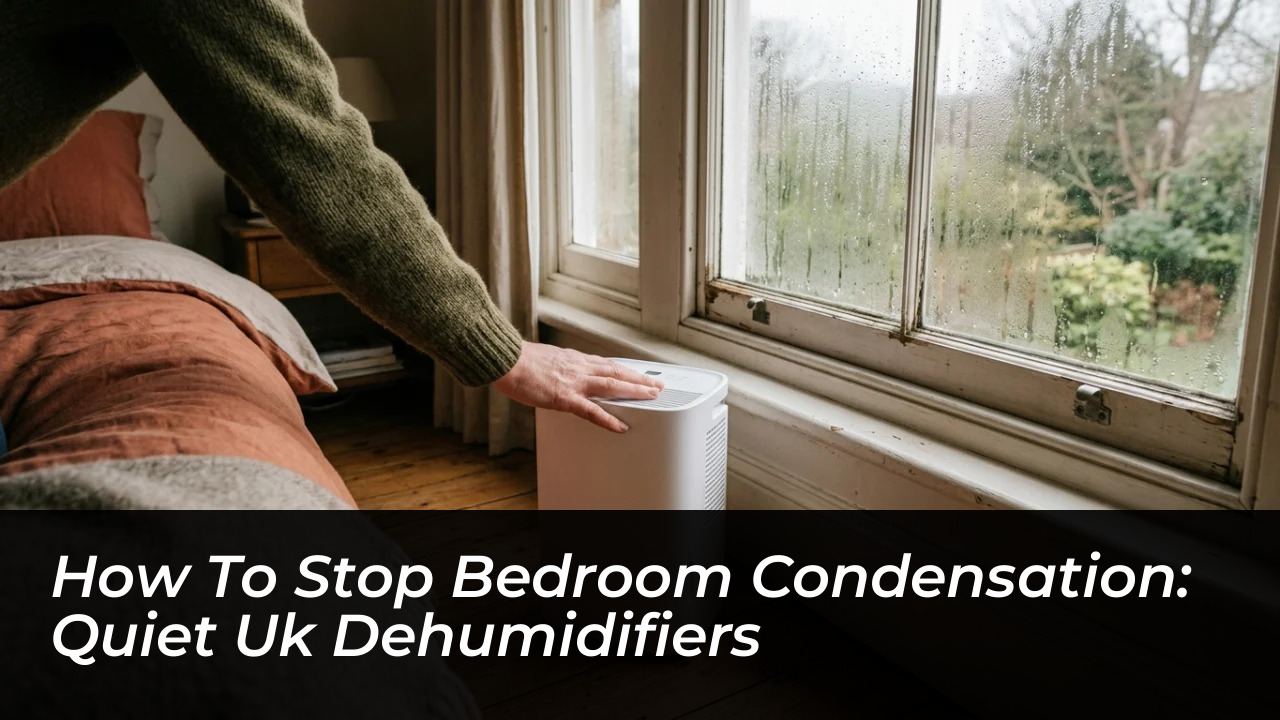

Stopping bedroom window condensation requires maintaining indoor relative humidity between 40% and 55%. This benchmark is best achieved by running a quiet compressor or a compact desiccant bedroom dehumidifier. Overnight breathing, closed interior doors, and drops in outdoor temperature cause water vapour to migrate toward the coldest surfaces in the room. There, it rapidly settles on window panes, external walls, and window sills as liquid water. Left unchecked, chronic moisture creates the ideal breeding ground for toxic black mould and dust mites. Both are recognised by health authorities such as the NHS as triggers for respiratory irritation, asthma flare-ups, and disturbed sleep. Choosing the correct extraction system means balancing extraction speed against operating noise, running wattage, and the ambient temperature of your sleeping space.
Compressor vs Desiccant: Which Suits Cold British Bedrooms?
The performance of any moisture-control appliance depends on the core mechanism inside the chassis. UK homes generally feature either compressor-driven units or desiccant-wheel systems. Each reacts differently to internal room temperatures during colder months.
Refrigerant compressor units work by drawing humid air over cold internal metal coils. When the moisture condenses, it drips into a collection tank, and the dry air is reheated before recirculating. These units excel in heated rooms maintained consistently above 16°C, offering lower running costs per litre of extracted water. However, the presence of an active motor means they inevitably emit a low-frequency hum that can disturb light sleepers.
Desiccant units absorb ambient water vapour using an internal rotating wheel coated in natural zeolites. A built-in ceramic heater then dries out this wheel. Because they contain no mechanical compressor, desiccant models operate with a smooth, fan-only rushing sound. They continue extracting moisture efficiently in unheated rooms dropping as low as 1°C.
Comparison of Extraction Mechanics
- Compressor (Refrigerant): High energy efficiency above 16°C; generates noticeable motor vibration; heavier frame. Averages 40 to 48 dB. Emits neutral air.
- Desiccant (Zeolite Wheel): Consistent extraction in unheated rooms; produces subtle warm exhaust; smooth fan noise profile running under 38 dB on low settings. Raises room temperature by 1°C to 2°C.
For a drafty bedroom with single glazing or intermittent heating, a desiccant design often resolves cold damp faster while gently warming the room. In well-insulated properties with steady central heating, a low-noise compressor remains the more economical daily workhorse.
Decibel Ratings and Night Modes: Sleeping Without Disturbance
Sound disruption is the most common reason British homeowners switch off their moisture extraction equipment prematurely, undoing progress against damp walls. In a quiet nighttime bedroom, ambient noise often drops below 30 decibels (dB), making any appliance producing over 42 dB immediately noticeable. Operating a unit on a continuous high setting inside an occupied bedroom creates acoustic fatigue. Targeting a stable ambient hum requires a dedicated night setting and proper floor isolation.
Specialist bedroom models address acoustic sensitivity through multi-speed fans and dampening mounts beneath internal components. Units equipped with a dedicated sleep setting dim all digital display lights, silence audible button beeps, and throttle the air intake to minimum speed.
Managing Night-Time Vibrations on Floorboards
Wooden floorboards commonly found in Victorian and Edwardian British properties act as natural amplifiers for compressor vibrations. Placing a unit directly onto bare timber transfers rhythmic mechanical hums throughout adjacent floor joists and down into downstairs rooms. To eliminate structure-borne acoustic resonance, position the chassis on top of a dense rubber washing-machine isolation pad or a high-density cork mat. This decouples the appliance from the floor structure, significantly reducing perceived operating volume without impeding airflow.
The Reality of Indoor Humidity: Busting Common Moisture Myths
A widespread misconception across UK households is that cracking a bedroom window open slightly on an autumn or winter night will prevent window condensation. While ventilation introduces fresh air, cold outside air cools internal wall surfaces further. This accelerates the rate at which human respiration condenses on surrounding plasterwork.
Another prevalent myth suggests that non-electric moisture traps containing chemical calcium chloride crystals provide sufficient moisture relief for bedrooms. These passive containers extract merely a few millilitres of water over several weeks. In contrast, two sleeping adults exhale approximately one litre of water vapour into the atmosphere every night. Relying on disposable chemical tubs leaves hundreds of litres of ambient water unmanaged across a single winter, practically guaranteeing mould development in poorly ventilated corners and behind wardrobes.
Step-by-Step Setup for Maximum Moisture Extraction
Proper appliance positioning and run cycles prevent morning glass misting without spiking electrical consumption. Follow these operational guidelines to achieve clear glass by sunrise:
- Position away from walls: Maintain at least 20 to 30 centimetres of clear space around the air inlet and outlet vents to maintain unrestricted laminar airflow across the room.
- Keep doors and windows sealed: Close bedroom doors while operating the unit overnight to prevent the machine from attempting to draw damp air from adjoining landings or bathrooms.
- Target the correct setting: Set the internal humidistat to 50% relative humidity to prevent excessive dry air that causes morning throat irritation.
- Engage low-fan mode an hour before bed: Turn the machine on early to establish air movement and drop relative humidity before the room cools down at night.
- Empty the collection tank daily: Drain the water container every morning or utilise continuous drainage tubing if your layout allows safe gravity feeding.
Managing bedroom condensation protects both indoor building fabric and nighttime respiratory health. Evaluate your property’s average room temperature before choosing between a whisper-quiet desiccant design and an energy-thrifty compressor.
Frequently Asked Questions
Is it safe to run a dehumidifier in the bedroom all night?
Yes, modern bedroom dehumidifiers are engineered for safe, continuous overnight operation. Units feature automatic shut-off mechanisms that trigger the moment the internal water collection tank reaches maximum capacity, preventing spills.
What is the ideal humidity level for a UK bedroom?
The optimal indoor relative humidity level for sleeping spaces is between 40% and 55%. This range successfully prevents window condensation and black mould growth while avoiding overly dry air that irritates the throat and nasal passages.
Do desiccant dehumidifiers cost more to run than compressors?
Desiccant models use a ceramic heating element to dry their internal zeolite wheels, resulting in a higher wattage draw (typically 300W to 400W+) compared to low-energy compressors (120W to 150W). However, because they expel warm air and maintain high extraction efficiency in cold rooms, they often require fewer total operational hours in unheated spaces.
Why is my dehumidifier making a rattling noise on the floor?
Hard wooden floorboards amplify mechanical vibrations from compressor motors. Placing a dense rubber isolation mat or a cork square beneath the appliance effectively absorbs these vibrations and noticeably lowers the operating decibel level.
Will a quiet dehumidifier also help dry indoor laundry?
Most full-sized quiet units feature a dedicated laundry mode with high fan speeds. While mini 300ml peltier units lack the capacity for drying clothes, larger bedroom models handle small batches of indoor washing effectively.