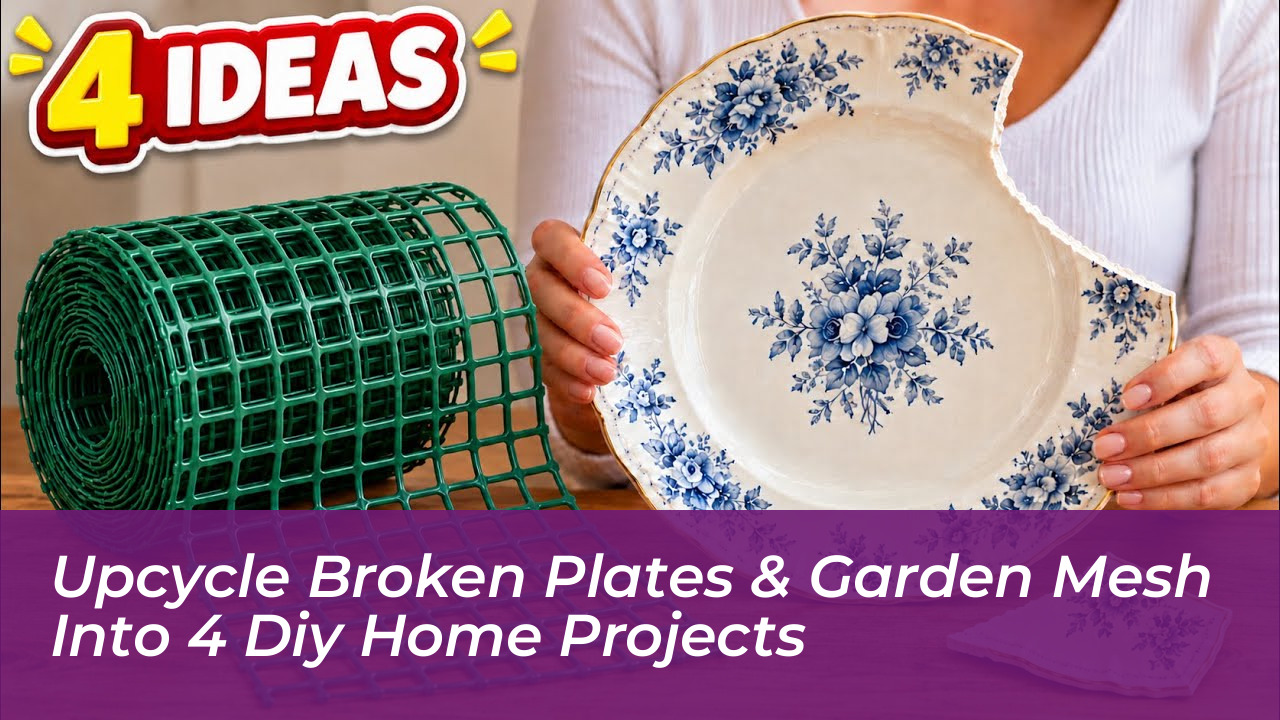

A shattered ceramic dinner plate does not belong in your wheelie bin. Pairing broken crockery with ordinary wire garden mesh creates an ultra-durable, rustically elegant foundation for bespoke home and garden accessories. Instead of consigning fractured china to a landfill, clever crafters across the United Kingdom are turning to upcycling broken plates to craft custom mosaic plant stands, textured hanging lanterns, bird feeders, and botanical wall plaques with minimal expense. Most local council kerbside recycling schemes in Britain cannot process ceramic tableware or tempered glass. This means broken dinner sets inevitably head straight for general waste. Reclaiming those fragments eliminates unnecessary refuse, while the pliable framework of garden mesh provides a structural armature that traditional flat-surface crafting simply cannot match.
Before gathering your materials, safety remains paramount when handling fractured pottery and cut metal netting. Working with ceramic fragments requires basic protective measures to prevent cuts and airborne dust. Heavy-duty gloves, protective eye goggles, and a clean cloth or canvas bag are indispensable when breaking larger pieces down to size. Wrap your broken plate inside a thick tea towel or canvas bag before striking it gently with a hammer to prevent sharp splinters from scattering across your workspace. Use a standard medium-grit sandpaper block or a tile file to soften razor-sharp perimeter edges before assembly. Finally, cut your garden mesh using sturdy wire cutters or tin snips, bending raw edge prongs backward with needle-nose pliers so they never snag clothing or skin.
4 Ingenious DIY Projects Using Broken Plates and Garden Mesh
Combining the rigid elegance of glazed porcelain with the pliable geometry of galvanised wire creates a tactile balance that suits modern and traditional British homes alike. Here are four distinctive projects designed to elevate your living space using materials you likely already have in your shed.
1. The Mosaic Hanging Lantern
Form a length of flexible garden mesh into a cylinder, fastening the overlapping wire joints with thin craft wire to create a sturdy cage. Adhere smoothed fragments of your broken plate across the exterior using exterior-grade silicone adhesive or weatherproof tile glue, leaving small gaps between each piece. When you drop a battery-operated LED candle or fairy lights inside, the glazed ceramic catches the light while the open wire gaps cast intricate geometric shadows across patio paving or mantelpieces.
2. The Freestanding Wire-Framed Plant Saucer
Houseplants often struggle on damp wooden surfaces where moisture rings cause lasting damage. By forming a low circular tray from double-layered garden mesh and lining the base with ceramic plate shards set into quick-drying mortar, you create an elevated, breathable plant saucer. The raised mesh rim keeps plant pots perfectly centred, whilst the glazed ceramic fragments catch rogue drainage drips effortlessly.
3. The Garden Mosaic Bird Feeder Platform
Transforming shards into wildlife-friendly garden features requires only basic assembly. Suspend a circular mesh disc using three equal lengths of garden twine or chain, and embed larger plate fragments into non-toxic exterior tile adhesive spread over the centre. This provides a non-porous, easily wipeable surface for seeds and fruit scraps, whilst the open mesh border offers perching room for garden songbirds such as robins and blue tits.
4. Textured Botanical Wall Art
Mount a flat rectangular panel of dark-coated garden mesh onto a salvaged timber frame, creating an industrial trellis canvas. Arrange colourful plate shards in flowing botanical silhouettes-such as stylised petals, leaves, or abstract swirls-fixing them securely onto the wire intersecting points with high-strength contact adhesive. The finished panel creates eye-catching, multi-dimensional wall decor suitable for outdoor brickwork or indoor garden rooms.
Why Upcycling Everyday Materials Outperforms Buying New
The beauty of this crafting approach lies in its resourcefulness. Household items that have outlived their original kitchen utility acquire an artistic second life, cutting consumer waste whilst delivering bespoke ornaments that high-street retailers cannot replicate. Moreover, tactile crafting offers a satisfying sensory break from screen-heavy daily routines. Manipulating cool porcelain pieces and weaving metal mesh provides a measured, calming rhythm that grounds the mind.
Before clearing up broken kitchenware after an accidental drop, take a closer look at the colours and patterns hidden within the shards. Storing fractured plates alongside surplus garden wire means your next weekend project is already waiting in the shed without costing an extra penny.
Frequently Asked Questions About Upcycling Broken Plates
Can old ceramic plates with lead paint be safely used in garden projects?
You should avoid using old or antique dishes containing lead paint in vegetable gardens or bird feeders where animals might ingest particles. For purely decorative outdoor wall art or hanging lanterns placed out of reach, they remain acceptable if properly sealed with a clear exterior varnish.
What is the best adhesive for attaching ceramic shards to metal garden mesh?
Exterior-grade silicone adhesive, high-strength contact adhesive, or weatherproof tile mortar provide the most durable bonds between glazed porcelain and galvanised wire mesh, ensuring your creations withstand fluctuating British weather conditions.
How do I prevent jagged ceramic edges from cutting my hands?
Always wear heavy-duty work gloves, wrap plates inside a canvas bag before breaking them with a hammer, and smooth out sharp perimeter points using a medium-grit sandpaper block or a dedicated tile file before starting your assembly.
Can these upcycled garden mesh projects stay outside during winter?
Yes, provided you use low-porosity stoneware or bone china and seal all gaps with weatherproof silicone or grout. However, bringing delicate hanging lanterns or plant saucers indoors during severe frost will significantly extend their structural lifespan.
Where can I source broken plates if I do not have any at home?
If your kitchen cabinet stays miraculously intact, visit local charity shops, car boot sales, or flea markets. Many retailers and thrift stores gladly give away chipped or cracked crockery for free or pennies since they cannot sell them for standard kitchen use.