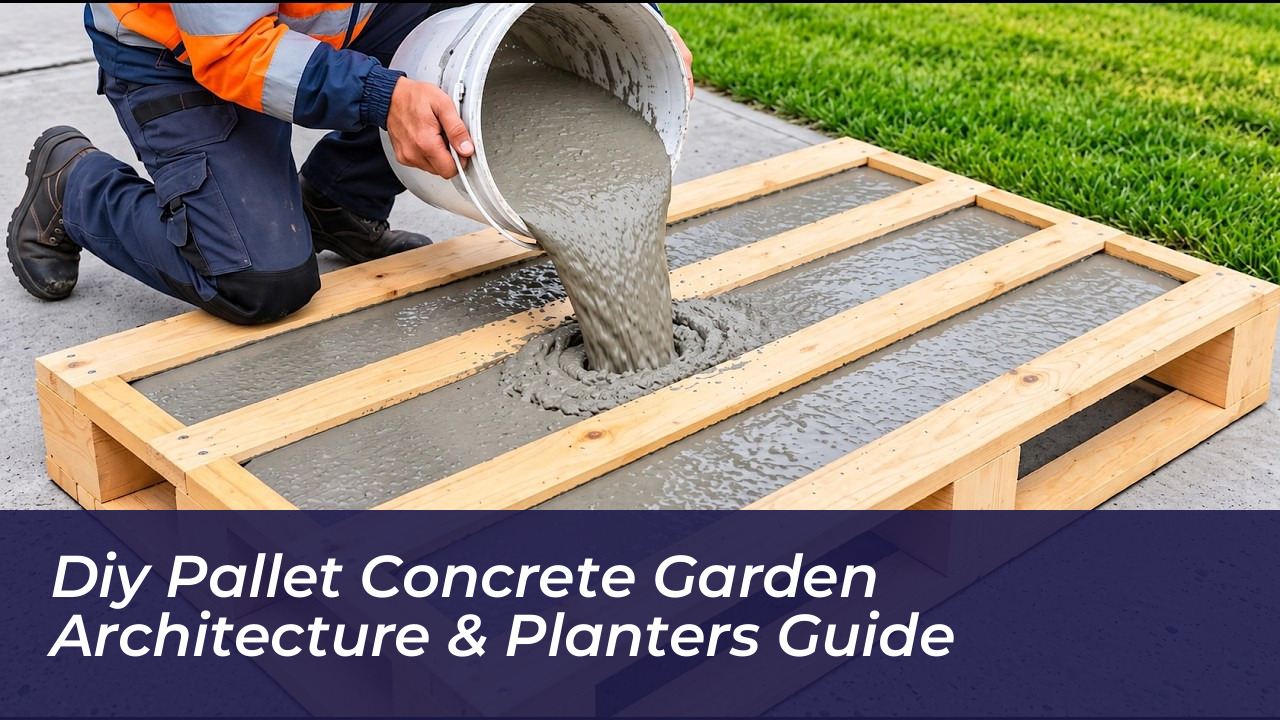

Pouring wet mortar across an old wooden frame might appear counter-intuitive. However, pairing structural wire mesh with a reclaimed timber base allows homeowners to cast bespoke, stone-effect garden planters and outdoor furniture for a fraction of retail prices. By using the timber structure as an integrated formwork and armature, this pallet cement DIY method bridges the gap between rough scrap upcycling and refined garden masonry.
The secret relies entirely on tension reinforcement. Standard concrete handles substantial downward weight with ease, but it possesses poor tensile strength on its own. When layered over flexible wooden slats without reinforcement, drying cement simply snaps across the joins, resulting in fractured slabs rather than an enduring feature.
The Science of Reinforcing Timber Formwork
To convert discarded shipping pallets into resilient garden architecture, the timber must serve purely as a rigid core or sacrificial mold, while metal wire mesh bears the internal tensile stresses. This hybrid technique mirrors the principles of ferrocement construction, a long-established building method used globally for lightweight, high-strength shells and water storage tanks.
When wet cement encases woven or welded wire mesh, the composite material gains the ability to flex slightly under changing temperatures without fracturing along the seams. Across regions subject to harsh winter freeze-thaw cycles that regularly destroy poorly mixed outdoor concrete, internal reinforcement is paramount. Water inevitably seeps into hairline surface cracks, expands upon freezing, and breaks fragile castings apart within a single season.
Pairing heavy-gauge steel mesh with an appropriate sand-and-cement mortar paste prevents these micro-fractures from expanding, producing a resilient skin that simulates expensive, chiseled architectural stone.
Essential Materials and Structural Preparation
Succeeding with this casting method requires thorough preparation of both your wooden foundation and your mortar mix before mixing a single trowel of aggregate. Gathering the correct supplies guarantees structural integrity and safety:
- Heat-treated wooden pallets: Look strictly for stamps marked “HT” rather than chemically treated timber stamped “MB” (methyl bromide), ensuring safe handling and cutting.
- Galvanised wire mesh: Welded wire fabric or fine hexagonal wire netting creates the structural skeletal layer that binds the wet mortar together.
- Bonding membrane: Heavy-duty polythene sheeting or breathable damp-proof membrane prevents dry timber from sucking hydration out of the wet mix prematurely.
- Masonry mortar or fine aggregate concrete: Standard general-purpose cement blended with sharp sand provides the buttery workability needed to sculpt fine profiles.
Protecting Your Skin Against Severe Chemical Burns
Working with wet cement requires uncompromising physical protection. According to the Health and Safety Executive (HSE), wet cement is strongly alkaline and can cause severe chemical burns, serious skin ulceration, and occupational dermatitis upon prolonged contact.
The reaction is deceptive. Wet cement rarely produces an immediate stinging sensation while working, often masking severe deep-tissue damage until hours later. Always equip yourself with heavy-duty nitrile or waterproof rubber gauntlets, eye protection, and full-length work trousers. If wet mix splashes past your protective gear, immediately rinse the affected skin under cool running tap water and neutralise the area before proceeding.
Step-by-Step Execution: From Rough Pallet to Refined Stoneware
Begin by cutting and screwing your wooden pallet into the desired basic geometry, whether forming an elevated trough planter, an outdoor bench plinth, or a decorative waterfall basin. Secure every loose slat with zinc-coated wood screws to eliminate structural wobble that could later induce cracks into setting mortar.
Line the wooden surfaces with polythene sheeting, stapling it firmly into place. This barrier performs two critical functions: it prevents the porous timber from rapidly pulling moisture away from the curing paste, and it shields the pallet frame from internal rot if you choose to keep the timber permanently enclosed within the casting.
Next, shape your galvanised wire mesh closely over the lined frame, fastening it with steel staples or tie wire. Keep the metal netting elevated roughly 5 to 10 millimetres off the backing membrane so the mortar paste can flow completely behind and encapsulate the wire entirely.
Mix your mortar to a stiff, cohesive consistency that holds its shape on a vertical trowel without slumping away. Press the initial scratch coat firmly through the openings in the wire mesh, working out trapped air pockets, then allow it to firm up before floating your final decorative coat over the surface.
Curing for Maximum Long-Term Durability
Never rush the drying phase. The most widespread mistake in home masonry casting is allowing the fresh surface to dry out quickly in direct sun or high winds. Cement does not dry; it hydrates through a continuous chemical bond between water and silicates.
Keep your freshly rendered masterpiece covered beneath damp sacking or plastic sheeting for a minimum of five to seven days, misting it lightly with clean water each morning to achieve maximum compressive strength. Once fully hydrated and cured, the concrete skin can be sealed with a penetrating silane-siloxane masonry sealer, shielding your handiwork against driving rain and winter damp.
Upcycling unwanted pallet wood into bespoke, stone-textured garden pieces proves that high-end landscaping does not demand exorbitant material costs. By respecting the chemistry of curing and fortifying every pour with wire mesh, basic backyard materials deliver incredible durability that defies their humble origin.