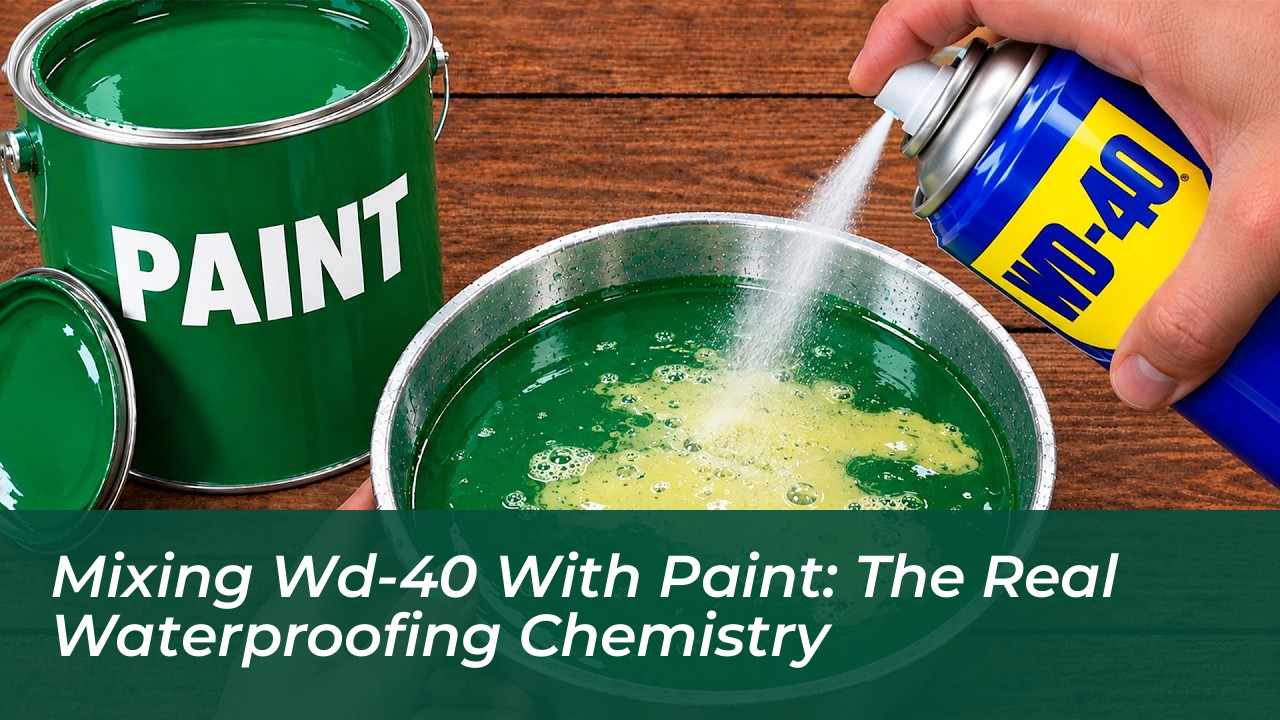

Blending WD-40 directly with architectural paint creates an immediate, highly hydrophobic mixture that repels moisture on contact. However, the underlying petroleum distillates permanently disrupt the chemical cross-linking required for coatings to cure. While viral workshop experiments champion this concoction as a rogue waterproofing shortcut for masonry, metal, and garden fixtures, the temporary water-beading effect masks severe, irreversible structural failure within the paint film. This concept has gained rapid traction across do-it-yourself communities seeking low-cost ways to seal exterior surfaces against relentless seasonal rain. The chemistry behind introducing a moisture-displacing lubricant into protective finishes, however, reveals why decorating professionals strictly advise against it.
The Chemistry Behind the Viral Workshop Experiment
To understand why this unorthodox blend behaves so erratically, one must examine what each component is designed to achieve. Paint relies on a stable carrier-typically water in emulsion formulas or mineral spirits in traditional glosses-to distribute pigment and binders across a surface. It then evaporates cleanly to leave a hardened, continuous film.
WD-40, by contrast, is formulated around light aliphatic hydrocarbons, petroleum base oils, and corrosion inhibitors engineered specifically not to form a rigid skin. When you introduce non-drying petroleum oils directly into wet paint, the additives do not simply vanish as the coating dries. In standard water-based acrylic paints, the oil instantly triggers severe phase separation. Because oil and water cannot naturally combine without dedicated emulsifiers, the oil droplets cluster together. This prevents the acrylic resins from fusing into a unified protective shell.
Water Repellence Versus Structural Failure: What Actually Happens
In the immediate aftermath of application, surfaces coated with this blend appear to perform miracles. Droplets of water bead up and roll away effortlessly, precisely as demonstrated in online practical demonstrations where creators coat raw brick, cement, or metal plates. However, this initial water-shedding property is purely the result of free oil sitting on the surface rather than a properly cured paint matrix. Within days or weeks, fundamental defects begin to surface across the entire treated area:
- Loss of Adhesion: Trapped oil prevents binder resins from biting into the porous substrate, leading to premature flaking and widespread peeling.
- Persistent Surface Tack: Non-drying petroleum fractions keep the paint soft and gummy, transforming walls or timber into magnets for garden dust, grit, and airborne debris.
- Severe Blistering: When sunlight warms the surface, unevaporated volatile hydrocarbons expand beneath the fragile topcoat, forming unsightly bubbles that burst and admit water.
- Cracking and Crazing: As seasonal temperatures shift, the uneven drying rates between the oil-rich zones and resin-heavy zones cause the finish to crack like dried mud.
How Damp Weather Accelerates the Breakdown
Across regions where relative atmospheric humidity frequently exceeds 80% throughout autumn and winter, exterior coatings face continuous moisture pressure. Paint compromised by lubricating oils cannot breathe or resist hydrostatic push from behind brickwork and masonry. When sub-zero temperatures hit, water that has seeped behind the unbonded paint film freezes and expands.
Instead of enjoying a weather-tight exterior, property owners face the laborious task of stripping gummy, failed paint back down to the bare substrate using harsh chemical strippers or abrasive sanding. The hidden cost of this shortcut far outweighs any initial savings.
Safe, Trade-Standard Alternatives for Weatherproofing
Achieving dependable moisture resistance does not require turning your garden shed into an amateur chemistry lab. Professional decorators rely on purpose-engineered additives and specialised coatings that deliver long-term protection without compromising surface integrity:
- Siloxane Masonry Creams: Deeply penetrating creams soak into exterior brick and stone, creating an invisible, breathable barrier that forces rainwater to bead off without altering the wall’s natural appearance.
- Dedicated Paint Conditioners: High-grade penetrative conditioners formulated specifically for oil-based or water-based paints improve flow, wet-edge time, and adhesion without interfering with resin curing.
- Direct-to-Metal Polyurethane Coatings: Purpose-built rust-inhibiting metal paints contain zinc compounds and flexible resins that seal steel railings and gates against salt, moisture, and corrosion for years.
Quick-fix chemical hacks often sound revolutionary in casual online workshops, but paint manufacturing is an exacting science of balanced binders, biocides, and carriers. Adding petroleum-based water dispersants into that equation breaks the precise molecular chain required for a durable finish. Taking the time to choose the correct exterior masonry paint or primer-and-topcoat system saves substantial labour, preventing the costly nightmare of scraping away a ruined, tacky coating after the first heavy winter downpour.