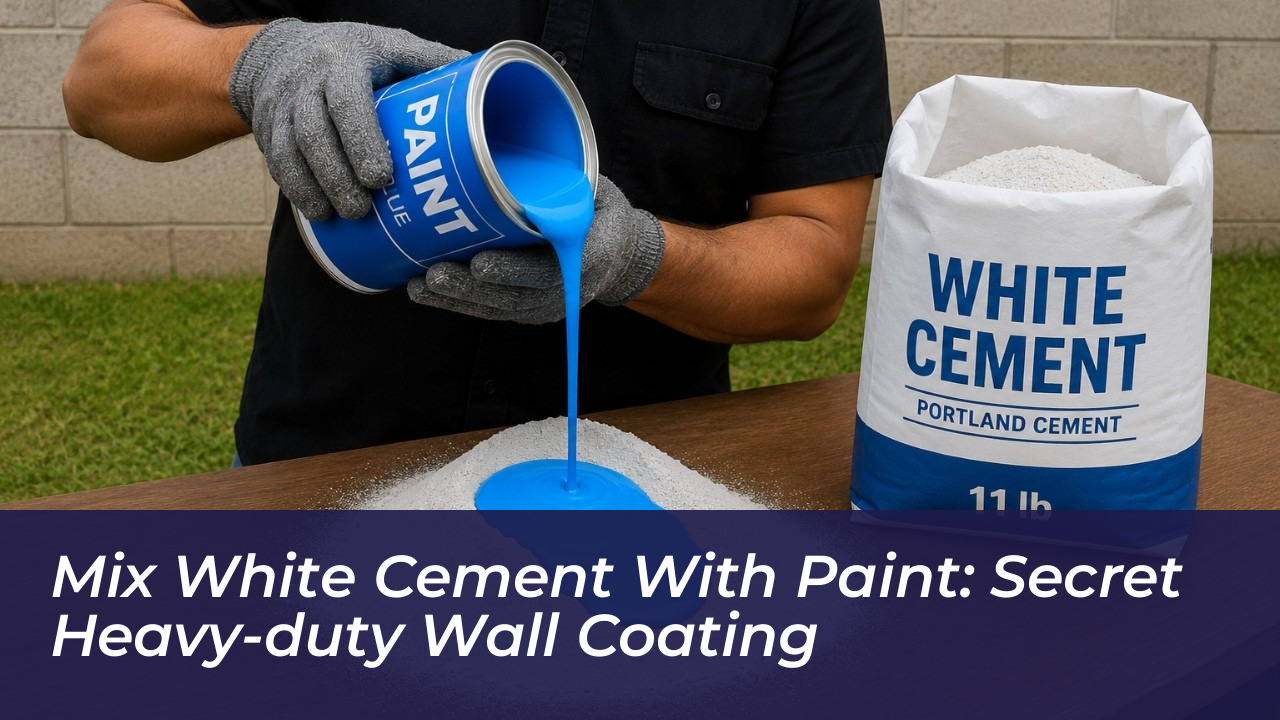

Combining white cement directly with standard water-based acrylic paint produces an ultra-tough, polymer-reinforced masonry coating. This blend fills hairline fractures, seals porous masonry, and cures into a rock-hard shield against damp weather. It transforms cheap paint into a flexible micro-render for a fraction of the cost of branded masonry refurbishment systems. For property owners battling chalking mortar, hairline plaster splits, or flaking exterior brickwork, this workshop trick solves two major decorating headaches at once. Instead of merely covering surface blemishes with cosmetic color, the hybrid slurry acts as both binder and filler, anchoring deep into mineral substrates.
The Chemistry Behind the Blend
Traditional water-based emulsions rely on polymer resins to suspend pigments across a surface. While effective on clean, dry plasterboard, they offer minimal structural reinforcement when faced with weathered brickwork or uneven masonry. Adding white cement introduces calcium silicate hydrate into the suspension. When the moisture in the paint triggers hydration, the mixture develops crystalline bonds that fuse with mineral surfaces.
The acrylic polymers in the paint prevent the cement from drying out too rapidly, reducing shrinkage cracks while preserving a degree of natural flexibility. Unlike standard grey Portland cement, the refined white variety contains negligible amounts of iron and manganese oxide. This purity ensures that your chosen paint pigment retains its true tint rather than degrading into an unappealing, muddy grey.
Why Home Decorators Rely on the Technique
The resulting compound performs like a cost-effective cross between traditional lime wash and modern micro-cement. You can mix it to varying consistencies depending on whether your priority is deep gap-filling or a smooth, decorative patina.
- Instant crack bridging: Thick coats fill stubborn fissures in exterior render that ordinary masonry paints simply sink into.
- Enhanced moisture resistance: The crystalline cure creates a barrier against driving rain, shielding exposed garden walls and outbuildings from penetrating damp.
- Tactile architectural texture: Applied with a stiff block brush or roller, it creates a tactile stone or rustic stucco finish reminiscent of Mediterranean villas.
- Remarkable adhesion: It bonds tenaciously to cinder blocks, unglazed terracotta, weathered concrete, and exposed stone without requiring a specialist primer.
Achieving the Correct Consistency
Getting the ratio right dictates whether the mixture glides across the wall or sets like mortar before you finish the first coat. Work incrementally rather than dumping dry powder straight into an entire tin of paint. In standard workshop practice, decorators start by mixing one part white cement with two parts water-based masonry or exterior acrylic paint by volume.
Stir the paste thoroughly using a drill-mounted paddle until all dry lumps dissolve into a uniform batter. If the slurry stiffens too rapidly, add a splash of clean water or an acrylic bonding agent to restore workability. Because the cement initiates a chemical curing process, mix only what you can comfortably apply within forty minutes.
Safety and Preparation on Masonry Walls
Proper preparation is vital to ensure long-term structural bonding before applying the mixture. Remove any loose debris, algae, or peeling paint with a stiff wire brush. Alkaline cement paste can cause severe skin irritation and dry out your hands quickly. Always wear rubber work gloves, eye protection, and a well-fitted dust mask when handling unmixed powder.
Dampen porous brick or stone with a light mist of water before application. This prevents dry walls from pulling moisture out of the wet slurry before the chemical bond can fully mature. This simple workshop recipe covers pitted, rough surfaces effortlessly in one sweep. The blend sets considerably harder than standard paint, meaning you should wash rollers and brushes in warm water immediately after each section.
Frequently Asked Questions
Can I use any type of paint with white cement?
No, you should stick to water-based acrylic or masonry paints. Oil-based or alkyd paints do not mix well with water-activated hydraulic binders and will fail to bond properly.
What is the ideal mixing ratio for cement paint?
A standard mixture starts at one part white cement to two parts exterior acrylic or masonry paint by volume. Adjust slightly depending on whether you need a thick gap-filling paste or a thinner wash.
Does white cement paint need a primer?
One of the main benefits of this mixture is that it acts as its own primer and binder, adhering directly to clean, slightly dampened mineral surfaces without a separate primer coat.
How long does it take for the coating to cure?
While the paint feels dry within a few hours, the chemical curing process for the cement component takes at least 24 to 48 hours. Lightly misting outdoor applications with water can help strengthen the final finish.
Is this mixture waterproof?
White cement is a hydraulic binder that resists weathering and moisture exceptionally well, but applying an exterior breathable sealer over the final cured coat offers maximum protection against driving rain.