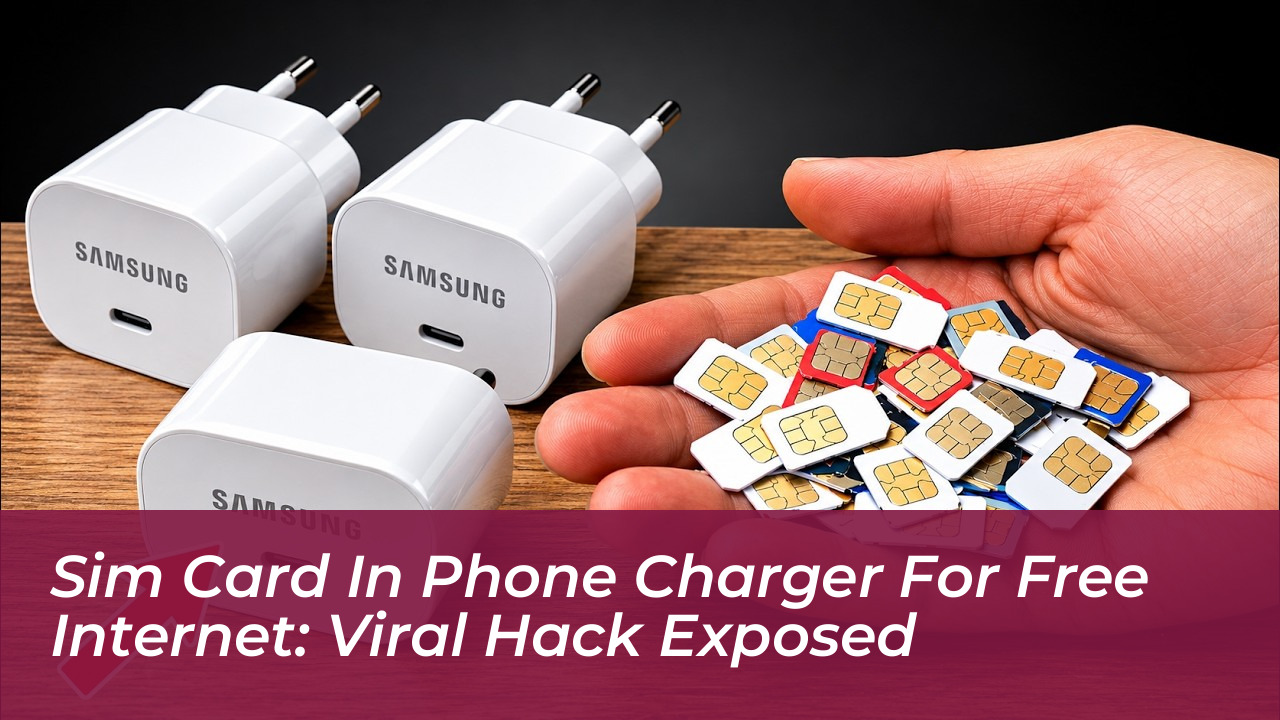

Across social media platforms like TikTok and Instagram, a viral DIY life hack has been making the rounds. It claims that placing a mobile SIM card inside a standard phone plug charger creates a self-contained internet hotspot for free Wi-Fi. With household bills remaining a critical talking point across the UK, shortcuts promising free connectivity spread rapidly. However, electrical engineers and consumer safety organizations are sounding the alarm. This trick does not work, and attempting it poses genuine physical and financial hazards to your household electrical equipment.
The Engineering Reality: Why a Charger Cannot Transmit Data
To understand why this viral method fails, you have to look closely at how everyday tech hardware functions. A standard wall charger has a single objective: safely converting alternating current (AC) from UK mains supplies into the direct current (DC) required to recharge a mobile phone battery. Inside, you will find copper coils, capacitors, and voltage regulators designed strictly for power delivery.
A Subscriber Identity Module, known universally as a SIM card, is not an antenna, a modem, or a power generator. It is merely a tiny integrated circuit that securely stores the international mobile subscriber identity (IMSI) number and related cryptographic security keys. These keys authenticate your device with a cellular network provider. Simply applying an electrical voltage to a standalone microchip does not produce a wireless broadcast signal. Without sophisticated computing architecture to interpret digital data, a SIM card and wall charger combination remains entirely inert.
The Hidden Hazards of Tampering with Electrical Accessories
Attempting to jam, tape, or solder a microchip inside a mains plug is far from harmless. UK electrical safety standards emphasize that altering certified charging equipment compromises built-in circuit protection. Bridging the sensitive contact pads of a SIM card against live USB pins or internal power rails can trigger severe consequences:
- Permanent chip damage: Excessive electrical current instantly burns out the delicate silicon microchip, rendering the SIM card permanently unusable.
- Short-circuit faults: Incompatible contact placements cause thermal runaway, melting plastic casings and destroying the charging brick.
- Tripped breakers: Faulty connections can instantly trip domestic consumer units, cutting power to local ring mains.
- Fire hazards: Tampered household plugs pose a direct ignition risk if left unattended in wall sockets.
Organizations such as Electrical Safety First frequently remind consumers that modifying domestic plugs bypasses vital fail-safes designed to prevent domestic electrical fires.
The Complex Architecture Real Wireless Routers Require
Authentic wireless hotspots require elaborate hardware that cannot be substituted with a simple phone adapter. To establish an internet connection, a functioning device must possess several specialized subsystems operating simultaneously:
- A baseband cellular modem to decode radio frequencies from local cell towers.
- Internal high-frequency antennas capable of capturing and broadcasting signals.
- An onboard system-on-chip to process incoming and outgoing data packets.
- A dedicated local Wi-Fi controller to securely transmit signals to your laptop, tablet, or smartphone.
A standard wall charger contains none of these computing engines. Without a modem to interpret the cellular signal, the SIM card has nothing to communicate with.
Legitimate Low-Cost Routes to Mobile Connectivity
If you need flexible broadband without an expensive fixed landline contract, reliable and safe hardware alternatives exist across the UK market. You do not need to risk damaging your appliances or home to stay connected:
- Dedicated 4G and 5G MiFi pucks: Pocket-sized, battery-powered routers contain genuine modems built specifically to share cellular data securely over local Wi-Fi.
- Smartphone personal hotspots: Every modern mobile handset features native software tethering, allowing you to share your mobile data allowance with external gadgets safely.
- USB mobile dongles: Direct plug-and-play sticks provide cellular broadband directly to laptops without requiring external mains modifications.
- Social broadband tariffs: UK regulator Ofcom highlights that numerous providers offer discounted mobile and fixed tariffs for households receiving qualifying government support.
Viral life hacks often trade plausible-sounding language for internet clicks, but mains electricity leaves no margin for error. Turning to certified hardware protects your home and ensures your connection remains stable, encrypted, and safe from unexpected hardware failures.