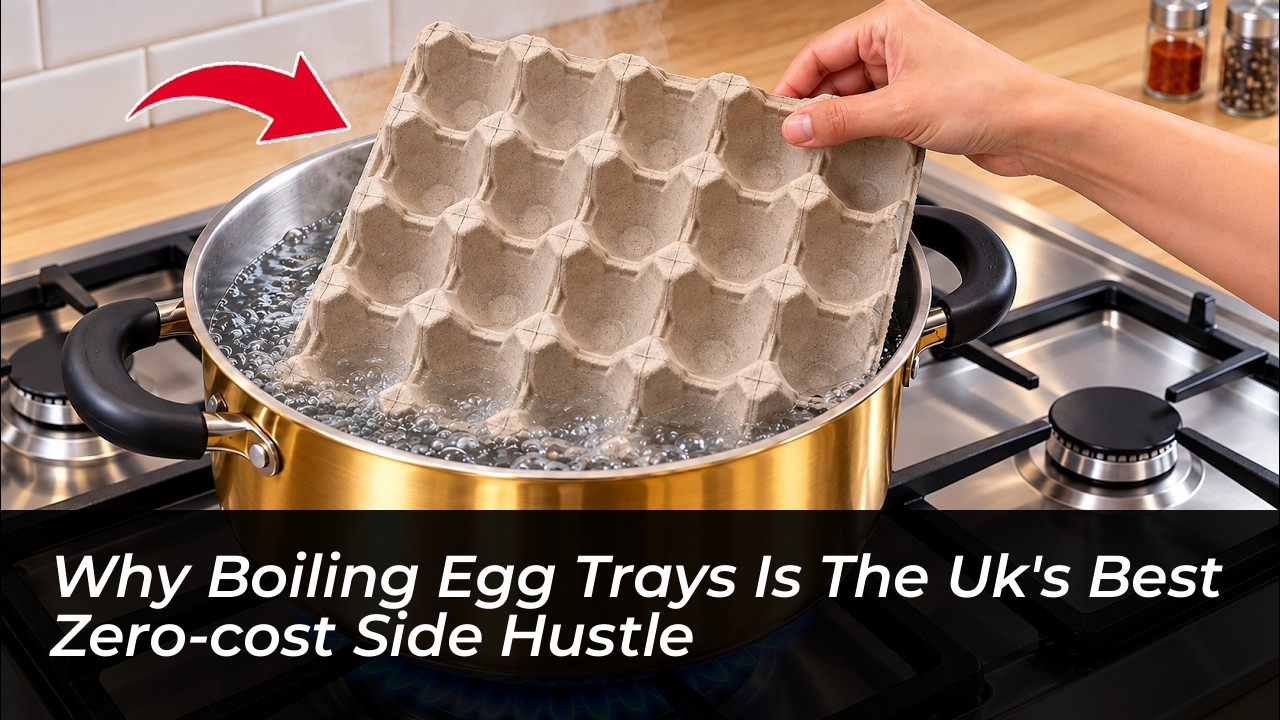

Submerging discarded cardboard egg cartons into boiling water instantly breaks down dense, factory-pressed fibres into an ultra-malleable, zero-cost paper clay that can be sculpted into high-value decorative homewares. Rather than tossing these grey cartons straight into the kerbside council recycling bin, households across Britain are discovering that a kettle of hot water unlocks an adaptable raw material for profitable craft projects.
Every week, millions of moulded-pulp egg boxes land in domestic rubbish or municipal compost streams across the United Kingdom. While paper recycling schemes handle them reasonably well, short paper fibres can only withstand a limited number of recycling cycles before degrading entirely. Repurposing them at home extends the lifecycle of valuable wood fibres while circumventing the cost of commercial modelling compounds. Understanding the exact chemical and physical shift caused by hot water turns everyday kitchen waste into a reliable, workable medium capable of generating genuine extra income.
The Science of Boiling: How Heat Transforms Tough Pulp
Standard egg boxes are engineered using moulded paper pulp, manufactured from compressed recycled newspaper and cardboard bound under heavy mechanical pressure. When cold water touches these trays, softening happens unevenly and takes hours to penetrate the dried sizing agents. Boiling water changes the equation immediately. Intense thermal energy relaxes the tightly wound plant fibres, dissolving the light adhesive compounds that maintain the tray’s rigid honeycomb shape.
Within minutes of soaking in freshly boiled water, the structure collapses, permitting effortless shredding into a smooth, uniform slurry without requiring industrial grinding equipment. Key factors in this chemical shift include:
- Thermal breakdown: Near-boiling temperatures penetrate hydrophobic coatings far quicker than cold soaking.
- Fibre preservation: Manual shredding after a hot soak maintains longer fibre strands, ensuring final cured pieces resist cracking.
- Contaminant cleansing: Heat neutralises minor surface debris and residue, making the mass hygienic to handle.
Step-by-Step: Converting Packaging into Workable Clay
Executing successful egg tray recycling at your kitchen worktop requires basic household precautions and clean raw materials. Only clean, unsoiled paper or moulded-pulp cartons must be used; foam or plastic variants will melt into toxic fumes and ruin the batch.
The Processing Method
Tear the clean trays into thumb-sized pieces and transfer them into a dedicated heatproof tub or non-food pot. Pour rolling boiling water directly over the pieces until fully submerged, ensuring you wear protective gloves to prevent accidental hot-water splashes. Allow the mixture to steep until the liquid cools to a comfortable, skin-safe temperature.
Once cool, knead the sodden fibres by hand or blend them using an old handheld stick blender reserved solely for craft preparation. Press the resulting sludge through an old muslin cloth or fine kitchen colander to squeeze out excess moisture. What remains is a dense, malleable paper mash that serves as the baseline for sturdy sculpting paste when blended with equal parts non-toxic craft adhesive or homemade flour paste.
Turning Wet Pulp into High-Margin Homeware
The financial viability of this upcycling craft rests on presentation, durability, and commercial appeal. Plain grey pulp looks rudimentary, but once cured, sanded, and sealed, it mirrors organic stoneware, rustic terracotta, or porous ceramic. British crafters operating on digital marketplaces such as Etsy or through local artisan fairs frequently mould this reinforced pulp over release moulds, including glass jars, bowls, and wooden blocks.
Once thoroughly dried over several days near a radiator, the material cures remarkably rigid and light. Popular products include:
- Trinket dishes and catch-alls: Finished with acrylic pigments, metallic leaf, and moisture-resistant matte sealant.
- Textured wall art: Applied onto reclaimed plywood panels to replicate high-end minimalist gallery pieces.
- Decorative plant covers: Formed around outer plant pot moulds to create trendy, tactile Scandinavian-style vessels.
Because the primary raw ingredient costs nothing, profit margins on finished decorative items remain exceptionally high, requiring only modest spend on sealant, paint, and basic PVA binder.
Essential Safety and Quality Considerations
Health and safety remain paramount whenever working with discarded food packaging. Never process cartons that exhibit damp spots, food splatters, or biological contamination from cracked eggs, as moisture creates a breeding ground for bacteria or mould spores. Ensure drying takes place in a well-ventilated, heated room.
If thick pulp creations dry too slowly in damp weather, internal mould can develop before the moisture evaporates entirely. A standard airing cupboard or proximity to a radiator speeds up desiccation, locking in structural rigidity. Creative workshops, including visual demonstrations by DIY Forge, highlight that the real secret lies in thorough mixing and controlled drying. When treated with patience, this humble kitchen throwaway proves that functional art does not require costly supplies.
Before throwing this week’s breakfast cartons into the council bin, set three aside and test the boiling method yourself. You may discover that a few minutes of prep and a splash of boiling water yields the most versatile crafting medium in your home.