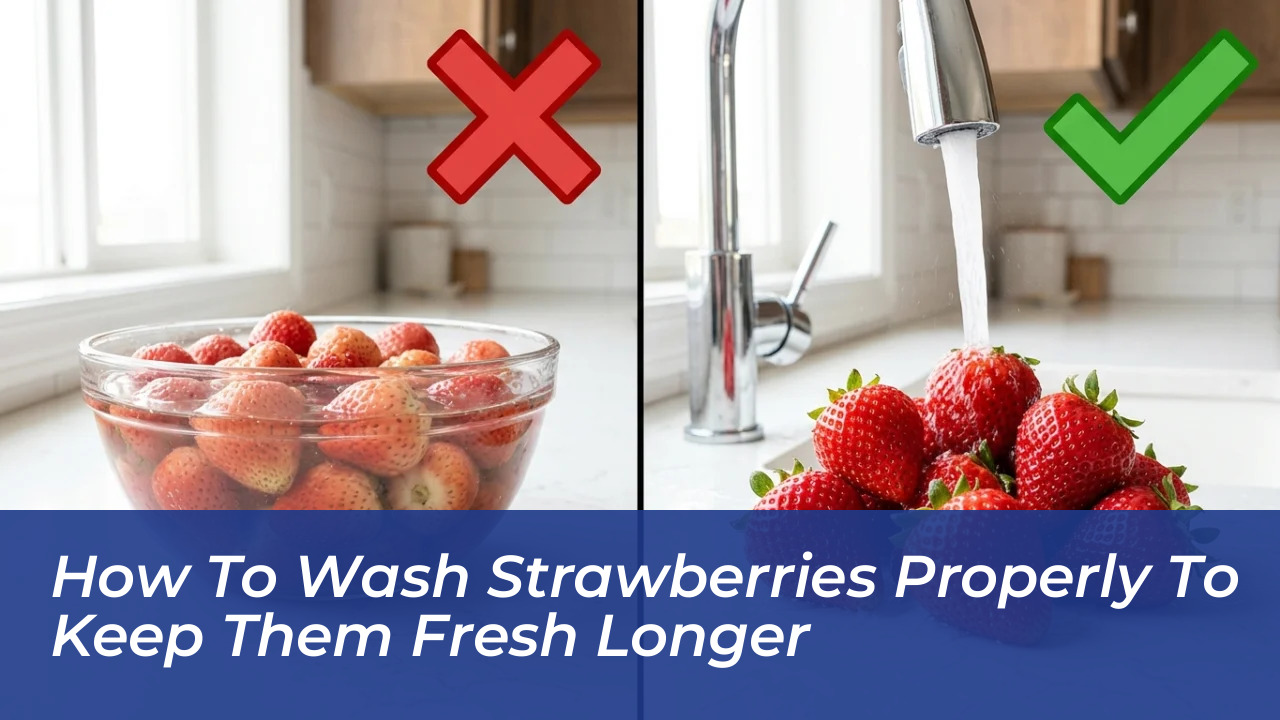

Got fresh strawberries and cold tap water at home? You already have the secret to long-lasting fruit. While many British households unpack their weekly grocery shop and immediately head to the kitchen sink to wash their produce, food science researchers warn that cleaning berries the moment you arrive home is the single fastest way to spoil an entire punnet. Moisture acts as a rapid catalyst for rot, meaning your straightforward tap water and unwashed berries are all you need to keep fruit fresh for days, provided you combine them at the exact right moment.
Most people believe that a prompt pre-wash preserves hygiene. In reality, sealing wet fruit in fridge drawers traps excess moisture against delicate skins, accelerating spoilage and turning firm berries into mush. Understanding the delicate nature of soft fruits can completely transform how you manage your kitchen produce.
The Hidden Risk of Pre-Washing Fresh Strawberries
Strawberries are exceptionally delicate fruits with thin, porous surfaces that make them ultra-sensitive to damp conditions. When you clean a batch in advance and pack them away damp, you create the ideal environment for fungal spores to thrive and degrade the fruit.
Guidance from the University of Minnesota highlights that washing fresh fruits and vegetables should only take place right before eating or preparing them. Introducing surface water hours or days prior to consumption directly compromises structural firmness and promotes rapid decay. Storing fruit while wet harms its preservation and causes it to spoil faster; wait until the exact moment of consumption before letting water touch the berries. This timing shift is vital: leaving the berries dry in their container until you actually want a snack protects their natural barriers and stops early degradation in its tracks.
Myth-Busting: Soaking Bowls and Chemical Sprays
A widespread kitchen trend suggests soaking berries in deep bowls of water, sometimes combined with soaps or commercial produce washes, to pull out dirt and impurities. Scientific recommendations firmly debunk this method as counterproductive.
Submerging berries allows water to penetrate the tender skin, diluting flavour and softening the flesh without providing superior cleanliness. University guidance states that detergents, washing-up liquids, and specialised cleaning solutions should never touch fresh food, as porous produce can absorb harmful chemical residues.
Recommended Strawberry Care Methods
- Timing: Wash exclusively at the moment of consumption.
- Water Method: Rinse under cold running water; avoid soaking.
- Cleaning Agents: Never use soaps, detergents, or chemical washes.
- Storage State: Store completely dry in original or breathable packaging.
The Correct Step-by-Step Washing Routine
Protecting both the flavour and longevity of your produce requires minimal effort once you align your kitchen habits with food safety science.
1. Store unwashed: Place fresh berries straight into the fridge without rinsing or removing the green stems, keeping them completely dry.
2. Select your portion: Take out only the exact quantity you intend to eat immediately, returning the remainder to cold storage.
3. Rinse under cold flow: Place the portion into a colander and rinse gently under cold running water, allowing the flow to wash away debris without letting the fruit sit in standing water.
4. Serve immediately: Pat gently with clean kitchen paper if desired, and enjoy while firm and fresh.
Simple adjustments to kitchen habits often deliver far better results than expensive gadgets or special food sprays. Have you noticed your summer fruit spoiling faster when rinsed early? Share your experiences with us and let us know your favourite ways to keep supermarket produce fresh in the comments below.
Frequently Asked Questions About Washing Strawberries
Should you wash strawberries before storing them in the fridge?
No. You should always store strawberries completely unwashed and dry. Adding moisture before refrigeration invites mold and accelerates rotting.
Is it safe to use soap or produce washes on strawberries?
No, you should never use soaps, detergents, or commercial produce washes. Strawberries have porous skins that easily absorb chemical residues.
How long do unwashed strawberries last in the refrigerator?
When kept dry in their original packaging or a breathable container, fresh strawberries typically last between 3 to 7 days in the fridge.
Why do strawberries spoil so quickly after getting wet?
Moisture trapped against the delicate, porous surface of a strawberry creates a breeding ground for fungal spores and rot, turning the fruit mushy fast.
Should I remove the green stems before washing?
Leave the green stems on until after you have washed the berries. Removing them beforehand allows water to flood the inside of the fruit, diluting its natural flavour.