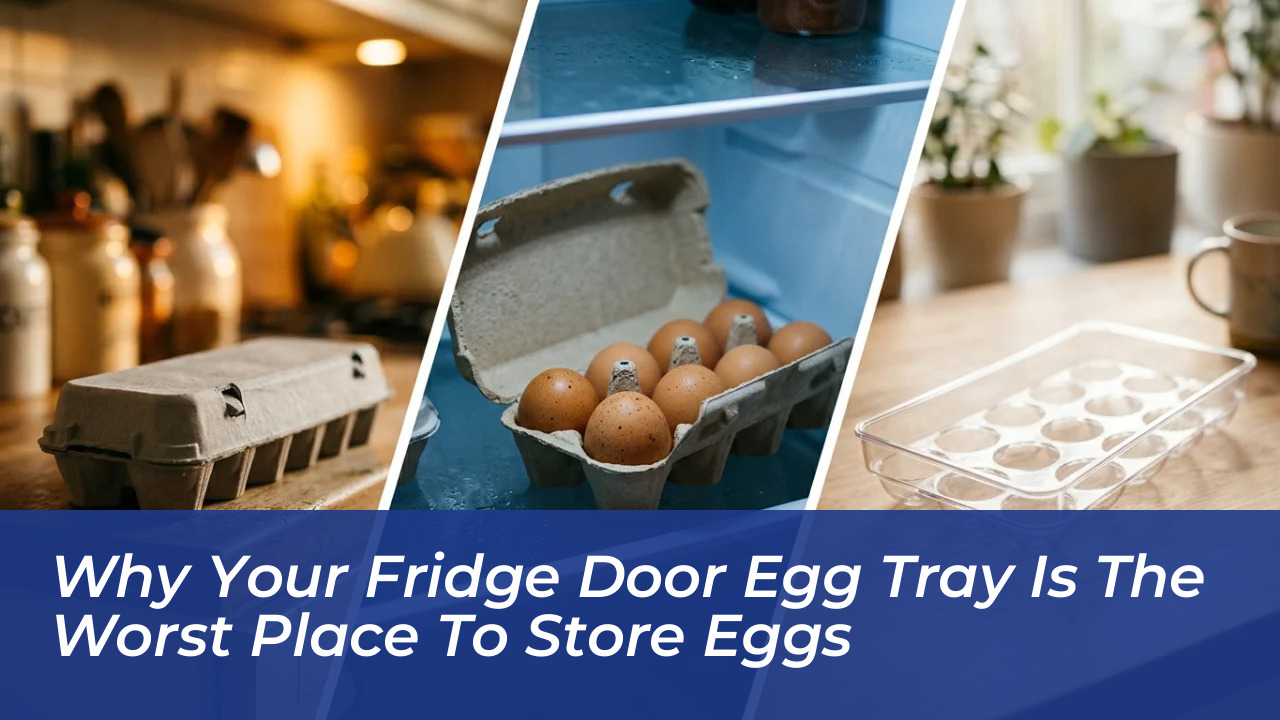

When you unpack your groceries and slide your eggs into the built-in plastic tray on your refrigerator door, you follow an intuitive kitchen habit. Unfortunately, food safety experts and appliance engineers warn that this convenient feature is actually the worst place in your kitchen to store fresh eggs. Despite being shaped specifically to hold them, door compartments expose eggs to constant temperature fluctuations and potential contamination risks that spoil them much faster than necessary.
The Science Behind Why Fridge Doors Compromise Egg Safety
The core issue with storing eggs in the appliance door comes down to thermal stability. Every time you open your refrigerator door to grab a snack, milk, or leftovers, a wave of ambient room air rushes across the door bins. The main body of the refrigerator barely registers this brief shift, but the door absorbs the temperature hit directly.
According to food safety authorities including the United States Department of Agriculture (USDA), these constant temperature swings disrupt the delicate climate needed to preserve fresh poultry products. Consistent chilling is vital because uncontrolled temperature variations encourage the rapid multiplication of harmful foodborne pathogens, most notably Salmonella. By keeping eggs on the door, you subject them to repeated mini heat shocks throughout the day.
Interior Shelf vs. Door Storage: What the Research Shows
A widespread assumption is that because an appliance manufacturer includes a custom egg holder in the door, using it must represent best practice. In reality, appliance layout designs frequently prioritize loading convenience over scientific food preservation standards.
Food safety organizations consistently recommend abandoning the door compartments entirely. Instead, eggs should rest on an interior shelf where the cold air remains steady and dependable.
- Fridge Door Trays: Exposed to frequent bursts of warm room air, condensation, and erratic temperature swings every time the appliance opens.
- Middle or Lower Interior Shelf: Maintains a consistent, reliable chill at or below 4.4°C (40°F) with minimal environmental disturbance.
The Protective Role of the Original Carton
Another common mistake involves transferring eggs out of their cardboard packaging and slotting them individually into open door racks. This practice strips away a vital layer of natural defense.
Eggshells are naturally porous, meaning they feature thousands of microscopic openings that allow air to pass through. When you leave eggs unprotected in an open tray, they easily absorb strong aromas from other foods in your fridge, such as onions, cut fruit, or leftovers. The original cardboard or molded paper carton acts as a protective buffer against moisture loss, physical micro-cracking, and shifting microclimates.
Essential Guidelines for Proper Egg Storage
Preserving the quality, flavor, and safety of your groceries requires establishing consistent habits from the moment you unpack your bags. Implement these straightforward rules in your kitchen:
- Keep your refrigerator internal temperature set at 4.4°C (40°F) or lower.
- Store eggs on a middle or lower interior shelf rather than anywhere near the door.
- Leave eggs securely nestled inside their original cardboard or molded packaging.
- Transfer groceries directly into the refrigerator immediately after purchase without letting them linger at room temperature.
- Avoid opening the appliance door unnecessarily, and close it promptly to maintain internal chill.
By shifting your habits and relocating your egg carton off the vulnerable door rack, you significantly reduce the risk of premature spoilage and protect your household from preventable hygiene hazards. Check your appliance settings today to confirm your shelves hold a steady, safe temperature.