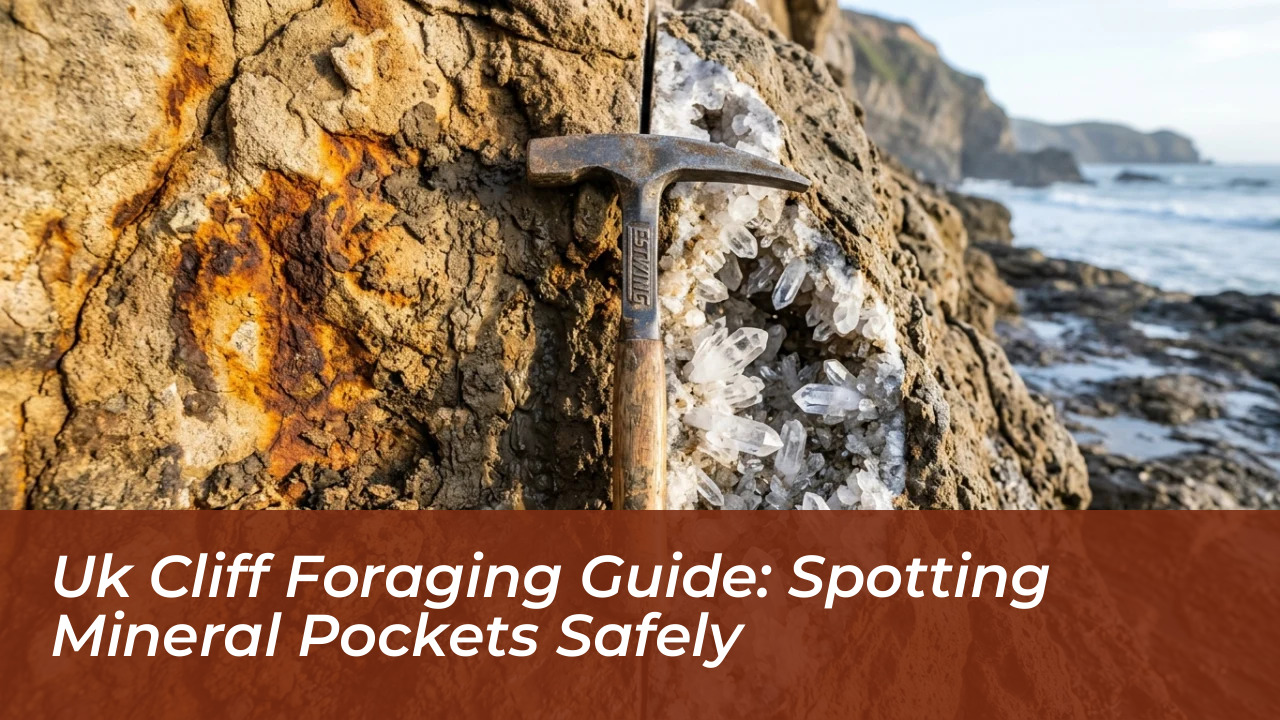

Cracking open a weather-worn fissure in an exposed cliff face to reveal a sparkling pocket of natural quartz or fluorite remains a dream for field geologists and amateur prospectors. Finding a genuine crystal-lined cavity, known as a vug or pocket, is rarely pure luck. It requires reading subtle mineral seams, understanding tectonic fracturing, and knowing how to navigate unstable geology safely. Every year, hundreds of enthusiasts across the United Kingdom venture to coastal exposures, disused quarries, and upland outcrops hoping to uncover hidden mineral treasures. While finding an intact crystal pocket provides an adrenaline rush, extracting specimens from cliff faces carries physical dangers and strict legal obligations under UK law.
Reading the Rock: How Prospectors Identify Hidden Crystal Cavities
Pockets lined with well-formed, euhedral crystals do not form randomly throughout solid bedrock. They develop when hot, mineral-rich hydrothermal fluids circulate through fault lines and open cavities deep underground before cooling slowly enough to allow crystal faces to mature. Experienced field collectors look for telltale signatures before they inspect a cliff face up close:
- Fault and Fracture Zones: Fault breccias and shatter zones create open voids necessary for hydrothermal circulation, leaving weakened lines where pocket formation is probable.
- Hydrothermal Veining: Sharp bands of white quartz, baryte, or calcite cutting across sedimentary or igneous host rock indicate pathways where minerals once precipitated.
- Drusy Coatings: Tiny, sparkling surfaces of micro-crystals on exposed rock faces signal that a larger, sealed chamber sits mere inches behind the weathering layer.
- Iron Staining and Leaching: Rust-coloured limonitic crusts and spongy gossan textures betray hollow voids where sulphide minerals have oxidised, leaving fragile cavities behind.
When weather, wave action, or natural erosion exposes these seams, a collector might spot a tiny opening that leads to a pristine mineral pocket. Preserving these delicate specimens requires patience, as the crystals inside are fragile and prone to fracture.
The Crucial Difference Between Mineral Pockets and Protected Finds
A frequent point of confusion among recreational diggers involves ownership rights and what legally qualifies as treasure. In England, Wales, and Northern Ireland, the statutory definition set out under the Treasure Act 1996 applies strictly to items of archaeological significance-chiefly metallic objects containing gold or silver, or prehistoric base-metal hoards. Naturally occurring minerals, gemstones, and crystals fall outside the Treasure Act, but that does not grant an automatic right of extraction.
Under UK property law, all minerals beneath the surface remain the property of the landowner, whether private individuals, local estates, or public bodies such as the Crown Estate or the National Trust. Before planning any outing dedicated to crystal hunting, prospectors must verify the legal status of the target coastline or cliff line:
- Sites of Special Scientific Interest (SSSIs): Administered by Natural England, NatureScot, or Natural Resources Wales, hammering or removing mineral specimens from designated geological SSSIs is illegal without prior statutory consent.
- National Trust and Council Land: Byelaws routinely prohibit the defacing, hammering, or removal of stone and geological specimens from these protected estates.
- Foreshore Rights: While public rights of way exist over many tidal foreshores, the underlying mineral rights remain vested in the owner. Surface collection of loose pebbles is widely tolerated, while bedrock quarrying is not.
A sensible baseline rule honoured by ethical mineral clubs across Britain is straightforward: collect loose scree and beach wash rather than aggressively chiselling into intact bedrock.
Cliff Dynamics: The Overlooked Physical Hazards of Extraction
The greatest threat in any excavation along rock faces is not failing to find crystals; it is the sudden failure of the cliff above you. Coastal cliffs in the UK, particularly along soft shale, chalk, and fractured sandstone bands, are unstable environments. HM Coastguard and the Royal National Lifeboat Institution (RNLI) issue frequent warnings regarding cliff falls, which occur without warning regardless of weather conditions.
The mechanical shock of driving a cold chisel or geological pick into an already fractured cliff face can destabilise tonnes of overlying strata. Anyone examining coastal cliffs must account for three safety priorities:
- Tidal Cut-Off: Always consult local tide timetables to ensure your retreat path remains open, as coastal pocket hunting often lures collectors into isolated bays at low water.
- Overhang Assessment: Avoid working beneath undercut cliffs or fresh rockfall cones, which signal ongoing active collapse.
- Protective Gear: Eye protection from high-velocity rock fragments and a certified climbing helmet are fundamental safeguards against falling scree.
A recent demonstration of practical field extraction featured on Crystal 777 highlights just how tight and precarious natural cliff cavities can be when encountered in the wild. While unearthing an intact crystal pocket provides an unforgettable thrill, matching technical curiosity with rigorous safety planning ensures the adventure ends safely.
Frequently Asked Questions About UK Cliff Mineral Foraging
Are natural minerals and crystals protected under the UK Treasure Act 1996?
No. The Treasure Act 1996 applies exclusively to objects of archaeological and historical importance containing precious metals or prehistoric hoards. Naturally occurring crystals, vugs, and geological specimens are governed instead by standard UK property and land ownership laws.
Who legally owns the minerals found inside UK coastal cliffs?
All subsurface minerals belong to the legal landowner. This includes private estates, local authorities, the National Trust, and the Crown Estate. Surface collection of loose, wave-washed float on public foreshores is generally tolerated, but chiselling bedrock without express landowner permission is illegal.
What are the primary geological signs of a hidden vug in a cliff face?
Prospectors look for hydrothermal veins (quartz, baryte, or calcite bands), fault breccia zones, drusy micro-crystal coatings, and iron-stained limonitic crusts that indicate oxidized cavities behind the rock surface.
Is it legal to hammer into rock faces at Sites of Special Scientific Interest (SSSIs)?
Strictly speaking, no. Removing, hammering, or damaging geological specimens within a designated SSSI without explicit statutory consent from bodies like Natural England, NatureScot, or Natural Resources Wales is a criminal offence.
What are the most critical safety hazards when hunting for minerals on UK coasts?
The primary dangers are sudden cliff collapses caused by unstable strata, dynamic coastal rockfalls, and becoming trapped by incoming tides in isolated bays. Always wear a certified helmet, eye protection, and monitor local tide timetables closely.