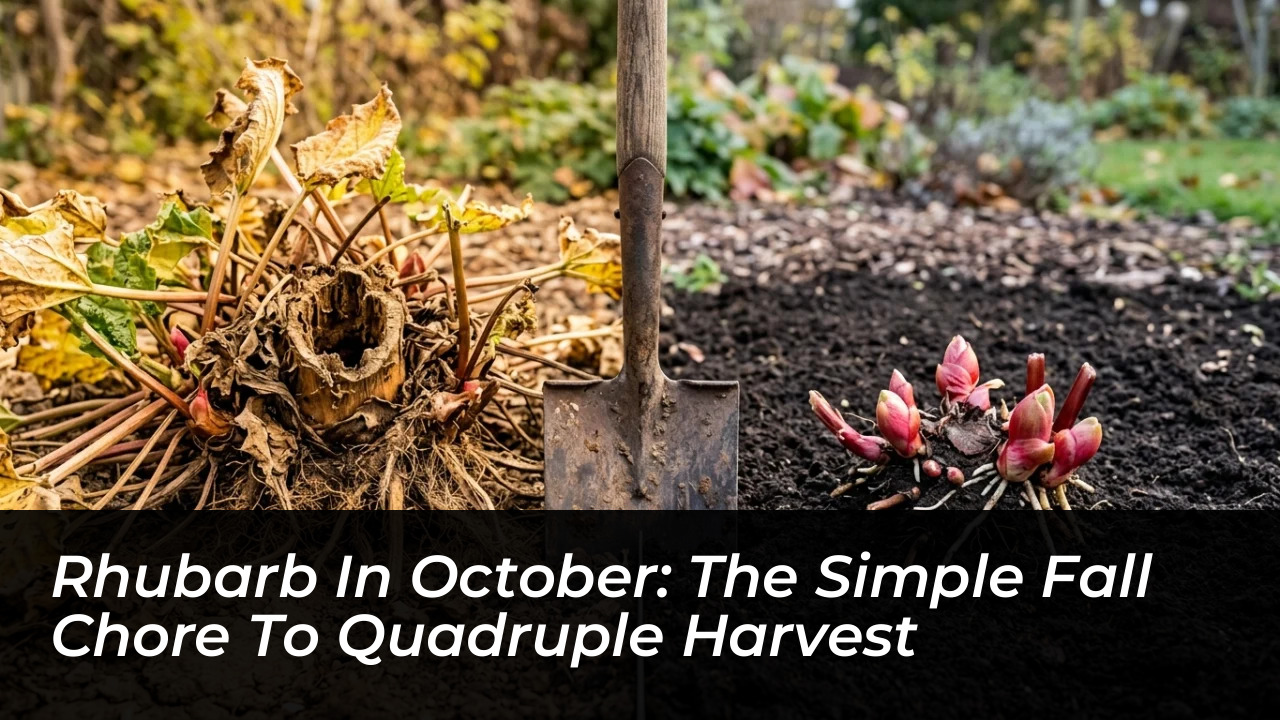

Dividing an overgrown root clump into three or four separate 1-pound sections in October can quadruple your rhubarb harvest for the coming spring without spending a cent. While declining, yellowing foliage often tempts gardeners to leave the bed untouched until March, taking action during autumn dormancy directly restores vigor to aging plants that have slowed down production. Rhubarb remains productive for over a decade, but rootstocks routinely run out of steam after four to eight years of continuous growth. The center of the primary rhizome gradually turns woody or decays, pushing new buds to the edges and resulting in spindly, stringy stalks. Revitalizing these crowns requires only a sharp spade and proper soil preparation before winter sets in.
Timing this intervention correctly hinges on recognizing whether your garden bed has crossed the threshold from peak maturity to root fatigue. Understanding these shifts allows home growers to maximize perennial output and avoid common pitfalls associated with aging crops.
Recognizing the Warning Signs of an Overgrown Crown
When a rhubarb clump spreads out toward 10 square feet (roughly 1 square meter), the central root structure begins to suffocate. A firm outer ring surrounding a hollow, brittle, or softening center signals that the plant struggles to allocate nutrients efficiently. Instead of producing thick, succulent stems, the crown pushes out thin stalks alongside repeated, unwanted flower spikes. When root systems become excessively dense, splitting the root clump restores productive stem development.
Many home growers assume that frequent bolting indicates poor soil fertility or drought stress. In established perennial beds, regular flowering paired with thinner stems usually indicates an overcrowded root system. This requires physical rejuvenation through dividing rhubarb rather than additional surface fertilizer. Leaving an exhausted clump undisturbed over the winter allows interior decay to worsen, which can permanently undermine next season’s output.
The Fall Division Window: Weather and Soil Rules
Autumn dormancy makes October and November the premier months for root division in well-draining, lighter soils. Working while the ground remains workable-free from hard frost or soggy saturation-protects exposed root wounds from disease. If you contend with heavy clay that stays persistently waterlogged throughout the cold season, deferring root division until late winter, between February and March, prevents root rot.
Selecting viable sections from the perimeter ensures that only vigorous material makes it into your renewed growing space. Inspecting the overall health of the root system guarantees that your efforts translate into healthy, productive plants next spring.
Step-by-Step Guide to Splitting and Replanting Crowns
Executing a successful fall division requires care, precision, and the right tools. Follow this step-by-step procedure to minimize transplant shock and encourage rapid root regeneration:
- Unearth the root ball: Using a garden fork or spade, dig a perimeter trench roughly 12 inches (30 cm) away from the crown center. Carefully lever the entire root mass upward to protect large storage roots from snapping.
- Clear the soil: Shake off loose dirt or lightly rinse the clump to expose the distinctive pink growth points, known as “eyes.”
- Slice into sections: Use a sharp spade to cut the clump into vigorous pieces weighing roughly 1 pound (500 grams) each. Ensure each piece retains one to three healthy buds and intact roots.
- Discard dead tissue: Cut out and toss the ancient, woody, or mushy core of the old crown into the compost bin.
- Amend the planting holes: Dig planting holes approximately 16 inches (40 cm) deep and enrich the soil with mature compost or well-rotted manure.
- Replant at proper depth: Position each division with its pink buds pointing upward, covered by only 1 inch (2 to 3 cm) of soil. Firm the soil gently by hand.
- Allow space to mature: Space individual plants 3 to 4 feet (1 to 1.2 meters) apart to accommodate future leaf canopy spread.
Winter Protection and Spring Harvest Limits
Immediately after replanting, give each site a thorough soaking to collapse air pockets around the roots. Follow with a layer of organic mulch across the bed, making sure to keep the material clear of the central crown so trapped moisture does not trigger rot. Maintaining damp, well-aerated soil without letting it turn into a stagnant bog protects the tender eyes during freezing weather.
When harvest season arrives in spring, moderation is essential for long-term health. Restrict your harvest during the first full growing season following division to let the root system re-establish its starch reserves. In subsequent years, harvest no more than half of the emerging stalks at any given time, and conclude all pulling by early July. A top-dressing of well-rotted compost each fall will keep the bed robust for seasons to come.
Frequently Asked Questions About Fall Rhubarb Division
Why is October the best time to divide rhubarb?
October falls during the plant’s autumn dormancy phase. With the foliage dying back, the plant no longer expends energy on top growth. This allows all its resources to focus on root healing and establishing stability before deep winter freezes.
How many new plants can I get from a single clump?
A healthy, mature rhubarb crown that is 4 to 8 years old can typically be divided into three to four separate 1-pound sections. This effectively quadruples your stock without buying new plants.
Should I harvest rhubarb the first spring after dividing?
No. You should avoid harvesting any stalks during the first full growing season following fall division. This restraint allows the young root system to rebuild its starch reserves and grow deep, strong roots for future years.
What happens if I plant the crown too deep?
Planting the crown too deep-burying the pink growth buds more than an inch or two beneath the soil surface-restricts emergence and frequently leads to crown rot during wet winter months.
How do I know if my rhubarb patch is too old?
If your rhubarb produces thin, stringy stalks, frequent unwanted flower spikes, or develops a hollow, woody center with growth restricted only to the outer edges, your plant is overcrowded and overdue for division.