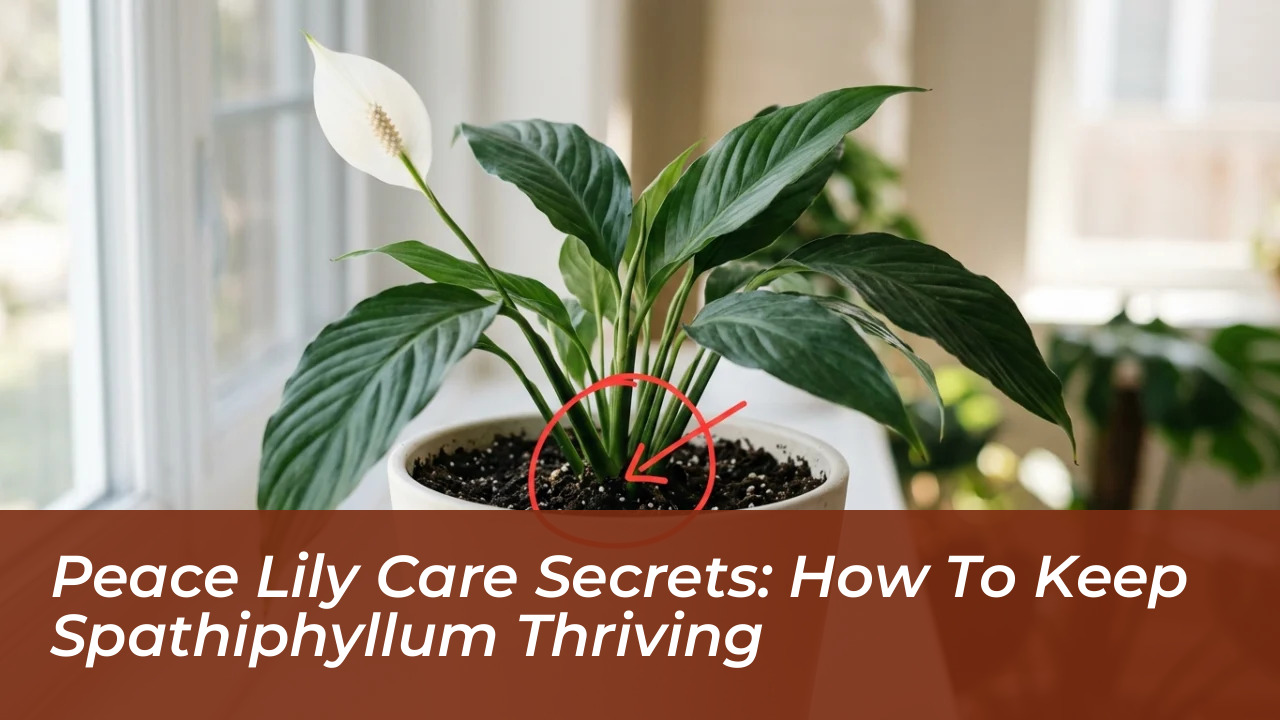

Mastering peace lily care requires providing two to four hours of bright, indirect sunlight daily. You also need to maintain consistent soil moisture within a temperature range of 64°F to 80°F (18°C to 27°C). Native to tropical regions of the Americas, this enduring houseplant produces showy white, hood-shaped spathes surrounding small flower spikes. However, poor watering habits or improper lighting can quickly stall growth and prevent blooming. While often celebrated as an easy-care specimen, the plant’s distinctive leaves and stems rise directly from the root zone. This means sub-surface issues reveal themselves instantly on the foliage. Maintaining the delicate balance between hydration and aeration remains the single most critical factor in keeping the foliage pristine.
Essential Environmental Demands for Indoor Success
Replicating the native tropical environment of the peace lily ensures steady foliage expansion and intermittent blooming cycles, especially during the active spring and summer months. The plant cannot tolerate ambient temperatures below 55°F (13°C), making stable room conditions essential. Direct sun rays scorch the broad leaf surface, creating irreversible brown burn marks. Meanwhile, excessively dark corners starve the plant of energy and suppress bud development.
Standard indoor humidity levels support steady growth, provided the soil remains moist without turning soggy. Proper hydration requires waiting until the upper layer of soil feels dry before watering thoroughly, as waterlogged roots rapidly trigger rot. Use a general-purpose, well-draining potting mix, ideally incorporating peat moss to achieve a mildly acidic pH. To keep nutrient levels balanced without burning the root system, apply a balanced 20-20-20 liquid fertilizer diluted to one-quarter strength every six weeks during spring and summer. Flush the potting medium thoroughly with fresh water every three to six months to prevent the accumulation of residual fertilizer salts.
The NASA Clean Air Study Myth vs. Living Reality
Popular gardening advice frequently promotes the peace lily as a natural air-purifying powerhouse, citing the landmark 1989 NASA clean air research. While laboratory testing demonstrated that the plant extracts airborne volatile compounds under sealed environmental chambers, real-world homes and offices tell a different story. Air exchange rates, drafty doorways, and natural ventilation in normal living quarters diminish these localized filtration effects.
Despite the reduced air-cleansing performance in daily practice, the species retains exceptional value as an indoor decorative staple due to its lush aesthetic and structural resilience. Households with dogs, cats, or young children must exercise strict caution. Every part of the peace lily foliage carries natural compounds toxic to humans and pets if ingested, requiring high surfaces or plant stands to prevent accidental chewing.
Choosing the Right Cultivar by Size
Spathiphyllum varieties present distinct scale profiles suitable for desktop displays or large floor placements. Matching the cultivar to available floor area prevents early overcrowding.
- Petite & Sweet Chico: 10 to 20 inches tall (compact tabletop form)
- Mauna Loa Supreme: Up to 4 feet tall and wide (medium classic)
- Sensation: 4 to 6 feet tall and wide (foliage up to 20 inches)
The monumental Sensation serves as an architectural centerpiece even when not producing spathes, whereas Sweet Chico stays compact on desks.
Repotting, Root Division, and Pruning
Long-term maintenance focuses on timely repotting every two to three seasons and targeted canopy cleanup. When root tips push out through the bottom drainage holes, or when growth stalls, move the specimen to a container one size larger.
Routine Maintenance Steps
- Cut spent flower stems and damaged leaves close to the base using sanitized shears.
- Snip emerging flower spikes after a few days to stop white pollen dusting the glossy foliage.
- Propagate during spring repotting by gently dividing mature root clumps with intact stems into separate containers.
- Keep divided divisions evenly moist to overcome temporary transplant shock, which usually subsides within seven days.
Diagnosing Foliage Distress and Pests
Insect pressures from aphids, spider mites, or scale bugs rarely attack robust peace lilies. Mild infestations rinse away with water or insecticidal soap. Leaf symptoms generally signal simple environmental mismatches:
- Brown leaf margins: Direct sunlight burn or prolonged underwatering.
- Severe drooping: Root rot from soggy soil and poor drainage, or simple dehydration if the mix is bone dry.
- Absence of blooms: Low ambient light. Relocate the plant to a spot with stronger indirect illumination.
- Fading spathes: Natural maturation causes the white hoods to turn light green over time.
Share your experiences with us regarding peace lily maintenance and blooming routines. Have you noticed changes in your plant after adjusting indirect lighting exposure? Leave your thoughts in the comments below to exchange care solutions with fellow indoor plant enthusiasts.