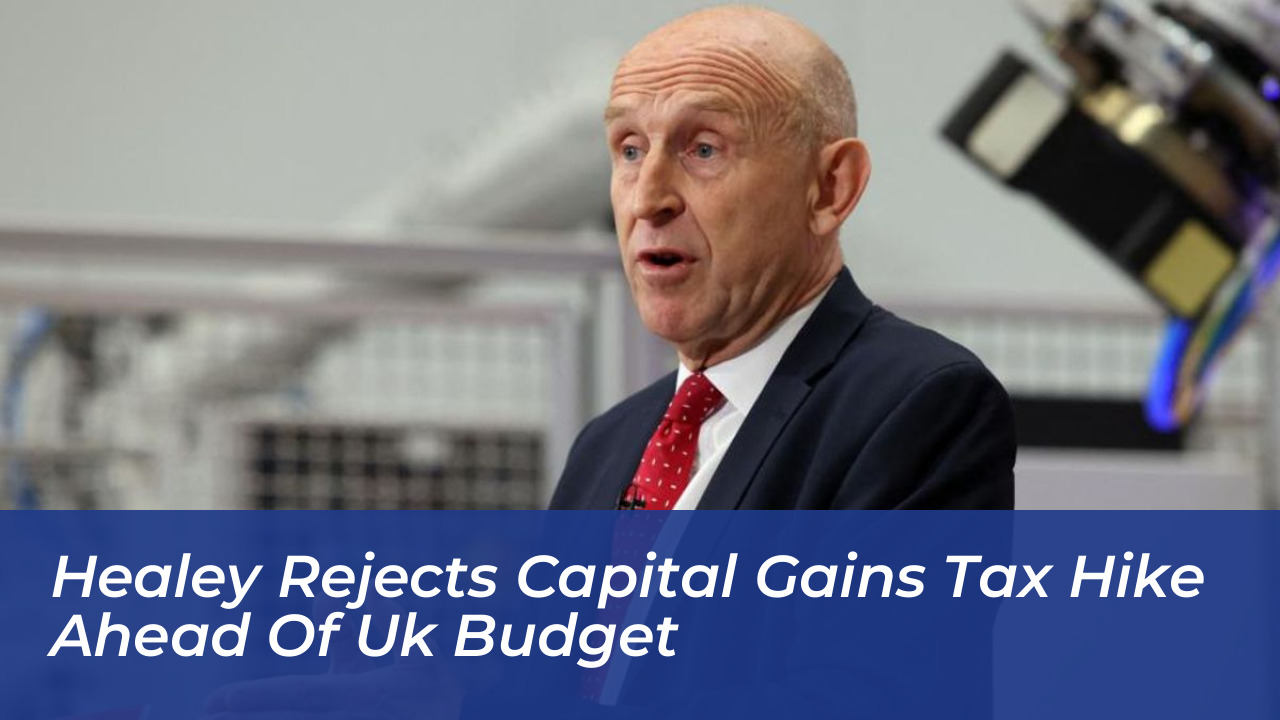

UK Chancellor John Healey is expected to reject proposals to align capital gains tax (CGT) with income tax ahead of the government’s Autumn Budget on October 28. Treasury sources cited by the BBC indicate that the decision reflects growing concerns that higher rates could prompt wealthy investors to leave the country or delay asset sales, potentially undermining government revenue.
Capital Gains Tax and Current UK Rates
Capital gains tax applies to profits made when assets increase in value and are sold, including company shares and properties that are not an individual’s primary residence. Under current UK regulations, the tax rate stands at 18% for basic-rate income taxpayers and 24% for higher- and additional-rate taxpayers.
Earlier debates among influential Labour figures, including cabinet ministers Wes Streeting and Louise Haigh, had pushed for equalizing CGT and income tax rates. According to analysis by the Financial Times, such a change could have raised the top CGT rate to 45% in England, Wales, and Northern Ireland, and up to 48% in Scotland.
Economic Warnings and Business Sentiments
Proponents of keeping the tax steady argued that hiking rates could achieve the opposite of its intended effect. Lord Jim O’Neill of Gately, a former advisor to Prime Minister Andy Burnham and former Goldman Sachs chief economist, noted that raising CGT would send the wrong message to business and potentially reduce overall tax receipts if asset transactions stall.
Chancellor Healey signaled his focus on economic growth during a speech last month. He stated that he wants the UK to be a nation of wealth creation, with government decisions and policies raising confidence, investment, and profit in British business.
Broader Fiscal Measures in the Upcoming Budget
While a capital gains tax hike appears off the table, other fiscal adjustments are anticipated. Senior banking executives have reported expectations that Healey will increase taxes on bank profits to fund cost-of-living support for households and businesses.
Meanwhile, political opposition continues to apply pressure. Conservative leader Kemi Badenoch has urged the government to curb its spending plans and reduce borrowing, pointing to a Conservative package worth £70 billion in potential cuts to welfare and the Civil Service headcount.
Pre-Budget polling conducted by Ipsos between October 9 and 12 surveyed 1,077 Britons. The survey revealed that 67% view the Chancellor’s performance as neither good nor bad, while 65% of the public anticipate some form of tax increase in the upcoming October 28 statement.