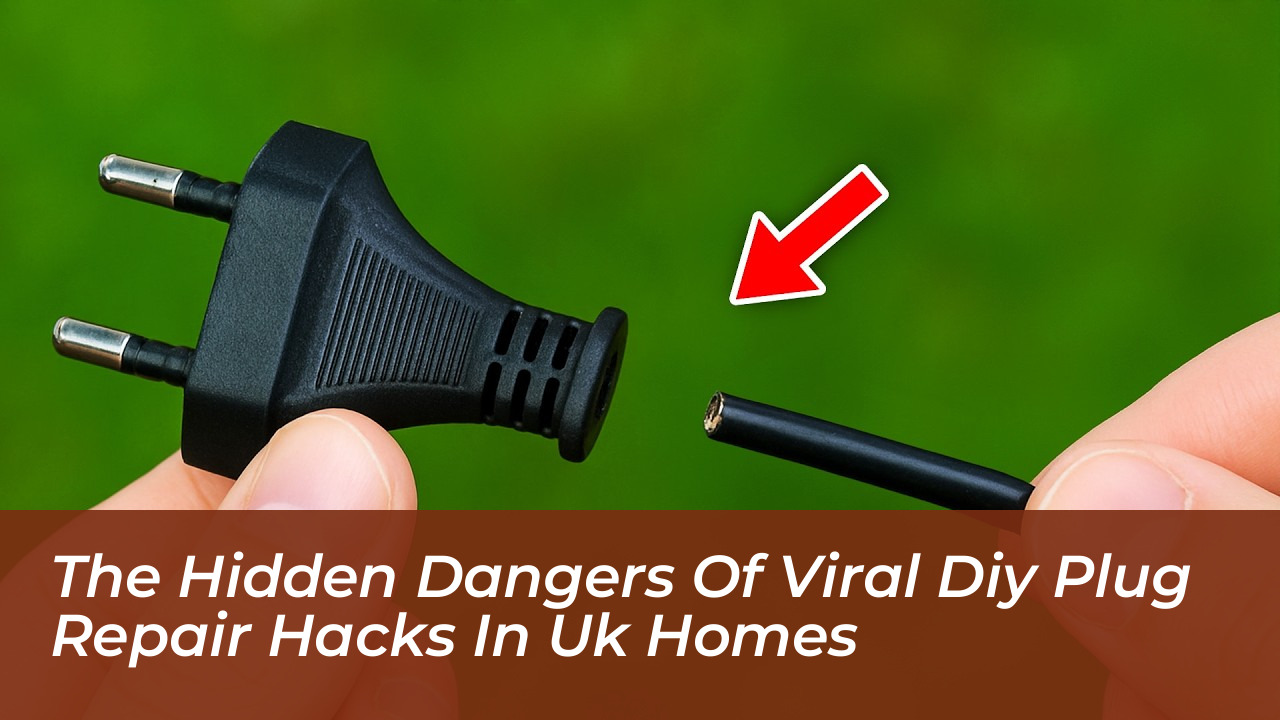

Attempting to salvage a broken electrical plug by fusing cracked plastic together with a makeshift soldering iron or DIY welding rig might look like an ingenious workshop hack. However, it creates an immediate fire and electrocution hazard inside any home running standard 230-volt mains power. While viral craft channels frequently celebrate improvised repairs using heat staples or melted thermoplastics, mains-voltage domestic hardware cannot be patched like a garden bucket.
A damaged casing compromises the structural containment designed to withstand arcing, physical strain, and extreme thermal loads. Before plugging a patched appliance back into a wall socket, understanding the engineering behind British electrical standards reveals why this viral trend poses severe risks to property and life.
The Physics of British Mains: Why Makeshift Welding Fails
In the United Kingdom, domestic power outlets operate at a nominal 230 volts alternating current, governed strictly by standard BS 1363. Unlike lower-voltage battery devices, mains electricity generates significant heat at connection points, particularly when powering high-draw appliances such as kettles, fan heaters, or washing machines.
Commercial plug casings are manufactured from specialised thermosetting plastics or high-grade flame-r****dant polymers. These materials are engineered not to ignite or deform under abnormal thermal conditions. When an improvised heating tool or soldering tip melts ordinary scrap plastic or attempts to re-fuse fractured thermoset material, several dangerous structural changes occur:
- Loss of structural rigidity: A welded fracture line creates a weak seam that easily fractures again when force is applied to pull the plug from a tight socket.
- Degraded fire resistance: Heating thermoplastics alters their chemical composition, frequently stripping away the self-extinguishing properties demanded by British manufacturing regulations.
- Creep and clearance failures: Improvised melting can push conductive contaminants or carbon tracks internally between the live, neutral, and earth terminals, provoking direct short circuits.
- Weakened cord grip integrity: Plugs rely on mechanical clamping to prevent cable tension from pulling live conductors free. Heat-damaged casings regularly fail to hold these clamps securely.
The Severe Real-World Risks of Patching Electrics
Consumer safety bodies, including Electrical Safety First, routinely caution that makeshift repairs on mains-connected accessories are among the leading causes of domestic electrical fires. A fractured plug that gives way in a user’s hand exposes uninsulated live conductors carrying lethal current.
, standard home insurance policies frequently contain exclusion clauses concerning unapproved modifications to mains electrical installations and cord-connected appliances. If an electrical fire traces back to a deliberately compromised, home-welded plug that contravenes British standards, insurers can reject claims entirely, leaving homeowners with devastating financial losses.
The Only Safe Solution: Standard Rewiring for Under Three Pounds
The irony of complex DIY welding hacks is that a safe, compliant, and permanent repair costs less than a cup of takeaway coffee and takes under five minutes. Standard British three-pin plugs are specifically engineered for straightforward user replacement without specialised machinery. Every household tool kit only needs a standard cross-head and flat-head screwdriver, wire strippers, and a replacement BS 1363 plug from any reputable hardware retailer.
- Disconnect fully: Ensure the appliance is completely isolated from the mains supply before cutting away the damaged plug head cleanly behind the cord strain relief.
- Strip with precision: Strip back approximately 45 millimetres of the outer protective sheath, keeping individual conductor insulation undamaged.
- Observe core lengths: Cut the live (brown) and neutral (blue) wires slightly shorter than the earth (green and yellow) wire, ensuring the earth conductor remains the last to break under extreme strain.
- Check the fuse rating: Always transfer or install the correct replacement fuse, typically 3 amps for low-power electronics or 13 amps for high-draw heating appliances.
Online craft videos frequently present clever mechanical shortcuts, yet electrical safety leaves zero margin for improvisation. Protecting your household means ignoring viral welding gimmicks and choosing certified, standards-compliant replacements every single time.
Have you ever spotted a dangerous electrical shortcut in a viral video or around your home? Share your thoughts and experiences in the comments below.