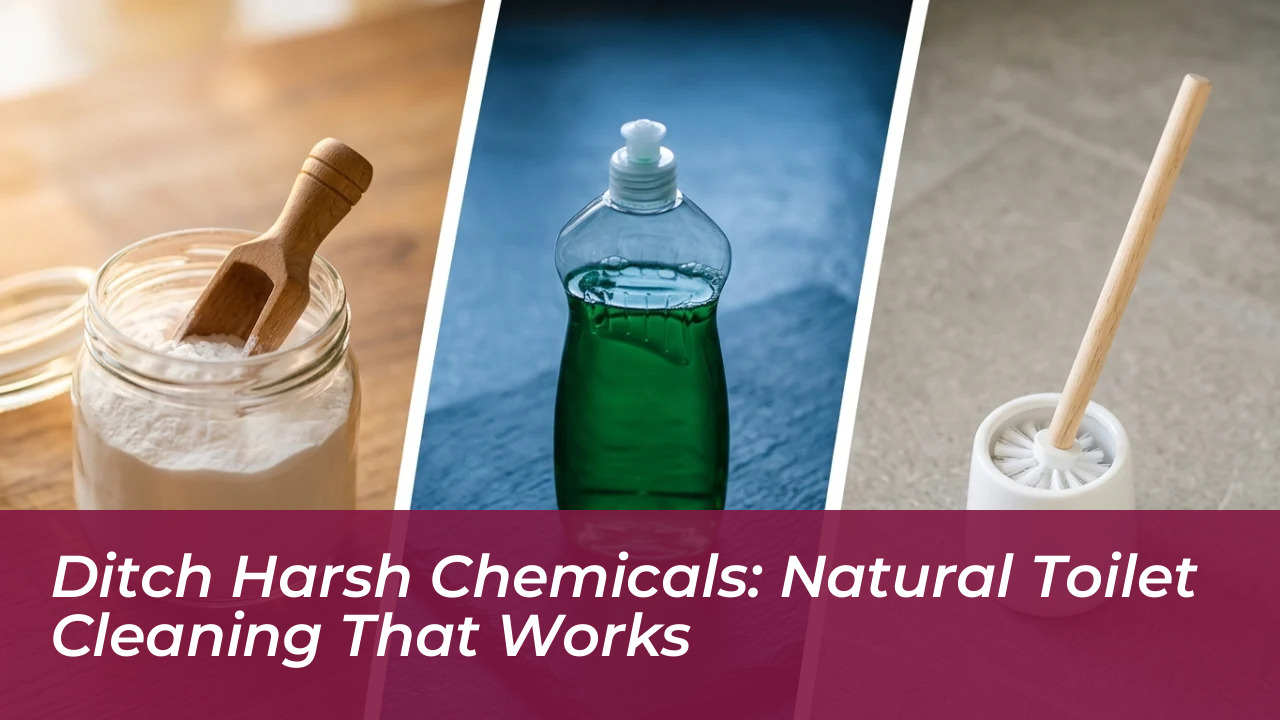

Reaching straight for caustic bleaches to clean the toilet is a habit ingrained in many households, but safe and inexpensive pantry staples achieve a spotless porcelain bowl without caustic fumes. Combining common baking soda with a few drops of everyday washing-up detergent lifts dirt, breaks down grease, and clears daily residue without scratching ceramic surfaces. This simple method forms part of safer household cleaning recommendations originally outlined by environmental waste authorities, providing a reliable alternative to aggressive chemical formulations.
The chemistry behind it is direct, relying on mechanical lifting power rather than corrosive action. Baking soda acts as a mild abrasive that helps loosen dirt without easily scratching the delicate glaze of ceramic fixtures.
Why Baking Soda and Liquid Detergent Work Together
The combination succeeds because both agents tackle entirely different components of bathroom grime. Sodium bicarbonate provides a delicate, crystalline texture that scrubs off stubborn surface marks without dulling porcelain glazes. Unlike abrasive scourers, it dissolves gradually in water, preventing pipe blockage or permanent surface scouring.
Adding liquid detergent introduces surfactants that break the surface tension of water. These compounds bind to oily films and organic particles, lifting them cleanly away so the mechanical scrubbing action of your toilet brush can work with minimal friction.
Comparison of Cleaning Agents
| Cleaning Agent | Primary Function |
|---|---|
| Baking Soda | Mild abrasive action that loosens dried residue without scratching porcelain. |
| Liquid Detergent | Surfactants that dissolve grease, lift particles, and trap dirt for easy rinsing. |
How to Use Baking Soda and Detergent to Clean Your Toilet Bowl
Applying this method takes mere seconds and requires no messy pre-mixing in separate containers. To get the best result on daily grime, follow this simple sequence:
- Sprinkle baking soda generously around the damp interior of the toilet bowl, targeting areas prone to residue line build-up.
- Add two or three drops of liquid dish detergent directly onto the sides or onto your toilet brush.
- Scrub the bowl thoroughly with the toilet brush, ensuring the mixture covers all stains and under-rim surfaces.
- Flush the toilet to rinse away the loosened dirt and cleaning residue cleanly down the drain.
Mixing Vinegar and Baking Soda for Household Cleaning Purposes
While this mild combination easily manages routine residue and light marks, severe limescale rings or deep mineral crusts require targeted descalers. In areas with hard water, deep mineral deposits need products formulated specifically for calcium removal, used strictly according to manufacturer instructions.
Odour Removal Versus Disinfection: Understanding the Boundary
A frequent misconception is that neutralising bad smells equates to full sanitisation. Baking soda absorbs and controls many volatile odours caused by organic residue, refreshing the bathroom atmosphere naturally. However, an odour-free toilet is not automatically a sterile one.
Routine surface cleaning removes dirt and organic matter, but eliminating harmful pathogens requires targeted disinfection if illness is present in the home. Maintaining reliable natural ventilation alongside regular washdowns remains essential for true bathroom hygiene.
Vital Safety Rules When Handling Bathroom Cleaners
Natural cleaning methods are fundamentally safe, but hazards arise when different household chemicals are combined carelessly. Always read packaging labels before mixing any cleaning substances.
Bleach should never be mixed with products that contain acids or ammonia, as dangerous gases can be released. Combining chlorine bleach with acidic solutions or ammonia releases toxic chloramine or chlorine gas, which can cause severe respiratory harm. Sticking to mild pairings like detergent and sodium bicarbonate avoids chemical risks entirely.
Switching to simple detergent and bicarbonate is an effortless way to cut down on aggressive bathroom chemicals. Check the hardness of your local water supply if stubborn limescale rings continue to resist gentle scrubbing.
Frequently Asked Questions
Can I mix vinegar and baking soda together in the toilet bowl?
While they create a satisfying fizz, they largely neutralise each other. For best results, use them sequentially or stick to baking soda and detergent for physical scrubbing.
Do natural cleaners kill germs and bacteria?
Natural ingredients like baking soda and soap remove dirt and reduce odours, but they do not actively disinfect pathogens. Use targeted disinfectants only when illness requires sanitisation.
Will baking soda scratch my toilet porcelain?
No, sodium bicarbonate has a very fine crystalline structure that acts as a mild abrasive without dulling or scratching standard porcelain surfaces.
How do I handle hard water rings naturally?
Hard water and severe limescale typically require targeted treatments like citric or a specialized pumice stone designed for porcelain.
Is it safe to mix chlorine bleach with other cleaners?
Never mix chlorine bleach with acids, vinegar, ammonia, or commercial toilet cleaners, as this creates highly toxic and dangerous gases.