
Removing stubborn, calcified mineral deposits submerged at the bottom of a toilet bowl requires concentrated mild acids like citric powder or spirit vinegar. Standard household bleach merely alters the color without dissolving the underlying calcium carbonate crust. To successfully eradicate toilet limescale, the acidic solution must make direct, undiluted contact with the mineral layer for several hours. This breaks down the ionic bonds adhering the deposit to the vitreous china glaze. Mineral crusting at the base of the S-bend occurs when dissolved calcium and magnesium ions settle out of hard water. Over months and years, repeated flushing deposits layer upon layer of insoluble rock, trapping dirt and bacteria underneath. Many households waste time scrubbing with standard bathroom sprays that wash away into the trap immediately. Conquering this persistent ring requires understanding the chemical breakdown of mineral scale and safely handling the standing water sitting directly above it.
The Chemistry of Mineral Build-Up in Hard Water Areas
Limescale consists primarily of calcium carbonate ($CaCO_3$). When hard water evaporates or sits stagnant in the trapway, the dissolved bicarbonate breaks down, forming an insoluble crystalline deposit firmly anchored to the porcelain surface. Because the bottom of the bowl is permanently submerged, household cleaners face an immediate barrier: dilution. Pouring a cup of mild cleaning vinegar into nearly two liters of standing water reduces its acidity to an ineffective concentration. The primary failure in clearing submerged scale is chemical dilution. Active acids must remain concentrated right against the mineral surface to dissolve the crystalline matrix.
Without altering the water level or significantly boosting the concentration of the , scrubbing yields negligible results. Breaking this cycle starts with addressing the most widespread cleaning misconception found in modern bathrooms.
The Bleach Myth: Why Disinfectant Fails on Limescale
A widespread assumption in routine housekeeping is that thick toilet bleach removes limescale. In reality, sodium hypochlorite is an alkaline disinfectant, not an . It oxidizes stains and bleaches the brownish-grey pigments embedded in the scale, rendering the build-up temporarily invisible. However, the structural calcium remains completely intact beneath the bleached surface. Within days, organic matter re-attaches to the rough mineral ridges, and the discolored ring reappears with identical severity. To permanently eradicate the build-up, you must reverse the chemical reaction that created it by deploying an with a low pH level.
Step-by-Step Method to Clear the Trapway
Achieving total removal without damaging your plumbing requires systematic execution. Following this targeted process ensures maximum contact between the active descaler and the hard mineral deposit:
- Displace the standing water: Use a standard toilet brush to plunge briskly into the bottom hole several times. This push-action forces the trap water over the S-bend, lowering the standing level by half or more.
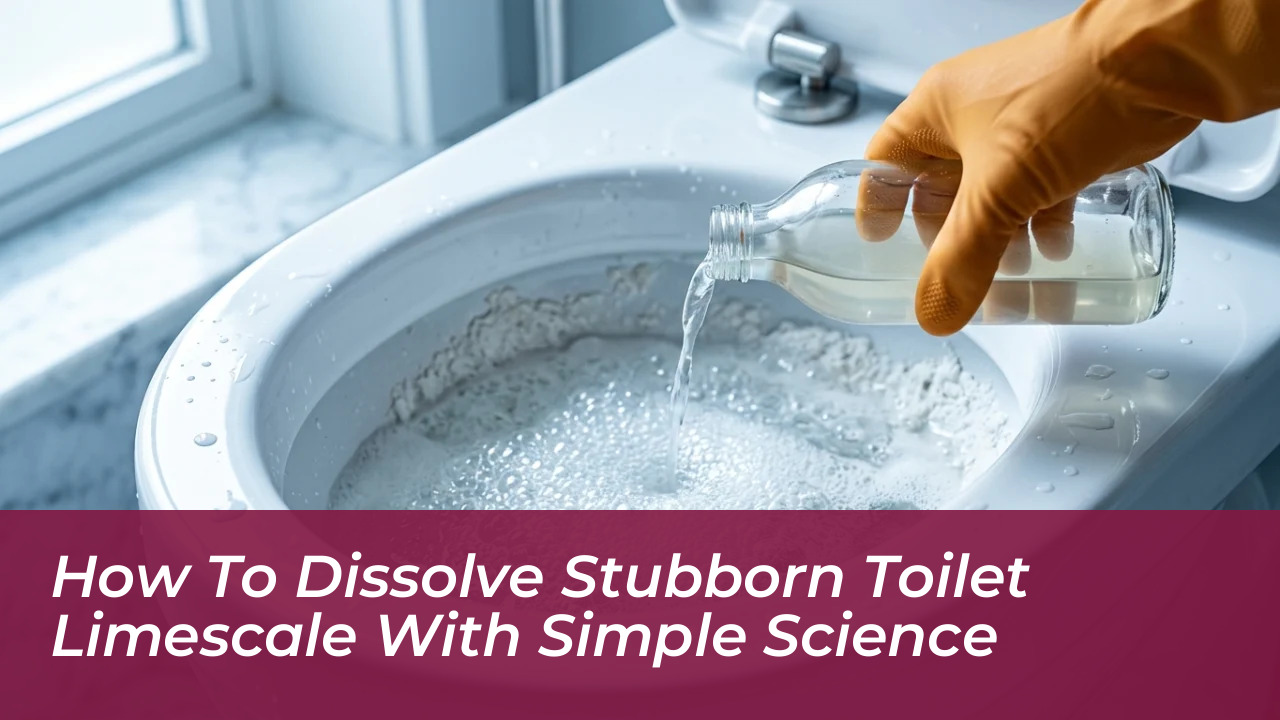
- Apply concentrated dry or liquid : Add approximately 250 grams of powdered citric directly into the remaining water at the base, or pour in undiluted cleaning vinegar if the bowl has been completely bailed out.
- Allow sufficient dwell time: Leave the mixture untouched for at least four to eight hours, ideally overnight. The mild effervescence indicates the is actively converting calcium carbonate into soluble calcium citrate.
- Agitate the softened deposits: Scrub the area vigorously with a firm toilet brush or an abrasive, non-scratch scouring pad suited for sanitaryware. The calcified sheets should flake away from the ceramic.
- Flush thoroughly: Flush twice to clear the loosened debris and restore the clean water level in the trap.
For particularly dense calcification that has developed over years, mechanical intervention or alternative compounds may be necessary to assist the chemical process.
Alternative Descaling Solutions Compared
Different compounds carry distinct benefits regarding speed, environmental profile, and surface safety. Selecting the correct approach depends on deposit thickness and plumbing configuration.
- Citric Powder: Highly effective, low odor, safe on septic systems, dissolves submerged scale efficiently.
- White Cleaning Vinegar: Affordable, liquid application, requires water displacement to avoid severe dilution.
- Pumice Stone: Mechanical removal only; must remain wet during use to prevent scratching porcelain.
- Hydrochloric/Sulphamic Acids: Rapid commercial-grade dissolution; requires protective gear and excellent room ventilation.
While chemical dissolution is the gentlest method for porcelain glaze, stubborn patches near the rim or tight bends can be coaxed away with gentle mechanical friction.
Preventing Recurring Scale in Your Bathroom
Once the ceramic surface is restored to its smooth factory finish, ongoing maintenance prevents crystals from securing a fresh foothold. Roughened, uncleaned porcelain attracts fresh limescale deposits twice as fast as smooth, unblemished vitreous china. Introducing a monthly dose of dry citric directly into the pan overnight stops new crusts from crystallising at the waterline.
Households in high-mineral postcodes often find this single routine eliminates the need for heavy scrubbing entirely. Regular maintenance protects the internal flush seals and ensures the waste pipe maintains an unobstructed pathway over decades of use. Check your local water hardness rating to determine how frequently your sanitaryware requires targeted acidic descaling. Inspect the bowl regularly beneath the waterline to catch rough crystalline texture before it thickens into dense rock.