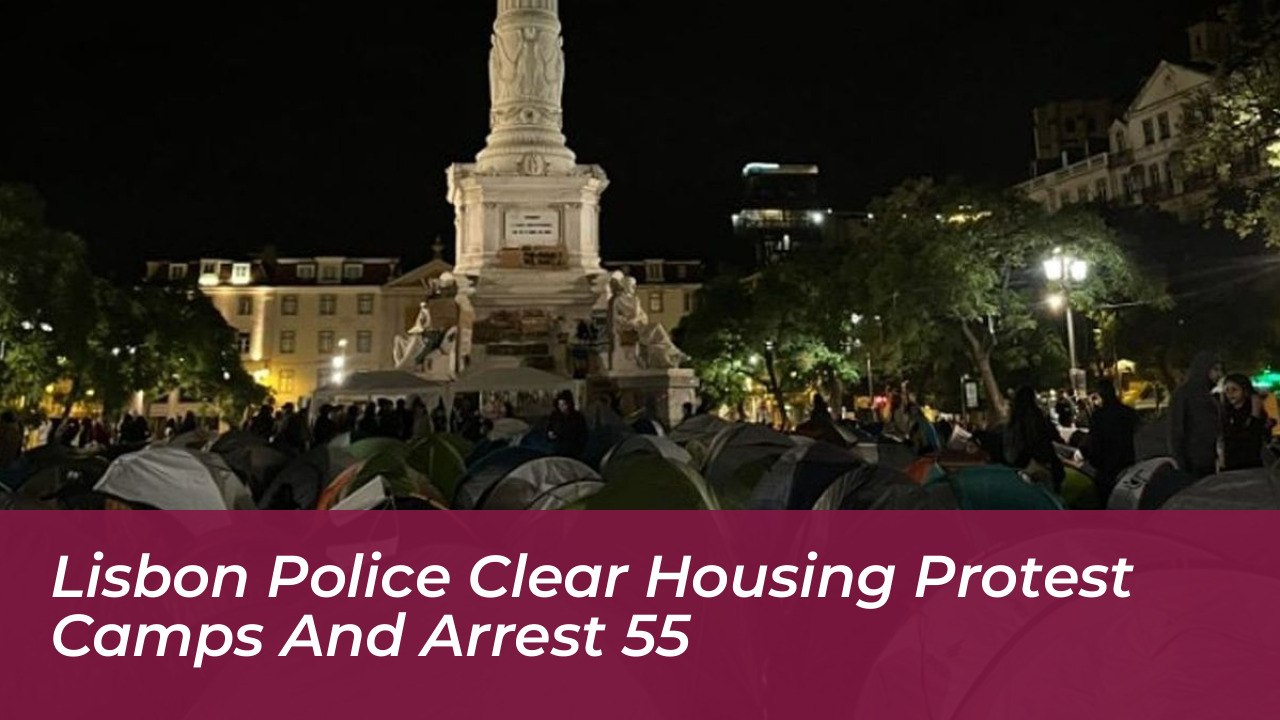

Portuguese police arrested 55 people and removed 228 camping structures from central Lisbon on Tuesday, October 20, 2026. Law enforcement authorities forcefully dismantled protest camps that demanded government action on affordable housing. The high-profile operation at Rossio Square followed days of escalating demonstrations over soaring housing costs and national housing policies. Organizers and participants immediately vowed to continue their campaign.
According to official statements from the Public Security Police (PSP), officers arrived shortly before 06:00 local time at Rossio Square in Lisbon and Praça D. João I in Porto. Demonstrators occupying the public spaces were given a strict window of five to 10 minutes to end their gatherings. Police declared the gatherings were no longer legally authorized.

Confrontations Erupt as Police Clear Camps
As security forces moved in to clear the encampments, tensions quickly boiled over. In Lisbon, groups of protesters attempted to resist the eviction by linking arms to form a human chain. Other demonstrators threw objects at advancing officers.
The PSP’s Special Unit was subsequently deployed to clear Rossio Square. Officers used batons during direct confrontations with the crowd. Local activists and medical volunteers reported that approximately 30 demonstrators sustained injuries during the clashes, alongside the dozens taken into custody. While protesters documented roughly 30 total casualties and arrests from the immediate scuffles, the PSP confirmed that 55 individuals were formally arrested across the operation.
Background on Portugal’s Housing Crisis
The dawn raids highlight the deep social tensions surrounding housing affordability in Portugal. Major urban centers like Lisbon and Porto have experienced dramatic surges in property values and rental rates over recent years. These increases are driven heavily by tourism, foreign investment, and stagnant local wages.
- Surging rental prices pricing out working-class residents and young adults
- Controversial government measures regarding short-term rentals and foreign tax schemes
- Growing frequency of tent cities and encampments organized by housing rights coalitions
- Calls from civil rights groups for increased public intervention in housing markets
Activists have used prolonged public camping and occupation protests to draw international attention to a severe housing emergency. Despite Tuesday’s sweeping police intervention and the destruction of the camps, leaders of the movement insist that the forced removals will only harden resolve to push for comprehensive legislative reforms.
Official Response and Next Steps
The Ministry of Internal Administration defended the police action. Officials emphasized that public spaces must remain accessible and that unauthorized encampments violate local municipal regulations. Authorities maintained that while the right to peaceful protest is protected under Portuguese law, permanent occupation and obstruction of public squares cross legal boundaries.
Legal aid networks and human rights observers are currently monitoring the legal status of the 55 detained individuals. Meanwhile, housing advocacy groups have announced plans for emergency assemblies and follow-up demonstrations later in the week. This signals that the broader political conflict over housing policy in Portugal remains far from resolved.