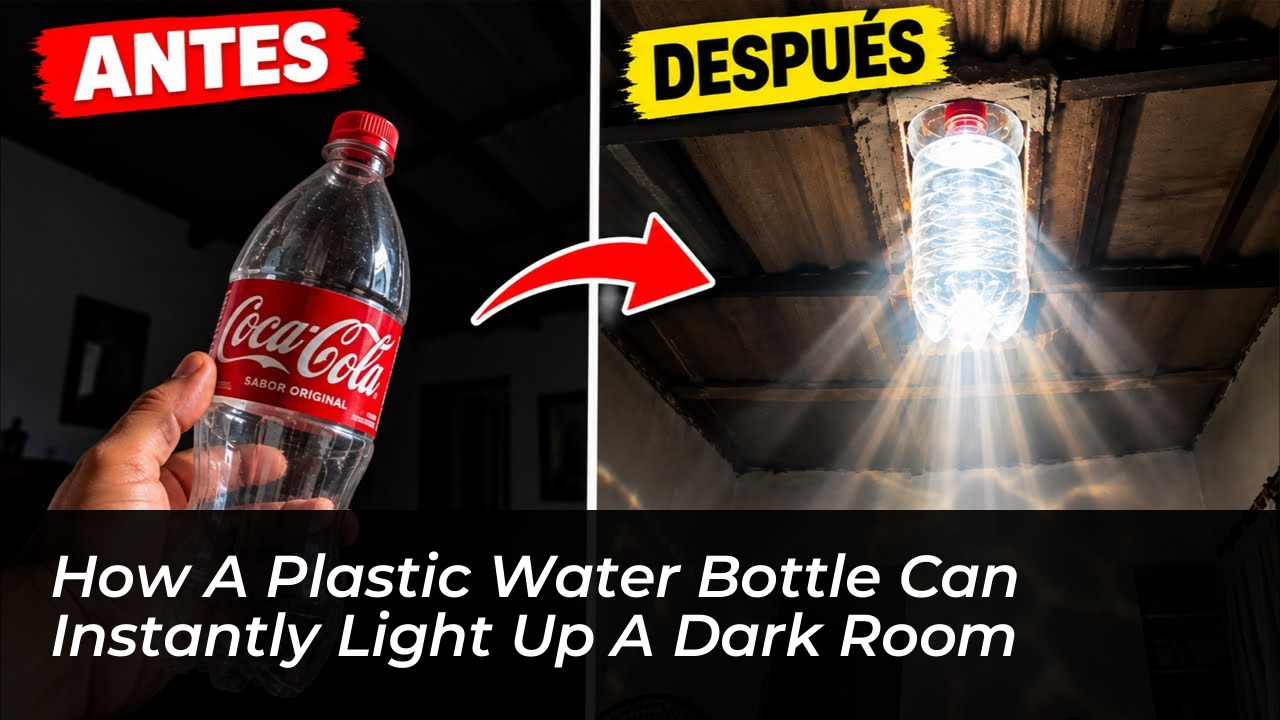

A simple clear plastic drinks bottle filled with clean tap water and a splash of household bleach can illuminate an entirely pitch-black room. It provides the equivalent intensity of a 40-to-60-watt electric bulb. Known globally as solar bottle bulbs or Moser lamps, these zero-cost devices harness optical refraction to bend and scatter direct daylight across spaces that lack windows or wiring. For homeowners looking to light up an unpowered garden shed, an allotment workshop, or cope during unexpected winter power cuts, this ingenious optical hack offers immediate utility. The principle relies entirely on the natural physics of light travelling through differing densities rather than any mechanical generation or hazardous chemical reaction.
The Physics of Refraction: How Water Multiplies Ambient Daylight
Direct sunlight normally travels in straight lines, creating a harsh, narrow beam when entering a room through a small hole or skylight. The surrounding corners remain cloaked in deep shadow. When sunlight strikes a cylindrical clear bottle filled with water, the fluid acts as a liquid lens. The light rays undergo refraction, bending sharply as they transition from air into water and back out again. Instead of hitting the floor as an isolated, blinding spot, the incoming rays disperse across a full 360-degree angle. This omnidirectional scatter bathes windowless spaces in soft, bright, ambient illumination.
Maximising this natural phenomenon involves specific physical properties:
- Algae Prevention: A minute measure of standard thin bleach-roughly two capfuls per two-litre bottle-prevents microbial bloom, ensuring the water stays crystal clear.
- Total Internal Reflection: The curved profile of standard fizzy drinks bottles maximises the bouncing of light internally before it exits downward into the room.
- Diffused Clarity: Clear PET plastic provides the highest rate of light transmittance, outperforming cloudy milk jugs or tinted bottles.
Installing a Solar Bottle Bulb in an Outbuilding
While the concept originally gained fame as an off-grid humanitarian intervention across developing communities, British gardeners and DIY enthusiasts frequently adapt the method for timber workshops and storage sheds. A precision installation requires careful attention to weatherproofing, especially given the frequent damp and rainfall typical of the UK climate.
Step-by-Step Construction Method
Select a clean, transparent two-litre soft drink bottle, ensuring all commercial labels and residual adhesives are fully stripped away. Wash the interior thoroughly to remove any sugary film that could encourage mould growth. Fill the container almost to the brim with cold tap water, leaving roughly an inch of air space at the top. Pour in two teaspoons of ordinary thin domestic bleach to sterilise the fluid, then screw the cap tightly in place.
Cut a circular aperture into a sheet of flexible corrugated roofing material or a dedicated flashing collar that matches your outbuilding roof. Push the bottle halfway through the collar so that the top half gathers outdoor light while the bottom half projects into the interior. Seal the entire perimeter around the bottle with exterior-grade, weather-resistant silicone sealant. A complete waterproof seal prevents rainwater ingress through your shed felt or corrugated roofing sheets.
Critical Safety Warnings and Chemical Handling
Household safety must remain the absolute priority whenever combining common domestic products. In line with official Health and Safety Executive guidance on chemical handling, strict boundaries apply when setting up water-based light diffusers. Never combine chlorine bleach with any other cleaning agents, acids, or hydrogen peroxide. Blending bleach with everyday acidic cleaners or ammonia releases hazardous, suffocating chlorine or chloramine gases into enclosed spaces. Plain water and basic thin sodium hypochlorite bleach are the only necessary ingredients for long-term clarity. If you intend to use the bottle purely as an emergency indoor lantern during an outage, plain tap water alone is entirely sufficient.
The Two-Second Blackout Hack for the Home
The identical refractive principle works just as effectively indoors during sudden power cuts or storm-related grid failures. A bare smartphone torch or small LED flashlight typically casts a narrow, blinding glare that does little to brighten an entire living room. Placing an upright, water-filled bottle directly on top of an illuminated smartphone screen instantly diffuses the focused beam. The water scatters the LED point-source across the ceiling and walls, immediately turning a harsh single beam into an ambient table lamp. This simple trick provides comfortable, soft illumination for reading or navigating rooms safely without draining multiple batteries or lighting hazardous open-flame candles.
Simple materials often solve persistent everyday challenges far better than costly gadgets. Reusing clean plastic packaging keeps functional items out of the waste stream while cutting reliance on grid energy for daytime outbuildings. Whether fitted through a timber workshop roof or sat atop a torch during an unexpected winter power outage, liquid refraction remains one of the simplest DIY upgrades available.