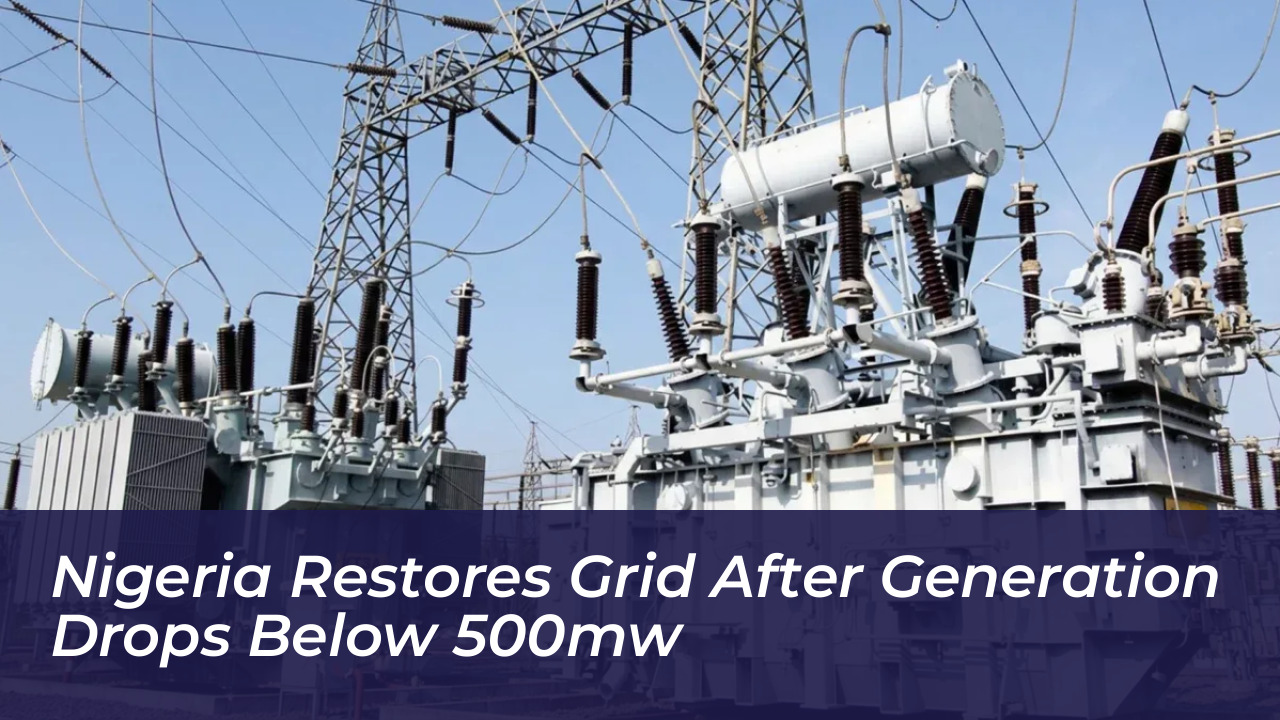

Nigeria’s electricity system partially recovered following a major transmission network disturbance on Monday, October 19, 2026, which sent grid generation down to 476.70 megawatts (MW) by 1 p.m. The Nigerian Independent System Operator (NISO) reported that corrective measures successfully restored normal operations, though total output remained constrained compared to morning figures.
According to official data published by NISO, electricity generation fell sharply from approximately 3,840MW recorded at 7 a.m. on Monday to 476.70MW by the afternoon. This 87.6 percent decline coincided with widespread electricity interruptions and sudden power outages reported by consumers across various parts of the country.
Details of the Transmission Disturbance and Genco Impact
NISO stated that the incident occurred at approximately 12:40 p.m. on the 330-kilovolt (kV) transmission network. The operator insisted that the event affected only a section of the grid and did not amount to a nationwide system collapse, countering unverified reports circulating across media platforms.
During the depth of the generation drop, multiple major power plants recorded zero output on the real-time monitoring dashboard. Key generating stations-including Egbin, Jebba, Shiroro, and Kainji-alongside several gas-fired plants, temporarily went offline or stopped feeding the grid. Only a limited number of stations, such as Odukpani NIPP, Omotosho, Sapele, and Paras Energy, contributed small amounts of electricity to keep the baseline functional.
Real-time figures showed that generation slipped further to 404.01MW by 9:15 p.m. on Monday night. By Tuesday morning at 7 a.m., output had climbed back to 2,827.82MW as restoration teams brought more generating units back online.
NISO and TCN Response Measures
In an official statement signed by its management on Monday, NISO detailed the immediate intervention carried out alongside the Transmission Company of Nigeria (TCN).
The Nigerian Independent System Operator wishes to inform the public that at approximately 12:40 hours on Monday, 19 October 2026, the national grid experienced multiple trippings on the 330kV transmission network. Following the incident, NISO, working with TCN, immediately implemented appropriate corrective measures to stabilise the power system and restore normal operations.
The operator urged electricity consumers and the general public to disregard misleading information and rely exclusively on official communication channels, such as its monitoring portal and website, for verified updates regarding grid stability.
Vulnerability of Nigeria’s Power Infrastructure
The sudden plunge in generation highlights the ongoing fragility of Nigeria’s interconnected power network. The country’s electricity supply depends heavily on the synchronized performance of thermal and hydro power plants, high-voltage 330kV transmission lines, and distribution networks.
When faults or disturbances occur on high-voltage transmission lines, automated protective mechanisms frequently trip to disconnect vulnerable equipment and prevent catastrophic infrastructural damage. While these safety features protect physical assets, they often result in sudden load shedding and sharp reductions in available grid capacity.
To address recurring system failures and strengthen long-term grid reliability, the Federal Government recently approved plans to develop separate eastern and western power grids. These plans aim to decentralize heavy load burdens and minimize the impact of localized transmission faults.