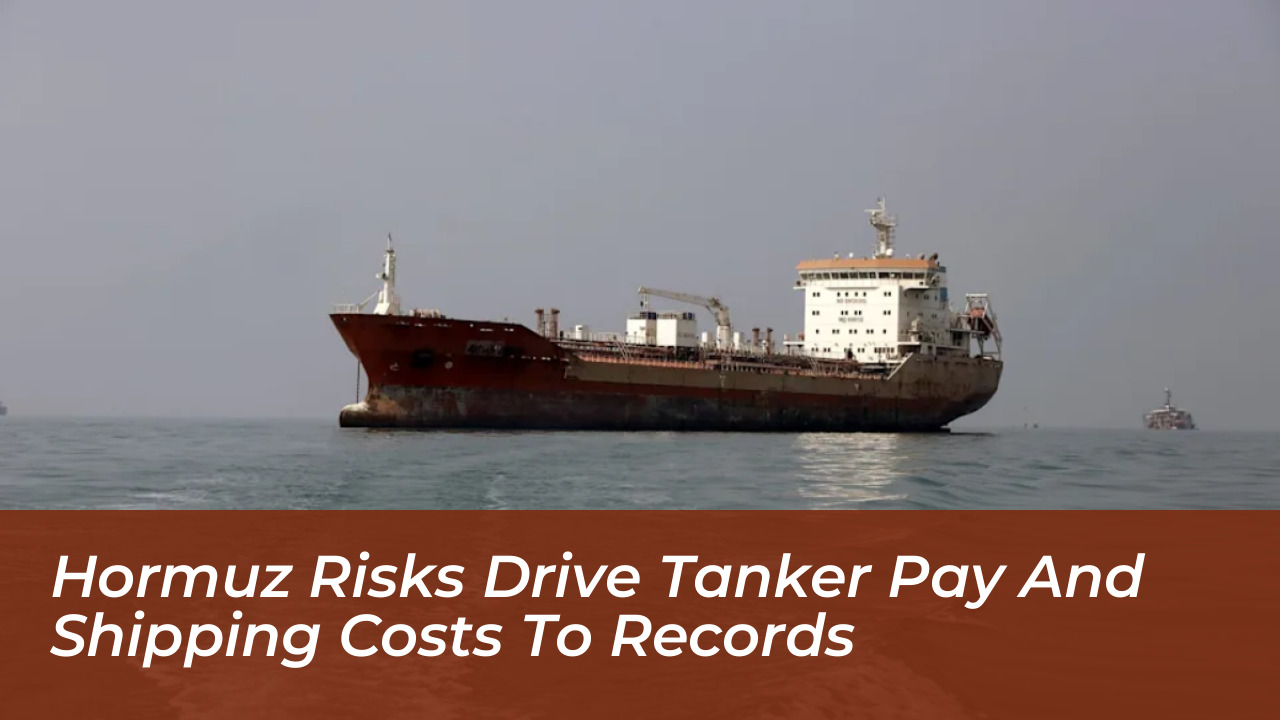

Rising attacks on commercial vessels in the Persian Gulf have pushed tanker crew compensation and global shipping costs to extraordinary levels. Oil companies and trading firms are seeking ways to move crude through the Strait of Hormuz. Reports published in October 2026 describe how escalating drone and missile strikes, soaring insurance premiums, and a tight shortage of available vessels are making oil transportation dramatically more expensive.
According to industry reports and financial analyses, tanker captains can now earn $100,000 a month for operating in the high-risk corridor, alongside a $50,000 bonus for each successful transit. Their regular monthly salaries typically hover around $15,000. Meanwhile, regular sailors earning as little as $1,500 a month can increase their monthly pay by four to six times on dangerous Hormuz assignments. For operating in adjacent high-risk waters, such as the southern Red Sea and the Gulf of Oman, crews receive double their standard wages.
Escalating Maritime Dangers and Plunging Traffic
The International Maritime Organization (IMO) has recorded at least 93 commercial ships struck and 24 sailors killed since the regional conflict began on February 28, 2026. Security firms have documented numerous separate attacks in the immediate Hormuz area in recent weeks alone. In response to the persistent threat, many commercial vessels now turn off their GPS signaling equipment and navigate the narrow chokepoint exclusively at night.
Daily ship transits through the strait have fallen significantly. Shipping analytics show that vessel counts dropped sharply compared to pre-war averages of roughly 135 ships per day. Despite the severe dangers, commercial traffic continues, supported by U.S. military protection along regional coastlines and alternative pipeline routes that have helped restore Persian Gulf oil flows to prewar levels through shuttle runs and ship-to-ship transfers.
Soaring Freight Rates and Astronomical Insurance Costs
The intense danger environment has translated into unprecedented operational costs for shipowners and cargo handlers. Freight rates for shipments crossing the Strait of Hormuz have reached a record high of $1.3 million per day, climbing drastically from historical daily averages of $20,000 to $50,000.
Marine war-risk insurance premiums required to operate vessels in the Gulf now command between 6% and 10% of a ship’s total hull value. For a very large crude carrier (VLCC), war-risk insurance alone for a single voyage can reach up to $20 million. Additionally, supertanker fuel prices in Fujairah have surged to $686 per tonne, representing a 67% increase year-over-year.
Impact on Global Refining Margins
The staggering rise in transportation and insurance expenses has created a global tanker shortage that has spiked freight rates across international shipping lanes. Industry brokers note that hiring a tanker to travel from the United States to China now commands approximately $80 million.
These extreme logistics costs are directly impacting downstream refining margins. European refiner Repsol reported a sharp drop in operating margins, falling from $36 per barrel in the third quarter down to $15 per barrel in October. Industry analysts warn that if freight costs remain elevated, refiners may be forced to scale back their overall crude processing volumes, adding further strain to the global energy market.