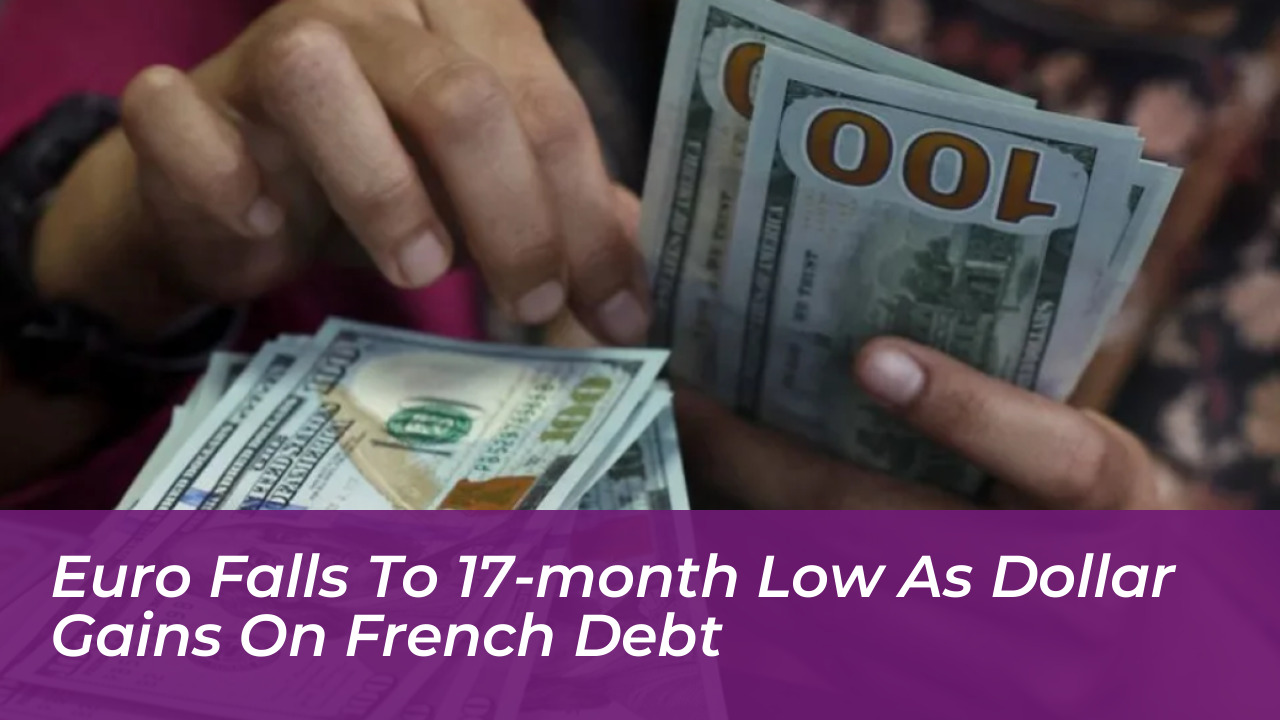


The euro fell 0.65% to $1.1185 on Wednesday, Oct. 7, as renewed French fiscal concerns pushed euro zone bond yields higher, while the U.S. dollar gained ahead of Federal Reserve minutes that could clarify the central bank’s policy path. The decline brought the single currency closer to the 17-month lows reached earlier in the week, driven by mounting investor anxiety over France’s stretched public finances and broader political instability across the currency bloc.

French Fiscal Pressures and Bond Yield Spikes
France’s 10-year government bond yield jumped 14.9 basis points to 4.8959%, putting it on track for its largest daily increase in two weeks. Meanwhile, Germany’s 10-year yield rose 0.8 basis point to 3.489%. The sell-off in French debt gathered pace as doubts grew over the long-term viability of the country’s public finances following the presentation of its budget proposals.
France has wrestled with underlying fiscal problems for years. Since President Emmanuel Macron came to office in May 2017, public spending has climbed alongside deep tax cuts. As a result, the nation’s national debt has increased significantly, pushing its debt-to-GDP ratio to almost 118%. Annual budget deficits routinely exceed 5%, well above the 3.4% rate recorded when Macron took office.
The yield gap between French 10-year bonds and safe-haven German bunds widened significantly, reaching levels not seen since the height of the eurozone sovereign debt crisis in the early 2010s. Analysts note that investors are retreating to safer options like German debt amid concerns that upcoming elections and a fragmented parliament will make fiscal consolidation difficult.
U.S. Dollar Strength and Federal Reserve Outlook
While European assets faced intense selling pressure, the U.S. dollar advanced. The dollar index, which tracks the greenback against a basket of currencies, rose 0.41% to 102.33. The currency’s ascent was supported by persistent domestic inflation pressures and market anticipation of upcoming Federal Reserve policy minutes.
Recent U.S. economic data, including an increase in the Institute for Supply Management’s nonmanufacturing prices-paid index, have reinforced expectations that the central bank will maintain a cautious stance on interest rates. Traders are carefully evaluating commentary from Federal Reserve officials regarding the timing and scale of future rate adjustments to combat stubborn price pressures.
Broader European Political and Economic Risks
Adding to the eurozone’s economic uncertainty, Spain announced a snap election called by Prime Minister Pedro Sánchez after emergency housing legislation was blocked in parliament. The twin political developments in France and Spain have heightened market skittishness regarding the fiscal discipline and legislative stability of major euro area economies.
Economists warn that a weaker euro could compound domestic inflation problems by driving up the cost of imported energy and commodities priced in U.S. dollars. While some market strategists view comparisons to the 2012 sovereign debt crisis as overstated, policymakers at the European Central Bank face a delicate balancing act to prevent regional debt concerns from escalating into broader financial panic.
Frequently Asked Questions
Why is the euro falling against the U.S. dollar?
The euro has declined primarily due to mounting fiscal concerns in France, rising European government bond yields, and political uncertainty across the eurozone. At the same time, a resilient U.S. dollar has been supported by expectations surrounding Federal Reserve monetary policy and persistent U.S. inflation data.
What are France’s main fiscal issues?
France faces a high debt-to-GDP ratio approaching 118% and persistent annual budget deficits regularly exceeding 5%. Years of increased public spending coupled with tax cuts have created widening borrowing costs and strained relations with bond investors.
How have French government bond yields reacted?
French 10-year bond yields surged significantly, pushing the yield spread between French debt and German bunds to its widest margin since the eurozone debt crisis of the early 2010s, reflecting heightened risk premiums demanded by investors.
What role does the European Central Bank (ECB) play?
The ECB monitors currency developments and regional bond markets closely to prevent localized fiscal stress from triggering widespread market panic, while balancing the risks of persistent inflation and energy price volatility.
How does the U.S. Federal Reserve affect the exchange rate?
Expectations of a hawkish Federal Reserve path and potential future interest rate adjustments elevate U.S. Treasury yields, making the dollar more attractive to global investors relative to European currencies.