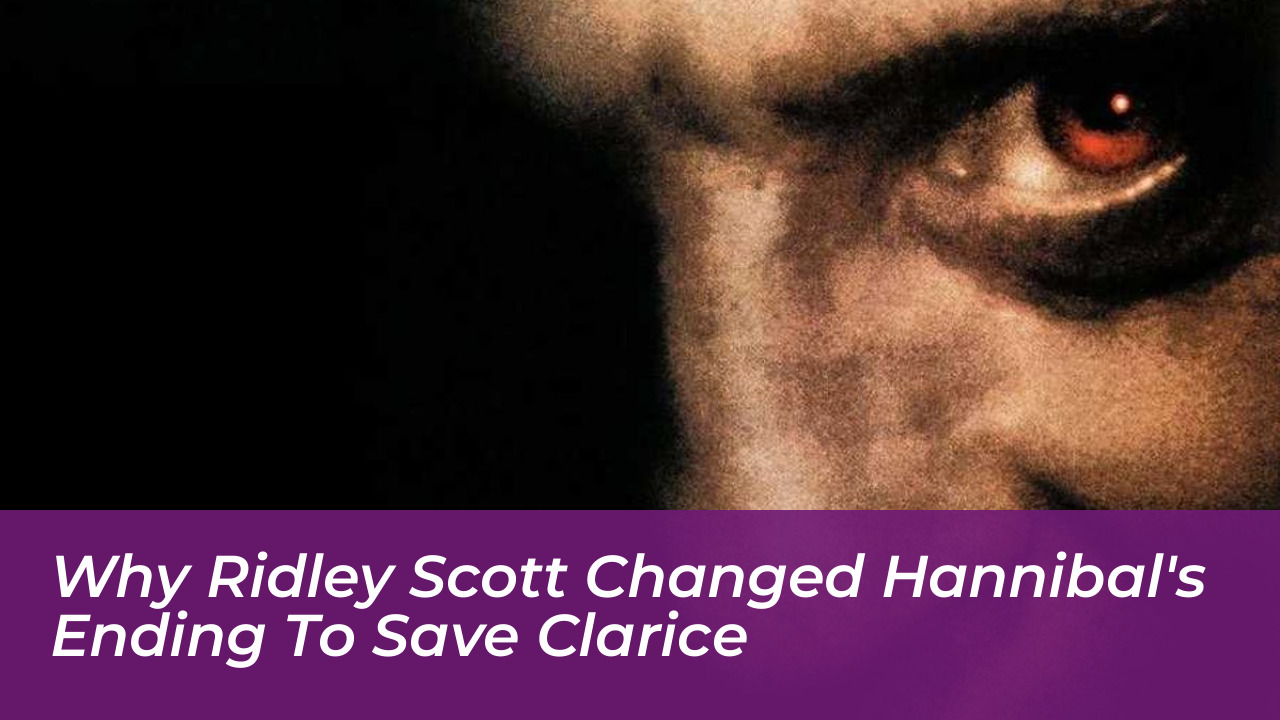


When director Ridley Scott brought Thomas Harris’s bestselling novel Hannibal to the big screen in 2001, he made a major creative departure from the source material. Rather than following the author’s controversial conclusion, Scott deliberately altered the fate of FBI special agent Clarice Starling to protect the integrity of the character. The feature film adaptation starred Julianne Moore alongside Anthony Hopkins, following Jodie Foster’s decision not to reprise her iconic role.
Thomas Harris’s 1999 novel, which served as a sequel to the massively successful 1991 film The Silence of the Lambs, divided readers with its final chapters. In the book, after escaping the compound of Mason Verger, Dr. Hannibal Lecter subjects Clarice to a cocktail of drugs and psychological manipulation. The story concludes with Clarice accepting his influence, leaving with him as his romantic partner, and living a shared life. For many fans and original creators, this outcome felt like a betrayal of the principled law enforcement agent.
Jonathan Demme, who directed The Silence of the Lambs, passed on helming the sequel because he did not appreciate the lurid direction of Harris’s novel. Jodie Foster similarly declined to return. In a Variety interview, Foster reflected on the decision: “It was easy. We waited years for that novel that Thomas Harris said he was writing, that he probably wrote in eight weeks.” Foster later clarified in a 2005 GamesRadar interview that there was no way for her or Demme to compromise the character they had built.
Why Ridley Scott Rejected the Novel’s Climax
While Ridley Scott loved the novel and took on the project coming off his success with Gladiator, he immediately recognized that the book’s romantic ending would not work on film. Speaking with The Guardian in 2001, Scott explained his reasoning: “I couldn’t take that quantum leap emotionally on behalf of Starling. Certainly, on behalf of Hannibal – I’m sure that’s been in the back of his mind for a number of years. But for Starling, no. I think one of the attractions about Starling to Hannibal is what a straight arrow she is.”
With the blessing of author Thomas Harris, who aided screenwriters in formulating a new conclusion, Scott pivoted away from the brainwashed romance. Instead, the 2001 film features a climax where Clarice attempts to apprehend Lecter in her kitchen by handcuffing him to herself. Rather than submitting to his psychological control, Lecter chooses to sever his own hand to escape, ultimately fleeing alone.
Box Office Success and Lasting Legacy
Despite mixed critical reviews and the absence of Jodie Foster, Hannibal proved to be a commercial success, continuing the legacy of the prominent psychological thriller franchise. The film retained several of the novel’s shocking elements, including the infamous dinner scene where Ray Liotta’s character, Paul Krendler, is fed pieces of his own brain. However, by preserving Clarice Starling’s foundational independence, Scott avoided the severe reader backlash that plagued the final pages of Harris’s original text.
Key Differences Between the Hannibal Book and Movie
- The Fate of Clarice Starling: The novel ends with Clarice becoming Hannibal’s lover after undergoing psychological manipulation. The film has her fight to the end, refusing to compromise her morals.
- The Escape: In the book, the pair peacefully run away together. In the movie, Hannibal chops off his own hand to break free from Clarice’s handcuffs and escapes alone.
- Cast Changes: Jodie Foster declined to return as Clarice, leading to Julianne Moore taking over the role for the 2001 adaptation.
- Author Involvement: Thomas Harris supported Ridley Scott’s cinematic adjustments, working alongside the creative team to craft the updated ending.
Although the film adaptation faced criticism for stripping away some of the quiet suspense that made The Silence of the Lambs a historic Academy Award winner, Scott’s choice to alter the ending ensured that Clarice Starling remained a resolute investigator rather than an uncharacteristic casualty of the killer’s charm.