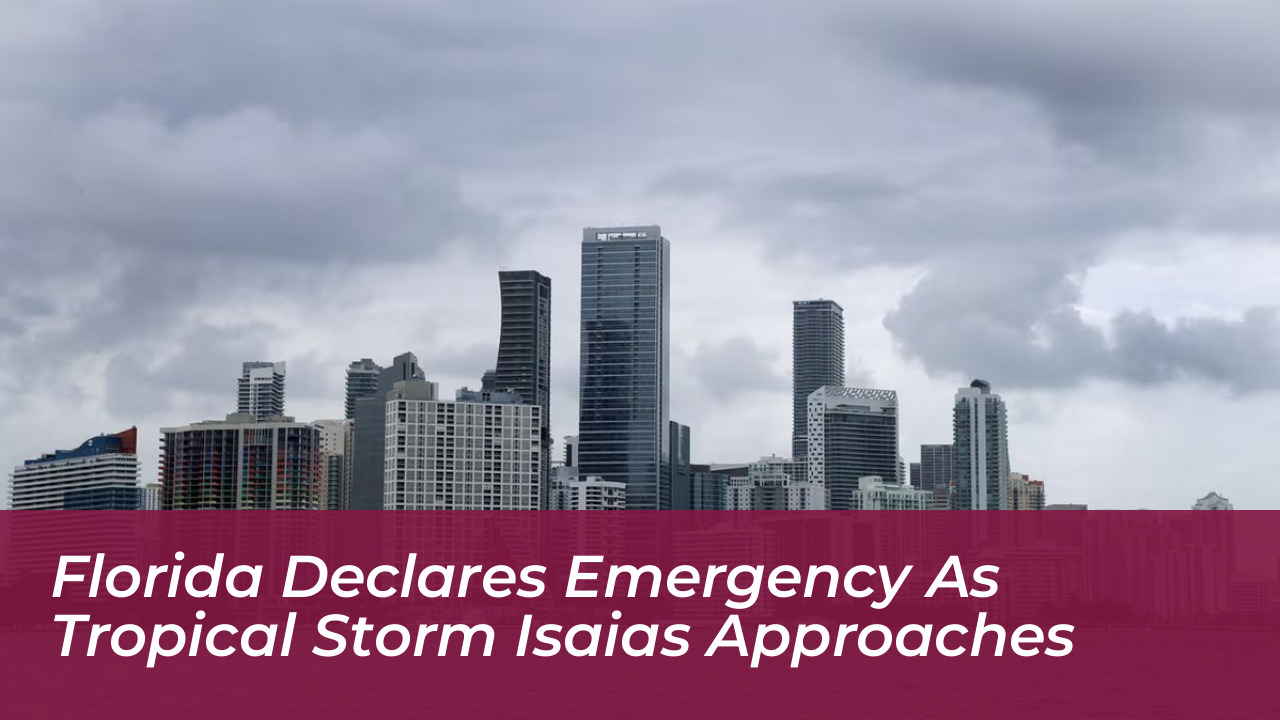


Florida Governor Ron DeSantis declared a state of emergency for 25 counties on Tuesday night, October 7, 2026. This action came as Tropical Depression Nine strengthened into Tropical Storm Isaias and advanced toward the Gulf Coast. The storm threatens to bring heavy rain, strong winds, coastal flooding, and possible tornadoes to parts of the state later in the week.
The emergency declaration allows state agencies to position crucial resources ahead of potential impacts across the Florida Panhandle and Big Bend regions. State emergency response teams are actively mobilizing supplies. They are staging generators, fuel, flood barriers, bottled water, shelf-stable meals, tarps, sandbags, and Tiger Dams in Tallahassee and the Santa Rosa area for rapid deployment.
Counties Under the State of Emergency
The executive order issued by Governor DeSantis covers 25 northern and western counties in Florida. Residents within these designated zones are urged to closely monitor local forecasts and review their emergency plans:
- Baker County
- Bay County
- Calhoun County
- Columbia County
- Dixie County
- Escambia County
- Franklin County
- Gadsden County
- Gilchrist County
- Gulf County
- Hamilton County
- Holmes County
- Jackson County
- Jefferson County
- Lafayette County
- Leon County
- Liberty County
- Madison County
- Okaloosa County
- Santa Rosa County
- Suwannee County
- Taylor County
- Walton County
- Wakulla County
- Washington County
Forecast and Potential Impacts
According to the National Hurricane Center, Isaias developed from Tropical Depression Nine. It is projected to pass north of Mexico’s Yucatan Peninsula before strengthening into a hurricane as it approaches the northern Gulf Coast. If it reaches hurricane intensity, Isaias will mark the first Atlantic hurricane of the 2026 season.
Forecasters predict the system will deliver between 3 and 6 inches of rain from southeastern Louisiana to the Florida Panhandle. Isolated maximum totals could reach up to 10 inches. State officials warn that additional rainfall could quickly saturate soils, significantly increasing the risk of flash flooding following recent heavy downpours across the region.
“This order will allow the Florida Division of Emergency Management to stage critical preparedness resources and ensure Florida is ready to respond,” Gov. Ron DeSantis said in a release. “Floridians should take this time to get disaster plans in place and ensure their hurricane supply kit is stocked.”
Emergency Powers and Preparedness
Declaring a state of emergency grants state and local governments the flexibility to cut through administrative red tape, coordinate emergency services swiftly, and reallocate resources as needed. , the declaration strictly activates state prohibitions against price gouging on essential commodities, services, food, and gasoline.
Emergency management officials recommend that residents living along the Gulf Coast finalize their emergency kits, secure loose outdoor items, and identify multiple reliable methods for receiving severe weather alerts and potential evacuation orders.