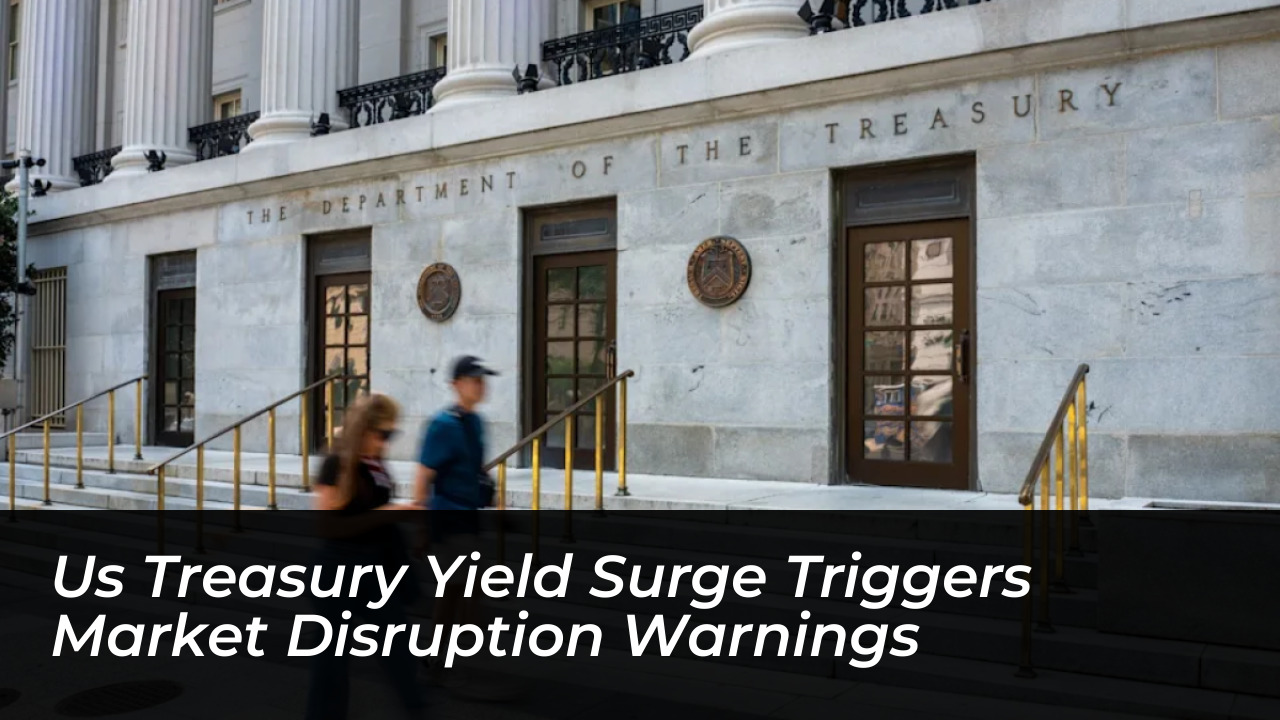



Rising U.S. Treasury yields and a rapid surge in short positions created fresh volatility across money markets. Analysts warned that aggressive bond market shifts could trigger broader financial disruptions. Short sellers borrowing specific government bonds pushed overnight repo borrowing rates lower. This signaled high demand to bet against debt securities as financial institutions navigated persistent inflationary pressures and heavy federal debt supplies.
The borrowing rate for the 10-year Treasury note dropped as low as 2.70% before settling at 3.75%, according to data from Curvature Securities. In contrast, standard general collateral Treasuries traded higher between 3.86% and 3.92%. This intense rate pressure on the 10-year issue occurred ahead of a planned $39 billion auction scheduled by the U.S. Treasury Department. It added to an already ample supply near $92 billion, which includes roughly $10.6 billion held by the Federal Reserve.
Drivers Behind the Historic Bond Market Selloff
Financial institutions and market strategists noted that the rapid ascent in borrowing costs was driven by several factors. These included hawkish Federal Reserve expectations, stubborn inflation metrics, mounting federal deficits, and massive corporate debt issuance. Big tech companies heavily tapped debt markets to finance artificial intelligence infrastructure and cloud expansions, pulling capital away from traditional government debt.
Citadel Securities warned institutional investors that the Federal Reserve’s cautious monetary policy stance leaves markets exposed to broader structural risks. Nohshad Shah, head of EMEA fixed-income sales at Citadel Securities, noted that multiyear highs in long-dated Treasuries signal widespread market anxiety over policymakers taking an easier route when faced with difficult inflation choices.
Concurrently, benchmark 30-year U.S. Treasury yields climbed to 5.29%, topping a 19-year high. They moved toward the 5.44% peak recorded during the onset of the 2007 financial downturn. Meanwhile, the 10-year Treasury note yield approached 5.15%, sparking concerns across Wall Street regarding the unprecedented speed of the repricing.
Historical Precedents and Warnings That ‘Something Always Breaks’
Market analysts drew parallels between the current rate trajectory and historical financial crises. John Roque, head of technical analysis at 22V Research, pointed out that during 16 instances of rapid increases in the 10-year yield since 1970, a financial market calamity followed.
“As sure as day follows night, when the 10-year Treasury yield rises, something gets knocked out,” Roque remarked. He emphasized that when borrowing costs soar quickly, they unravel leveraged or risky plans by companies and investors counting on stable rates.
Regional banks, utilities, and homebuilders faced immediate downward pressure as borrowing costs rippled through Main Street and Wall Street alike. With the average rate for a 30-year mortgage surpassing 7%-its highest level in nearly two years-consumers and businesses encountered an intensifying affordability crunch.
Global Repercussions and Cross-Border Tremors
The repricing of the world’s cost of capital also triggered international market tremors. Major sovereign bond yields in Japan, Germany, and the UK reached multi-decade highs. In developing markets like India, surging U.S. yields fueled capital flight, strengthened the U.S. dollar, compressed equity appraisal multiples, and narrowed yield differentials, limiting local central bank maneuverability.

As policymakers and market participants monitored upcoming Treasury auctions and inflation readings, economists emphasized that managing the delicate balance between economic growth and fiscal stability remained paramount to avoiding severe financial fallout.
Frequently Asked Questions
Why are U.S. Treasury yields rising so rapidly?
Yields are climbing due to expectations of a more hawkish Federal Reserve, persistent inflation above the 2% target, massive corporate debt issuance for artificial intelligence infrastructure, and growing U.S. fiscal deficits.
How do rising Treasury yields affect everyday consumers?
Higher Treasury yields directly benchmark broader borrowing costs, causing 30-year mortgage rates to cross 7%, while also raising interest rates on auto loans, credit cards, and small-business loans.
What does the term ‘something always breaks’ mean in this context?
Financial analysts use this phrase to warn that rapid, unexpected spikes in benchmark interest rates historically expose hidden vulnerabilities in the financial system, often leading to market corrections or localized crises.
How is the Federal Reserve responding to the bond market volatility?
The Federal Reserve continues to evaluate inflation metrics and economic strength, maintaining a cautious stance on rate cuts while monitoring how elevated borrowing costs cool economic activity.
Are investors shifting away from equities because of high yields?
Yes. With short-term Treasuries and cash-equivalent assets offering attractive yields near 5% with minimal risk, capital is frequently pulled away from riskier asset classes like equities and real estate.