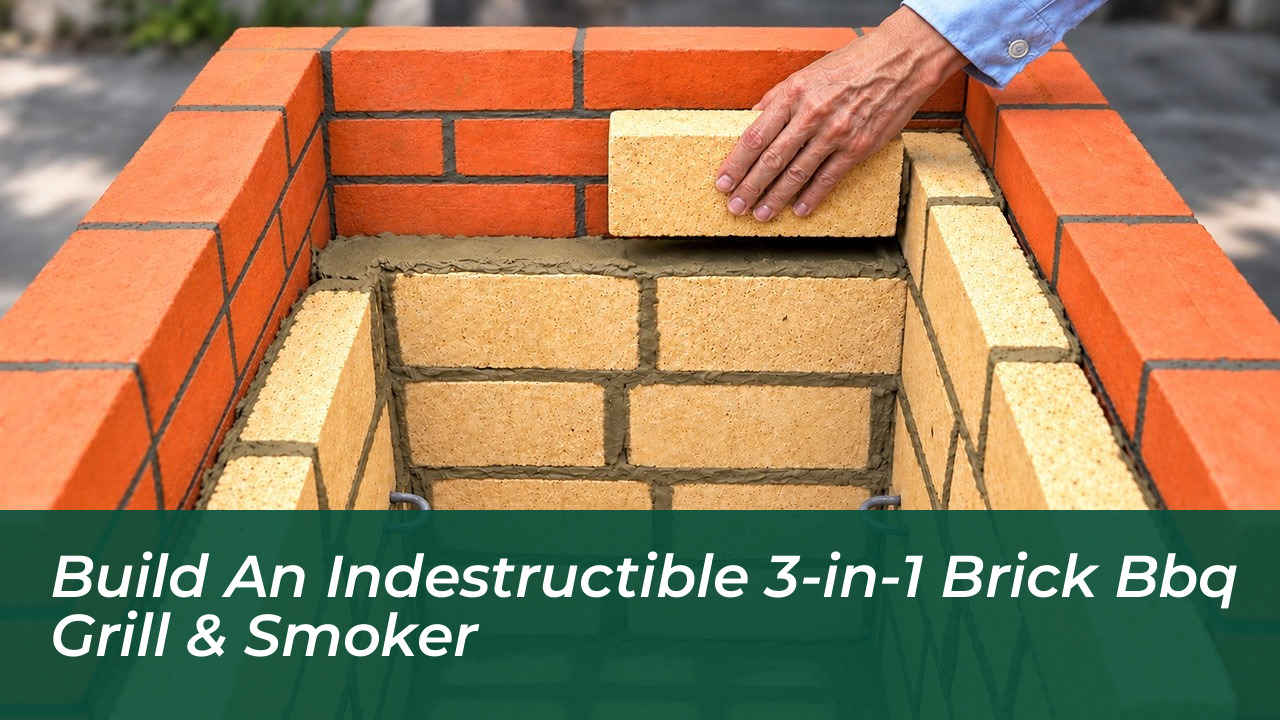

Store-bought metal cookers are notorious for succumbing to rust, warping, and uneven heat distribution within just three to five seasons of unpredictable weather. A traditional brick BBQ grill built with a 3-in-1 configuration solves these primary flaws by merging direct charcoal grilling, indirect slow smoking, and flat-top plancha searing into one indestructible masonry unit. By anchoring high-density refractory firebricks inside a frost-resistant brick shell, this custom setup delivers consistent thermal retention that flimsy steel barrels simply cannot achieve.
Constructing a permanent backyard culinary fixture with stone, mortar, and clay creates an installation that retains radiant heat for hours while using significantly less charcoal. However, achieving this level of thermodynamic versatility requires strict adherence to professional masonry techniques, careful material selection, and proper curing phases.
Thermal Engineering: Why Mortar Choice Dictates Lifespan
Constructing a versatile outdoor cooking station requires a strict separation between structural support and thermal resistance. Standard red clay bricks and everyday Portland cement perform exceptionally well for external retaining walls, but they fracture violently when subjected to direct flame and cyclical heating.
Direct contact with burning lumpwood charcoal generates internal temperatures exceeding 500°C. Under this thermal load, the moisture naturally trapped within standard mortar vaporises rapidly, creating micro-explosions that crack the joints from within. A master builder counters this through a precise two-tier material strategy:
- Refractory Firebricks: These dense, alumina-rich clay blocks line the primary firebox to absorb intense heat without expanding rapidly or crumbling.
- Heat-Proof Mortar: Fire clay mixed with refractory cement forms joints that chemically bond under extreme heat, maintaining an airtight firebox.
- External Facing Bricks: Frost-resistant engineering bricks shield the interior core from rain, driving frost, and freezing temperatures.
Skipping this dual-layer method is the single most common cause of early structural failure in DIY garden masonry.
Anatomy of the 3-in-1 Multi-Fuel Station
Rather than dedicating valuable patio space to separate smokers, grills, and pizza ovens, a unified brick layout relies on shared thermal mass and controlled airflow. The structure routes hot convective gases through distinct culinary zones:
- The Primary Combustion Chamber: Located in the lower central firebox, this zone features adjustable cast-iron air vents embedded low in the brick courses to regulate oxygen intake and give you fine control over the fuel burn rate.
- The Grilling Bay: Positioned directly above the firebox, this zone is fitted with welded stainless steel angle irons that let you adjust the cooking grate height across several tiers.
- The Offset Smoking Chamber: Flanking the central grill, this chamber links via an internal brick flue. Sliding an internal baffle damper shut forces hot aromatic smoke from oak or fruitwood to travel horizontally, enabling low-and-slow smoking at steady temperatures between 105°C and 125°C.
- The Plancha Searing Station: A solid cast-iron plate or polished soapstone slab covers the third zone, transforming ambient flue heat into an ultra-high-heat griddle for smash burgers and breakfast flatbreads.
Laying the Structural Foundation
A masonry installation of this scale weighs upwards of 600 kilograms once completed, making a reinforced concrete pad non-negotiable. Constructing your grill on decorative paving slabs or loose soil invariably results in subsidence and structural cracking.
Dig down roughly 200 millimetres into solid subsoil, compact a layer of crushed hardcore, and pour a steel-reinforced concrete slab. Allow the slab to cure fully for at least five days before striking the first chalk line. Laying the initial course demands absolute precision with a spirit level; any minor variation at ground level compounds as courses rise, making your cooktop grates wobble and rock during service.
Curing the Masonry Before the Maiden Burn
Patience remains the final, critical material in traditional masonry construction. Freshly laid mortar holds substantial residual hydration that must evaporate slowly before facing operational cooking temperatures.
Firing a freshly built brick grill prematurely turns that residual moisture into superheated steam, causing structural delamination and surface spalling across your firebricks. Protect the structure from rain under a canvas tarp for two full weeks following completion. Once dry, light a succession of small kindling fires over three consecutive days to gently temper the mortar joints before loading the firebox with full-capacity charcoal.
Crafting a multi-functional masonry station transforms outdoor cooking from a seasonal chore into a year-round artisanal craft. The precision you invest in laying true courses and refractory linings pays dividends in rock-solid heat retention for decades to come.
Frequently Asked Questions
Can I use standard red bricks for the inside of the firebox?
No. Standard red clay bricks contain trapped moisture and lack the alumina content required to withstand direct flames. They will crack and crumble under high temperatures. Always use high-density refractory firebricks for the inner firebox lining.
Why is a concrete foundation required for a brick BBQ?
A completed 3-in-1 masonry grill weighs upwards of 600 kilograms. Building on loose soil or standard paving slabs causes shifting, subsidence, and severe structural cracking. A steel-reinforced concrete pad provides the necessary load-bearing stability.
How long do I need to let the mortar cure before cooking?
You should protect the structure from rain for at least two full weeks. Following that, perform a three-day tempering process by burning small kindling fires to slowly drive out residual moisture before executing high-heat cooks.
What is the benefit of an offset smoking chamber in a brick grill?
An offset chamber routes convective heat and aromatic smoke horizontally away from the direct firebox. This indirect airflow setup allows you to maintain steady low-and-slow temperatures between 105°C and 125°C for authentic barbecue smoking.
What type of mortar is required for the high-heat zones?
You must use a specialized mixture of fire clay and refractory cement. Standard Portland cement mortars break down under thermal expansion, whereas refractory formulations chemically bond under extreme heat.